
Who Qualifies for LHWCA Coverage? The Status and Situs Tests
If you were hurt doing maritime work but you are not a ship’s crew member, the law that most likely covers you is the Longshore and Harbor Workers’ Compensation Act. Whether it applies turns on two questions: what you do, and where you were hurt.
This article is for informational purposes only and does not constitute legal advice. Coverage under the LHWCA is fact-specific and frequently disputed; to find out whether the Act covers your injury, consult a licensed maritime attorney.
Key Facts at a Glance
- The LHWCA is a federal workers’ compensation law for maritime workers who are not seamen, 33 U.S.C. § 901 and following (Source: Cornell LII).
- A worker must satisfy both a status test and a situs test to be covered (Source: Justia).
- The status test covers any person engaged in maritime employment, including longshoremen, ship repairers, shipbuilders, and ship breakers, 33 U.S.C. § 902(3) (Source: Cornell LII).
- The situs test covers injuries on navigable waters and adjoining piers, wharves, dry docks, terminals, building ways, and marine railways, 33 U.S.C. § 903(a) (Source: Cornell LII).
- A worker injured on actual navigable waters in the course of employment satisfies status, Director, OWCP v. Perini North River Associates, 459 U.S. 297 (1983) (Source: Justia).
- A welder on a fixed offshore platform was not in maritime employment and was not covered, Herb’s Welding, Inc. v. Gray, 470 U.S. 414 (1985) (Source: Justia).
- Masters and members of a crew of a vessel are excluded from the LHWCA, 33 U.S.C. § 902(3)(G), because they are seamen covered by the Jones Act (Source: Cornell LII).
Not sure whether the Longshore Act covers your injury? The two-part test can be decided in your favor with the right facts.
We are not a law firm and not attorneys; we connect injured maritime workers and families with experienced maritime attorneys at no cost.
Maritime law sorts injured workers into two systems, and which one applies decides almost everything about a claim. Crew members of vessels are seamen who sue their employers for negligence under the Jones Act. Most other maritime workers, the longshoremen, dockworkers, ship repairers, and shipbuilders who keep ports and shipyards running, are covered instead by the LHWCA, a no-fault federal compensation system. Getting the classification right matters because the remedies are very different.
This guide explains LHWCA coverage completely: the two-part status and situs test, how the tests work together, who is excluded and why, the Supreme Court decisions that set the boundaries, how the Act differs from Jones Act seaman status, the extensions that reach offshore and overseas workers, and how employers dispute coverage. The aim is a single page that answers the coverage question, including a covered-versus-not-covered situs table that general explainers do not provide.
What Is the LHWCA and Who Does It Cover?
The Longshore and Harbor Workers’ Compensation Act, 33 U.S.C. § 901 and following, is a federal workers’ compensation program that pays medical care and wage-loss benefits to maritime workers who are injured on the job and who are not seamen (Source: Cornell LII). It is a no-fault system, which means a covered worker does not have to prove the employer was negligent, but in exchange the worker generally cannot sue the employer for pain and suffering. Congress designed the Act to fill the gap left by the Jones Act, which protects vessel crews, and by state workers’ compensation, which historically did not reach injuries on the water. To qualify, a worker must clear two separate hurdles, the status test and the situs test, both drawn from the 1972 amendments that expanded coverage landward.
What Is the Status Test Under the LHWCA?
The status test asks whether the worker is engaged in maritime employment, as defined in 33 U.S.C. § 902(3). The statute expressly includes any longshoreman or person engaged in longshoring operations, and any harbor worker including a ship repairman, shipbuilder, and ship breaker (Source: Cornell LII). The Supreme Court reads maritime employment broadly: in Northeast Marine Terminal Co. v. Caputo, 432 U.S. 249 (1977), it rejected a narrow point-of-rest theory and held that workers essential to loading and unloading are covered (Source: Justia). A worker need not perform maritime tasks exclusively; the work only needs to be a regular part of the job. The core question is whether the worker’s duties contribute to the maritime functions of moving cargo or building, repairing, or breaking vessels.
What Is the Situs Test Under the LHWCA?
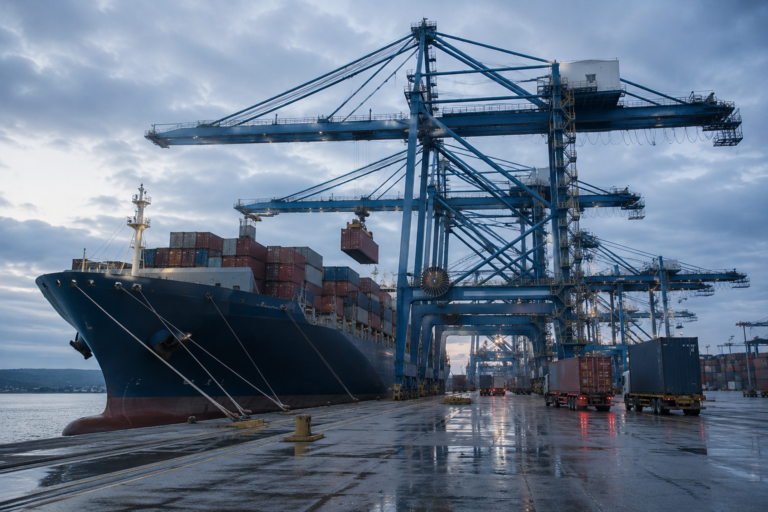
The situs test asks where the injury happened. Under 33 U.S.C. § 903(a), coverage extends to injuries occurring on the navigable waters of the United States, including any adjoining pier, wharf, dry dock, terminal, building way, marine railway, or other adjoining area customarily used by an employer in loading, unloading, repairing, dismantling, or building a vessel (Source: Cornell LII). The 1972 amendments deliberately pushed the covered zone landward, away from the old rule that limited admiralty to injuries actually over the water. The hardest situs fights involve the catch-all phrase “other adjoining area,” where courts ask whether the specific location is functionally connected to maritime activity. Unlike status, which looks at the nature of the job over time, situs is judged by where the worker was at the moment of injury.
| Location of injury | Situs satisfied? | Why |
|---|---|---|
| On the navigable water itself | Yes | Core situs; also supports status under Perini |
| Pier, wharf, or terminal | Yes | Expressly enumerated in § 903(a) |
| Dry dock, building way, or marine railway | Yes | Expressly enumerated in § 903(a) |
| Adjoining area used to load, repair, or build vessels | Usually yes | Covered if customarily used for maritime work |
| Inland warehouse far from the water | Usually no | Not adjoining; not a maritime situs |
| Fixed offshore oil platform | No (LHWCA), see OCSLA | Treated as an artificial island, not a vessel situs |
How Do the Status and Situs Tests Work Together?
A worker must satisfy both tests at the same time; passing one is not enough. The Supreme Court framed the coverage question as a two-part inquiry in Herb’s Welding, Inc. v. Gray, 470 U.S. 414 (1985), where it explained that a claimant must meet both a status and a situs requirement (Source: Justia). A dockworker loading a ship at a marine terminal plainly meets both. The difficulty arises at the margins, where a worker has maritime status but is hurt at a location that may not qualify as a situs, or is hurt on a clear maritime situs while doing work that may not count as maritime employment. Because the tests measure different things, the nature of the work and the place of the injury, a coverage dispute can turn entirely on one of them.
Worked example: A ship repairer is welding a hull seam in a dry dock when a scaffold collapses. He passes the status test as a ship repairman and the situs test because a dry dock is expressly named in § 903(a). Both tests are met, so the LHWCA covers him, and he does not need to prove his employer was negligent to receive medical care and wage-loss benefits.
Who Is Excluded From LHWCA Coverage?
Even a worker on a maritime situs can be excluded by the carve-outs in 33 U.S.C. § 902(3). The Act excludes individuals whose work is clerical, secretarial, security, or data processing; aquaculture workers; people who build, repair, or dismantle recreational vessels under 65 feet; certain marina employees; some suppliers, vendors, and transporters; and workers at camps, clubs, restaurants, museums, or retail outlets, so long as those workers are covered by state workers’ compensation (Source: Cornell LII). The most important exclusion is § 902(3)(G): a master or member of a crew of any vessel is not covered, because that worker is a seaman protected by the Jones Act. Benefits can also be barred where an injury was caused solely by the worker’s intoxication or by a willful attempt to harm someone, 33 U.S.C. § 903(c).
What Did Perini and Herb’s Welding Decide About Coverage?
These two decisions mark the outer edges of LHWCA status. In Director, OWCP v. Perini North River Associates, 459 U.S. 297 (1983), the Court held that a worker injured on actual navigable waters in the course of employment satisfies the status requirement, and that the 1972 amendments expanded coverage to shore-based workers without stripping coverage from those who would have been covered before 1972 (Source: Justia). In Herb’s Welding, Inc. v. Gray, 470 U.S. 414 (1985), the Court reached the opposite result for a welder on a fixed offshore oil platform in Louisiana state waters, holding that his work was not maritime employment and that he therefore did not qualify under the LHWCA (Source: Justia). Together they show that the situs of an injury on the water can establish status, while purely extractive platform work generally cannot.
Coverage disputes are won on facts. Have a maritime attorney evaluate which law actually applies to you.
We are not a law firm and not attorneys; we connect injured maritime workers and families with experienced maritime attorneys at no cost.
How Is LHWCA Coverage Different From Jones Act Seaman Status?
LHWCA coverage and Jones Act seaman status are mutually exclusive: a worker is either a seaman or a longshore worker, not both. The dividing line is the crew exclusion in § 902(3)(G), which removes masters and crew members of a vessel from the LHWCA and routes them to the Jones Act. That makes vessel status and seaman status central to the analysis; whether a structure is a vessel under maritime law and whether the worker has a substantial connection to it decide which system applies. We explain the seaman side of that line in our guide on whether you are a Jones Act seaman, and the platform split in Jones Act or Longshore coverage for platform workers. The stakes are high, because a seaman can recover for pain and suffering while an LHWCA claimant generally cannot.
What About Offshore Platform and Overseas Workers?
Three statutes extend LHWCA benefits to workers the base Act would not reach. The Outer Continental Shelf Lands Act covers workers injured in operations to explore for or extract resources on the outer continental shelf, which is how many fixed-platform oil and gas workers receive LHWCA-style benefits even though Herb’s Welding placed them outside the base Act; see our OCSLA guide. The Defense Base Act covers civilian contractors injured on overseas military bases and projects. The Nonappropriated Fund Instrumentalities Act covers certain civilian employees who support military morale and recreation. Coverage under the LHWCA can also run concurrently with state workers’ compensation, and a worker may pursue both systems, as the Supreme Court allowed in Sun Ship, Inc. v. Pennsylvania, 447 U.S. 715 (1980) (Source: Justia).
How Do Employers Dispute LHWCA Coverage?
Employers and their insurers contest coverage from whichever direction limits their exposure. When a worker files an LHWCA claim, the employer may argue the worker fails the status test because the work was not truly maritime, or fails the situs test because the injury happened at a location that is not an adjoining maritime area. In other cases the employer argues that the worker is actually a seaman, hoping to defeat the comp claim and force the worker into Jones Act litigation, or argues the opposite, that the worker is not a seaman, in order to cap exposure at no-fault comp benefits and avoid a negligence verdict. Borrowed-employee and dual-employment defenses also appear in multi-employer port and shipyard settings. The worker’s counter is detailed proof of job duties, the precise location of the injury, and the vessel connection, framed against Perini, Caputo, and Herb’s Welding.
Key Decisions on LHWCA Coverage
| Case or statute | Court and year | Holding |
|---|---|---|
| Northeast Marine Terminal Co. v. Caputo | U.S. Supreme Court, 1977 | Maritime employment is read broadly; rejected the point-of-rest limit |
| Sun Ship, Inc. v. Pennsylvania | U.S. Supreme Court, 1980 | LHWCA and state workers’ compensation can apply concurrently |
| Director, OWCP v. Perini North River Associates | U.S. Supreme Court, 1983 | Injury on actual navigable waters in the course of work satisfies status |
| Herb’s Welding, Inc. v. Gray | U.S. Supreme Court, 1985 | Fixed-platform welder was not in maritime employment; not covered |
| Status definition and exclusions, § 902(3) | Congress, 1972 and after | Defines maritime employment and excludes crew members and listed jobs |
Frequently Asked Questions
Who is covered under the LHWCA?
The LHWCA covers maritime workers who are not seamen, such as longshoremen, dockworkers, ship repairers, shipbuilders, and ship breakers, when they satisfy both the status test and the situs test. Status looks at whether the work is maritime employment, and situs looks at whether the injury happened on navigable waters or an adjoining maritime area like a pier or dry dock.
What is the difference between the status and situs tests?
The status test asks what you do, whether your job is maritime employment under 33 U.S.C. § 902(3). The situs test asks where you were hurt, whether the injury occurred on navigable waters or an adjoining area listed in 33 U.S.C. § 903(a). You must satisfy both tests at the same time to be covered by the LHWCA.
Is a longshoreman covered by the LHWCA or the Jones Act?
A longshoreman who loads and unloads vessels but is not a crew member is covered by the LHWCA, not the Jones Act. The Jones Act protects seamen, meaning masters and members of a vessel’s crew. The crew exclusion in § 902(3)(G) is the line that separates the two systems.
Does the LHWCA cover offshore oil platform workers?
A worker on a fixed offshore platform is generally not covered by the base LHWCA, because Herb’s Welding held that such work is not maritime employment. Many of those workers instead receive LHWCA-style benefits through the Outer Continental Shelf Lands Act. Workers connected to a vessel, rather than a fixed platform, may be Jones Act seamen.
Can you get both LHWCA and state workers’ compensation?
Yes. In Sun Ship, Inc. v. Pennsylvania, the Supreme Court held that the LHWCA and state workers’ compensation can apply concurrently, so an injured worker may pursue benefits under both systems. Coordination rules prevent a double recovery, but the existence of state coverage does not automatically bar an LHWCA claim. See how the two systems compare.
Who is excluded from LHWCA coverage?
The Act excludes masters and crew members of vessels, who are seamen, along with clerical, secretarial, security, and data-processing staff, aquaculture workers, certain recreational-vessel and marina workers, and some vendors and transporters, when they are covered by state workers’ compensation. Benefits can also be denied where the injury was caused solely by intoxication or a willful attempt to harm.
What benefits does the LHWCA provide?
The LHWCA provides medical care for the work injury and wage-loss compensation based on the worker’s average weekly wage, plus disability and, in fatal cases, death benefits. Because it is a no-fault system, the worker does not prove employer negligence, but generally cannot recover pain and suffering from the employer. Learn how to file an LHWCA claim.
If you were hurt doing maritime work, the right classification can change everything. Let an attorney sort it out.
We are not a law firm and not attorneys; we connect injured maritime workers and families with experienced maritime attorneys at no cost.
References and Sources
- Longshore and Harbor Workers’ Compensation Act, 33 U.S.C. ch. 18, Cornell LII
- Definitions and exclusions, 33 U.S.C. § 902, Cornell LII
- Coverage and situs, 33 U.S.C. § 903, Cornell LII
- Herb’s Welding, Inc. v. Gray, 470 U.S. 414 (1985), Justia
- Director, OWCP v. Perini North River Associates, 459 U.S. 297 (1983), Justia
- Northeast Marine Terminal Co. v. Caputo, 432 U.S. 249 (1977), Justia
- Sun Ship, Inc. v. Pennsylvania, 447 U.S. 715 (1980), Justia
- U.S. Department of Labor, Division of Longshore and Harbor Workers’ Compensation
- DOL Benefits Review Board, status and situs reference, sections 2(3) and 3(a)
- Jones Act, 46 U.S.C. § 30104, Cornell LII (for the seaman boundary)
Editorial Standards and Review
This article follows a zero-hallucination policy. Every legal rule, case holding, and statute is traced to a primary or authoritative source linked inline and listed above; Supreme Court holdings are cited to the official reporter and verified against Justia, statutory text is verified against the U.S. Code, and agency material is cited to the U.S. Department of Labor. We are not a law firm and not attorneys, and nothing here is legal advice. Whether the LHWCA covers a particular injury is a fact-specific question that turns on the worker’s duties and the place of injury, so an injured worker should have the specific facts reviewed by a licensed maritime attorney. Last reviewed June 2026. See our editorial standards.