
OCSLA Explained: Outer Continental Shelf Workers’ Rights
If you were hurt working on an offshore oil or gas platform, the single most important question is not how badly you were injured. It is which law covers you, because that one answer decides whether you are a Jones Act seaman, a Longshore Act claimant, or someone borrowing the law of the nearest state.
In short: The Outer Continental Shelf Lands Act (OCSLA) governs workers on fixed oil and gas platforms beyond state waters. It extends Longshore and Harbor Workers’ Compensation Act benefits to those workers and borrows the law of the nearest state to fill gaps. After Valladolid (2012), coverage reaches any injury with a substantial nexus to extraction on the shelf, even one that happens on land.
This article is for informational purposes only and does not constitute legal advice. Whether OCSLA, the Jones Act, or state law governs your injury depends on specific facts; to understand your own situation, consult a licensed maritime attorney.
Key Facts at a Glance
- OCSLA, 43 U.S.C. §§ 1331-1356, gives the federal government jurisdiction over the submerged lands of the outer continental shelf beyond state coastal boundaries (Source: Cornell LII).
- Section 1333(b) extends Longshore Act benefits to workers disabled or killed in oil and gas operations on the shelf (Source: Longshore Insider).
- In Pacific Operators Offshore v. Valladolid, 565 U.S. 207 (2012), the Supreme Court held coverage requires a substantial nexus between the injury and extractive operations on the shelf, not that the injury happen on the shelf (Source: Cornell LII).
- Fixed platforms are treated as artificial islands, not vessels, so platform workers are generally not Jones Act seamen, under Rodrigue v. Aetna Casualty & Surety Co., 395 U.S. 352 (1969) (Source: Justia).
- A fixed-platform welder was held not to be in “maritime employment” for the Longshore Act on its own terms, which is why OCSLA’s statutory extension matters, Herb’s Welding v. Gray, 470 U.S. 414 (1985) (Source: Cornell LII).
- OCSLA borrows the law of the adjacent state as surrogate federal law where federal law does not otherwise apply, 43 U.S.C. § 1333(a)(2) (Source: U.S. DOJ).
- As of 2025, federal agencies including BOEM refer to the region as the Gulf of America, while the OCSLA statute itself still reads “Gulf of Mexico” until Congress amends it (Source: Federal Register).
Hurt working offshore on a rig or platform? The law that covers you decides how much you can recover.
We are not a law firm and not attorneys; we connect injured offshore workers and families with experienced maritime attorneys at no cost. Find out where you stand
What Is the Outer Continental Shelf Lands Act (OCSLA)?
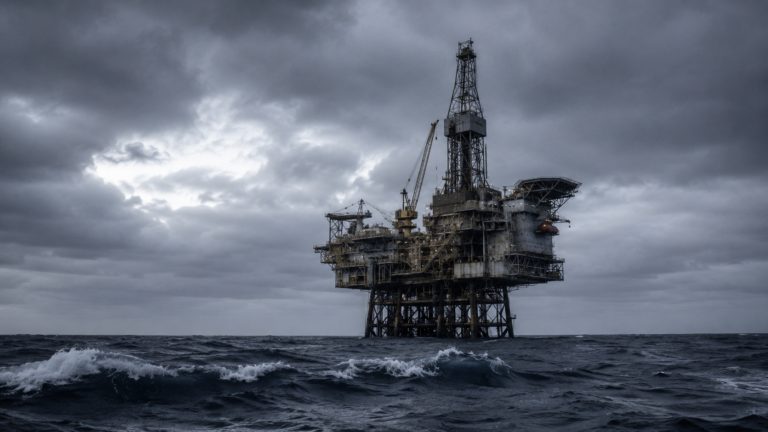
The Outer Continental Shelf Lands Act (OCSLA) is the 1953 federal statute that governs the use of the outer continental shelf, the submerged lands that extend seaward beyond each coastal state’s boundary, 43 U.S.C. §§ 1331-1356. Congress used OCSLA to claim federal jurisdiction over the shelf so that the oil, gas, and minerals beneath it could be leased and developed under a single federal scheme, 43 U.S.C. § 1333(a)(1) (Source: Cornell LII). For injured workers, the operative part is twofold. Section 1333(b) extends the Longshore and Harbor Workers’ Compensation Act to people hurt in operations on the shelf, giving them a no-fault workers’ compensation remedy. Section 1333(a)(2) fills remaining gaps by borrowing the law of the adjacent state as surrogate federal law. OCSLA is the reason a roustabout on a fixed Gulf platform is covered at all, because without it, ordinary admiralty law would not reach a structure the Supreme Court treats as an artificial island.
Who Is Covered by OCSLA?
OCSLA covers employees disabled or killed in operations conducted on the outer continental shelf for the purpose of exploring for, developing, removing, or transporting natural resources from the shelf, 43 U.S.C. § 1333(b). In practice that means roustabouts, roughnecks, drillers, production operators, welders, and other oil-and-gas workers on fixed platforms and similar structures who are not seamen and not covered by ordinary state workers’ compensation (Source: Arnold & Itkin). The statute matters because the Longshore Act’s own coverage test, the “maritime employment” status requirement, does not naturally fit a platform worker, as Herb’s Welding v. Gray showed. OCSLA bridges that gap by saying that for shelf extraction work, Longshore benefits are payable regardless of whether the job counts as traditional maritime employment. A worker who qualifies receives Longshore-level medical care and wage-replacement, and may also pursue a third party for additional damages.
What Is the “Substantial Nexus” Test After Valladolid?
The substantial-nexus test asks whether there is a significant causal link between the worker’s injury and the employer’s extractive operations on the outer continental shelf. The Supreme Court announced it unanimously in Pacific Operators Offshore, LLP v. Valladolid, 565 U.S. 207 (2012), resolving a three-way circuit split (Source: Wikipedia). Juan Valladolid spent about 98% of his time working on an offshore platform but was killed at his employer’s onshore processing facility. The Court rejected the Fifth Circuit’s rule that the injury had to occur on the shelf and also rejected the Third Circuit’s broad “but for” causation test, adopting the Ninth Circuit’s middle standard (Source: Longshore Insider). The result is that coverage turns on the relationship between the injury and shelf operations, not on a rigid line in the water. That is a worker-friendly rule, because it can reach injuries during transit, loading, or related onshore work tied to a platform.
Does an Injury Have to Happen on the Outer Continental Shelf?
No. After Valladolid, the location of the injury is no longer decisive; the question is whether the injury has a substantial nexus to extraction operations on the shelf (Source: Barnett, Lerner & Karsen). This is one of the most misunderstood points in offshore law, because older sources still describe a strict “situs of injury” requirement that the Supreme Court discarded. An injury sustained while a worker is being transported to or from a platform, or while performing platform-related tasks at a shore base, can fall within OCSLA if the causal link to shelf operations is strong enough.
Worked example: A production operator who works almost entirely on a fixed Gulf platform is injured at the company’s onshore separation facility while handling equipment that came off the platform. Under the pre-2012 rule he might have been pushed into state workers’ compensation. Under Valladolid, because his work and injury bear a substantial nexus to shelf extraction, OCSLA can supply Longshore benefits with their higher medical and wage protection.
Why Are Fixed Platform Workers Usually Not Jones Act Seamen?
Fixed platform workers are usually not Jones Act seamen because a fixed platform is not a vessel. In Rodrigue v. Aetna Casualty & Surety Co., 395 U.S. 352 (1969), the Supreme Court held that fixed offshore platforms are artificial islands, extensions of land rather than vessels in navigation, so traditional admiralty law and the seaman remedies that go with it do not apply (Source: Justia). Seaman status requires a substantial connection to a vessel or fleet in both duration and nature, the standard set in Chandris, Inc. v. Latsis, 515 U.S. 347 (1995), and a worker permanently assigned to a stationary platform does not meet it (Source: Justia). The distinction is decisive. A crew member assigned to a mobile drilling unit, drillship, or jack-up rig that qualifies as a vessel may be a Jones Act seaman with negligence, unseaworthiness, and maintenance and cure remedies, while the worker on the fixed platform next to it is an OCSLA/Longshore claimant. Same field, very different rights.
How Does OCSLA Borrow State Law?
OCSLA borrows the law of the adjacent state and applies it as surrogate federal law wherever federal law does not already supply a rule, 43 U.S.C. § 1333(a)(2). Because Rodrigue treated fixed platforms as extensions of land outside ordinary admiralty jurisdiction, Congress needed a body of law to govern conduct and claims on those structures, and it chose the nearest state’s law (Source: U.S. DOJ). For a worker on a platform off Louisiana, that means Louisiana tort and contract principles can apply to a third-party claim, while the Longshore Act supplies the workers’ compensation remedy against the employer. The borrowed law is frozen as it existed when adopted and applied only so far as it is not inconsistent with federal law. This adoption mechanism is why outcomes can differ between, for example, a platform off Texas and one off California, and why identifying the adjacent state is an early step in any OCSLA case.
Hurt working offshore on a rig or platform? The law that covers you decides how much you can recover.
We are not a law firm and not attorneys; we connect injured offshore workers and families with experienced maritime attorneys at no cost. Discuss your case at no cost
Which Law Applies to an Offshore Worker? A Decision Table
The chart below maps the common offshore worker situations to the law that governs and the remedy it provides. Because the same oil field can hold seamen, Longshore claimants, and platform workers side by side, this is the analysis that decides the value and shape of a claim. No competitor guide we reviewed lays the choices out this way, so use it as the starting point and confirm the facts with a maritime attorney.
| Worker / structure | Governing law | Primary remedy | Authority |
|---|---|---|---|
| Crew assigned to a vessel (drillship, MODU, jack-up that is a vessel) | Jones Act + general maritime law | Negligence, unseaworthiness, maintenance and cure | Chandris, 515 U.S. 347 |
| Oil/gas worker on a fixed platform on the OCS | OCSLA → Longshore Act | LHWCA benefits + third-party tort | 43 U.S.C. § 1333(b) |
| Worker injured onshore but tied to OCS extraction | OCSLA (substantial nexus) | LHWCA benefits | Valladolid, 565 U.S. 207 |
| Fixed-platform worker in state territorial waters | State law; LHWCA only if status + situs met | State comp or LHWCA | Herb’s Welding, 470 U.S. 414 |
| Death on a fixed platform on the OCS | OCSLA + adjacent state wrongful-death law (not DOHSA) | State wrongful-death remedy | Rodrigue, 395 U.S. 352 |
What Benefits Does OCSLA Provide Through the Longshore Act?
OCSLA workers receive the Longshore Act’s benefit package: payment of all reasonable medical care for the work injury, plus wage-replacement compensation calculated from the worker’s average weekly wage, generally two-thirds of that wage for total disability, subject to statutory maximums set by the Department of Labor (Source: DOL OWCP). These are no-fault benefits, meaning the worker does not have to prove the employer was negligent, and in exchange the Longshore remedy is generally the exclusive claim against the employer. Death benefits are payable to surviving dependents. Because the compensation tracks average weekly wage, accurate wage documentation, including overtime and the offshore pay structure, often determines the value of a claim. Disputes are resolved through the Department of Labor’s administrative process rather than a state board, and a worker who is wrongly denied benefits can request a formal hearing before an administrative law judge.
Can an OCSLA Worker Sue a Third Party for More?
Yes. Longshore-type benefits are the exclusive remedy against the employer, but an OCSLA worker injured by the fault of a third party can bring a separate negligence claim for the full range of tort damages, including pain and suffering, that workers’ compensation does not pay (Source: Arnold & Itkin). Offshore operations are crowded with separate companies, the platform owner, the drilling contractor, a wireline or crane subcontractor, equipment manufacturers, so a third-party defendant is common. Where a vessel is involved, the Longshore Act’s own third-party route under 33 U.S.C. § 905(b) allows a negligence claim against the vessel owner. The third-party case is frequently the larger recovery, because it reaches non-economic damages and is not capped by the compensation schedule. Identifying every potentially responsible company early, and preserving the equipment and incident records, is central to maximizing what an injured worker recovers.
Worked example: A roustabout on a fixed OCS platform is struck by a load when a crane operated by a separate contractor fails. He collects Longshore benefits from his employer for medical care and lost wages, and separately sues the crane contractor for negligence, recovering pain and suffering and the rest of his full tort damages, which the compensation schedule alone would never have paid.
What About Deaths on the Outer Continental Shelf?
A death on a fixed platform on the outer continental shelf is generally governed by OCSLA and the borrowed law of the adjacent state, not by the Death on the High Seas Act. Rodrigue v. Aetna arose from two platform deaths, and the Court held that DOHSA did not reach fixed platforms because they are artificial islands outside the high-seas situs the statute requires, so OCSLA and surrogate state wrongful-death law applied instead (Source: Longshore Insider). This can matter a great deal to a family, because DOHSA limits recovery to pecuniary loss, while a state wrongful-death statute borrowed through OCSLA may allow broader non-economic damages. The analysis flips, however, if the decedent was a seaman assigned to a vessel rather than a platform worker, in which case the Jones Act and DOHSA framework can control. Establishing the structure, the worker’s status, and the adjacent state is the first task in any offshore fatality case.
Is It Still the “Gulf of Mexico” or the “Gulf of America” for OCSLA?
Both names are now in use, and the distinction is procedural rather than substantive. Executive Order 14172, signed January 20, 2025, directed federal agencies to rename the Gulf of Mexico as the Gulf of America, and the Bureau of Ocean Energy Management amended its OCSLA-implementing regulations to use “Gulf of America,” effective June 6, 2025 (Source: Federal Register). NOAA and other agencies made parallel changes through 2025 (Source: NOAA Fisheries). The rename does not change any worker’s rights; it is a nomenclature update that imposes no new legal requirements. The underlying statutes Congress wrote, including OCSLA itself, still read “Gulf of Mexico” until Congress amends the text, so an injured worker will see both terms across federal documents. For coverage purposes, the body of water’s name is irrelevant; what matters is whether the structure sits on the outer continental shelf.
What Are the Deadlines and First Steps for an OCSLA Claim?
For the Longshore benefits side, an OCSLA worker must give the employer written notice of the injury, generally within 30 days, and file a claim with the Department of Labor, generally within one year of the injury or last payment of benefits (Source: DOL OWCP). Those administrative deadlines are short, so prompt written reporting is critical. The third-party tort claim runs on a separate, longer clock that depends on the borrowed state law applied through 43 U.S.C. § 1333(a)(2), which varies by adjacent state. Practical first steps are the same in almost every case: report the injury in writing and keep a copy, get medical care and follow it, photograph the equipment and scene if possible, identify every contractor on the job, and avoid signing releases or giving recorded statements before getting advice. Because two different deadlines apply to one accident, missing the shorter one can forfeit benefits even while the tort claim survives.
OCSLA Compared to the Jones Act and the Longshore Act
| Feature | Jones Act (seaman) | OCSLA / Longshore (platform worker) |
|---|---|---|
| Who is covered | Crew with substantial connection to a vessel | Oil/gas workers on the outer continental shelf |
| Fault required against employer | Yes, employer negligence (featherweight standard) | No, benefits are no-fault |
| Pain and suffering vs. employer | Available | Not from employer (comp only); available vs. third party |
| Third-party tort claim | Available | Available (incl. 33 U.S.C. § 905(b) vs. vessel) |
| Key authority | Chandris (1995) | Valladolid (2012) |
Frequently Asked Questions
What does OCSLA stand for, and what is the Outer Continental Shelf Lands Act?
OCSLA stands for the Outer Continental Shelf Lands Act, 43 U.S.C. §§ 1331-1356. It is the 1953 federal law that gives the United States jurisdiction over the submerged lands of the outer continental shelf and, for injured workers, extends Longshore Act benefits to those hurt in oil and gas operations on the shelf.
Who qualifies for OCSLA coverage?
Workers disabled or killed in operations to explore for, develop, remove, or transport natural resources from the outer continental shelf qualify, such as roustabouts, roughnecks, drillers, and platform welders. After Valladolid, the injury does not have to occur on the shelf, as long as it has a substantial nexus to shelf extraction operations.
Is an oil rig worker covered by the Jones Act or OCSLA?
It depends on whether the worker is assigned to a vessel or a fixed platform. A crew member with a substantial connection to a vessel such as a drillship or jack-up rig may be a Jones Act seaman. A worker on a fixed platform is generally an OCSLA/Longshore claimant, because a fixed platform is not a vessel.
Does OCSLA cover injuries that happen on land?
It can. After Pacific Operators Offshore v. Valladolid, an injury that occurs on land can still be covered if it bears a substantial nexus to the employer’s extractive operations on the outer continental shelf. The location of the injury is no longer the deciding factor.
What benefits can you get under OCSLA?
Through the Longshore Act, OCSLA provides no-fault medical care for the injury and wage-replacement benefits based on the worker’s average weekly wage, plus death benefits for dependents. A worker injured by a third party’s fault can also pursue a separate tort claim for pain and suffering and other damages comp does not pay. Request your free case review to learn what your claim may be worth.
Can you sue a third party under OCSLA?
Yes. While Longshore benefits are the exclusive remedy against your employer, you can sue a negligent third party such as a contractor, equipment maker, or vessel owner for full tort damages. Where a vessel is involved, 33 U.S.C. § 905(b) provides a negligence claim against the vessel owner.
What is the deadline to file an OCSLA claim?
For Longshore benefits, written notice to the employer is generally due within 30 days and the claim within one year. A third-party tort claim runs on a separate, usually longer deadline borrowed from the adjacent state’s law. Because two clocks apply to one accident, act quickly on the shorter one.
Is the Gulf of Mexico now the Gulf of America for OCSLA purposes?
Federal agencies, including the Bureau of Ocean Energy Management, adopted the name Gulf of America in 2025 under Executive Order 14172, but the OCSLA statute itself still reads “Gulf of Mexico” until Congress amends it. The name change does not affect any worker’s coverage or rights.
Hurt working offshore on a rig or platform? The law that covers you decides how much you can recover.
We are not a law firm and not attorneys; we connect injured offshore workers and families with experienced maritime attorneys at no cost. Get a free case review
References and Sources
- Outer Continental Shelf Lands Act, 43 U.S.C. ch. 29, Cornell Legal Information Institute
- Pacific Operators Offshore v. Valladolid, 565 U.S. 207 (2012), Cornell Legal Information Institute
- Herb’s Welding, Inc. v. Gray, 470 U.S. 414 (1985), Justia U.S. Supreme Court
- Herb’s Welding v. Gray, full opinion, Cornell Legal Information Institute
- Chandris, Inc. v. Latsis, 515 U.S. 347 (1995), Justia U.S. Supreme Court
- U.S. Department of Labor, Division of Longshore and Harbor Workers’ Compensation
- U.S. Solicitor General brief discussing OCSLA § 1333(a)(2) and Rodrigue v. Aetna
- Federal Register, BOEM final rule adopting “Gulf of America” in OCSLA regulations (2025)
- NOAA Fisheries, final rule implementing the Gulf of America name change (2025)
- Pacific Operators Offshore, LLP v. Valladolid, case summary
- Longshore Insider, OCSLA § 1333(b) and the substantial-nexus test
- Arnold & Itkin LLP, Outer Continental Shelf Lands Act overview
Editorial Standards and Review
This article follows a zero-hallucination policy. Every statute, case holding, agency rule, and benefit description is traced to a primary or authoritative source linked inline and listed above; Supreme Court holdings are cited to the official reporter and verified against Justia and the Cornell Legal Information Institute, and the 2025 Gulf of America rulemaking is cited to the Federal Register. We are not a law firm and not attorneys, and nothing here is legal advice. Whether OCSLA, the Jones Act, or borrowed state law governs a specific injury depends on the structure, the worker’s status, and the adjacent state, so an injured worker or family should have the facts reviewed by a licensed maritime attorney. Last reviewed June 2026. See our editorial standards.