
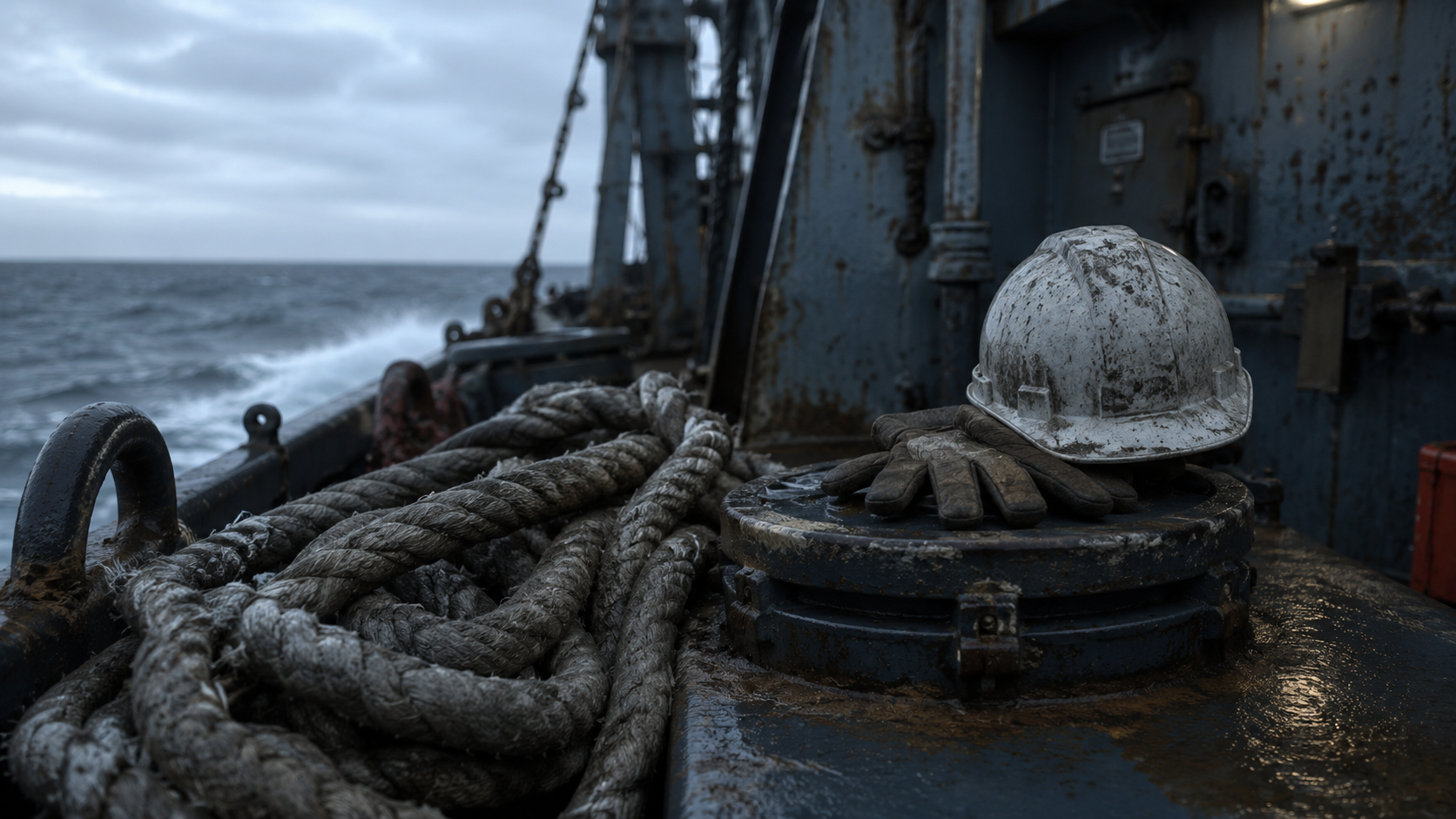
The Jones Act: A Complete Guide to Your Rights as an Injured Seaman
If you were injured working at sea, the Jones Act may give you far stronger rights than ordinary workers’ compensation. Here is exactly where you stand.
In short: The Jones Act (46 U.S.C. § 30104) is a federal law that lets an injured seaman sue their employer for negligence and demand a jury trial. It applies the seaman-protective FELA negligence standard, allows recovery far beyond workers’ compensation, including lost earnings and pain and suffering, and sets a three-year deadline to file.
This article is for informational purposes only and does not constitute legal advice. Every maritime case is unique. Consult a licensed maritime attorney about your specific situation. See our full disclaimer.
Key Facts at a Glance
- The Jones Act is codified at 46 U.S.C. § 30104 and was enacted as part of the Merchant Marine Act of 1920.
- It extends the railroad workers’ Federal Employers’ Liability Act (FELA) negligence standard to seamen, a far more worker-friendly standard than ordinary injury law.
- To qualify, a worker must be a “seaman” with a connection to a vessel in navigation that is substantial in duration and nature, a test set by the Supreme Court in Chandris, Inc. v. Latsis (1995).
- An injured seaman has three potential remedies that can be pursued together: Jones Act negligence, unseaworthiness, and maintenance and cure.
- Employers who willfully refuse to pay maintenance and cure can be liable for punitive damages under Atlantic Sounding Co. v. Townsend (2009).
- The deadline to file a Jones Act claim is generally three years from the date of injury, under 46 U.S.C. § 30106.
If you work on a vessel and you have been hurt on the job, the law that protects you is probably not the workers’ compensation system most people know. It is a federal law called the Jones Act, and for injured maritime workers it is often far more powerful, because it lets you hold a negligent employer accountable in court rather than accept a limited no-fault benefit.
This guide explains the Jones Act in plain language: what it is, who it protects, the three ways you can recover, how much maintenance and cure is worth, when punitive damages apply, what happens if you were partly at fault, and the deadline you cannot afford to miss. Maritime law is genuinely complex, but understanding these fundamentals can be the difference between a fair recovery and walking away with far less than you are owed.
What Is the Jones Act?
The Jones Act is a federal law, codified at 46 U.S.C. § 30104, that gives an injured seaman the right to sue their employer for negligence and to have the case heard by a jury. It was enacted as part of the Merchant Marine Act of 1920.
Its power comes from a specific legal move: the Jones Act extends the Federal Employers’ Liability Act (FELA), the law that protects injured railroad workers, to seamen. FELA uses a far more worker-friendly negligence standard than ordinary personal injury law. Under it, an employer is liable if its negligence played any part, however small, in causing the injury.
This is fundamentally different from workers’ compensation. Most land-based workers receive limited no-fault benefits but generally cannot sue their employer. Seamen can. Because the sea is dangerous and seamen historically had few protections, the law lets them hold a negligent employer accountable in court and recover a much fuller range of damages than workers’ compensation allows.
Who Qualifies as a “Seaman” Under the Jones Act?
To qualify, a worker must be a “seaman”, someone with an employment connection to a vessel in navigation that is substantial in both its duration and its nature. This is the single most important, and most contested, question in most Jones Act cases.
The U.S. Supreme Court set the modern test in Chandris, Inc. v. Latsis (1995). Building on its earlier decision in McDermott International, Inc. v. Wilander (1991), the Court held that a worker is a seaman if two things are true: the worker contributes to the function of a vessel or the accomplishment of its mission, and the worker has a connection to a vessel in navigation (or an identifiable fleet) that is substantial in duration and nature.
Importantly, the job does not need to involve navigation. Deckhands, engineers, mates, captains, cooks, and many other crew members can qualify. What matters is whether you are genuinely part of the vessel’s crew rather than a land-based worker who happens to step aboard.
The “30 Percent” Guideline
Courts often apply a rule of thumb: a worker who spends less than about 30 percent of their working time in service of a vessel in navigation generally does not qualify as a seaman, while a worker at or above 30 percent usually does.
This figure is a guideline, not a rigid cutoff. Courts treat seaman status as a fact-intensive question that looks at the whole picture of a worker’s duties and relationship to the vessel. The percentage mainly helps courts dismiss clearly land-based workers; the real question is whether you are part of the crew.
What Counts as a “Vessel in Navigation”?
The connection must be to a vessel “in navigation”, generally a watercraft that is afloat, in operation, capable of moving, and on navigable waters, even if anchored or docked at the time. A vessel pulled out of the water for major, long-term repairs may not count as “in navigation,” which can affect a worker’s status, as it did for the worker in Chandris whose drydock time was disputed.
Who Usually Qualifies, and Who Does Not
Workers who often qualify include crew on cargo ships, tankers, tugboats and towboats, commercial fishing vessels, offshore supply vessels, and drillships. Workers who often do not qualify, and who instead fall under the Longshore and Harbor Workers’ Compensation Act (LHWCA), include longshoremen, dockworkers, and harbor workers whose duties keep them primarily on land or on fixed platforms.
Not sure whether you qualify as a seaman?
Seaman status is the most contested issue in maritime law, and the most important. A free case review can help you understand where you stand.
What Are the Three Pillars of Maritime Injury Recovery?
An injured seaman usually has three potential avenues of recovery, and they can often be pursued together. Maritime lawyers call these the “three pillars,” and understanding them is key to understanding the full value of a claim.
1. Jones Act Negligence
The first pillar is the Jones Act negligence claim. To recover, a seaman must show they are a seaman, that the employer or a co-worker was negligent, and that the negligence played a part in the injury. The burden is unusually low: courts call it a “featherweight” standard, because the negligence need only have played any part, even the slightest, in causing the harm. Employer negligence can include unsafe conditions, defective or poorly maintained equipment, inadequate training, insufficient crew, or the careless acts of a co-worker.
2. Unseaworthiness
The second pillar comes from general maritime law. A shipowner has an absolute duty to provide a vessel that is reasonably fit for its intended purpose. A vessel is “unseaworthy” if any part of it, equipment, gear, or even an incompetent crew, is not reasonably fit. This is a form of strict liability: if an unseaworthy condition causes an injury, the owner can be liable even without knowing about the problem in advance. It gives seamen a powerful backup when negligence is harder to prove.
3. Maintenance and Cure
The third pillar, maintenance and cure, is the oldest and is available regardless of fault. “Maintenance” is a daily living allowance covering basic expenses while recovering ashore. “Cure” covers medical treatment. A seaman is entitled to maintenance and cure until reaching “maximum medical improvement”, the point at which the condition will not improve further with treatment. Because it does not require proving fault, it provides essential early support while a larger claim develops.
How Do the Three Remedies Compare?
Each remedy has different requirements and covers different things. This comparison shows how they fit together.
| Remedy | Fault required? | What it can cover | Key legal authority |
|---|---|---|---|
| Jones Act negligence | Yes, but only “featherweight” (any part, even slight) | Lost wages, lost earning capacity, pain and suffering, medical costs | 46 U.S.C. § 30104 |
| Unseaworthiness | No, strict liability for an unfit vessel | Same broad damages as negligence; independent backup claim | General maritime law |
| Maintenance and cure | No, owed regardless of fault | Daily living allowance plus medical care until maximum medical improvement | General maritime law; Atlantic Sounding v. Townsend |
How Much Is Maintenance and Cure Worth?
There is no single fixed maintenance rate; it is meant to reflect the seaman’s actual cost of room and board on land. In practice, employers have historically tried to pay very low rates, sometimes $15 to $35 per day, that have little basis in a seaman’s real expenses.
Following the Supreme Court’s 2009 decision in Atlantic Sounding Co. v. Townsend, many employers now pay more realistic rates, and figures in the range of roughly $30 to $75 per day are commonly reported, varying by region and cost of living (Source: maritimelawyer.us). “Cure” separately covers reasonable and necessary medical treatment, with no dollar cap, until maximum medical improvement. If you believe your maintenance rate is too low, it is worth having it reviewed, an inadequate rate can itself expose an employer to additional liability.
What Is Maximum Medical Improvement (MMI)?
Maximum medical improvement, or MMI, is the point at which a seaman’s condition is not expected to improve further with additional treatment. It is a critical milestone, because an employer’s duty to pay maintenance and cure generally ends when the seaman reaches MMI.
This makes MMI a frequent point of dispute. Employers and the doctors they select sometimes declare a seaman at MMI prematurely, in order to cut off benefits while the worker is still recovering. A seaman is not bound by a company doctor’s opinion alone; an independent medical evaluation can support a different conclusion. Reaching MMI also does not erase a separate Jones Act negligence or unseaworthiness claim, those proceed independently of maintenance and cure. If your benefits are being cut off based on an MMI determination you disagree with, it is worth having that decision reviewed.
Can You Get Punitive Damages Under the Jones Act?
Yes, in a specific situation: when an employer willfully and arbitrarily refuses to pay the maintenance and cure a seaman is owed. In Atlantic Sounding Co. v. Townsend, 557 U.S. 404 (2009), the U.S. Supreme Court held that punitive damages are available for the willful withholding of maintenance and cure (Source: supreme.justia.com).
This is a powerful protection. It means an employer who ignores a treating doctor, cuts off benefits prematurely, or simply refuses to pay can face damages well beyond the unpaid amount, along with potential attorney’s fees. Punitive damages are generally not available for ordinary Jones Act negligence itself; their main role is to punish bad-faith denial of maintenance and cure.
What If You Were Partly at Fault?
You can still recover. Maritime law uses “comparative negligence,” meaning your compensation is reduced by your percentage of fault rather than barred entirely. If you are found 20 percent at fault, your recovery is reduced by 20 percent, but you still recover the rest.
This matters because employers and insurers often try to blame the injured worker to avoid paying. Under comparative negligence, the employer must actually prove your share of fault, and even significant fault on your part does not eliminate your claim. Do not assume that being partly responsible means you have no case.
How Is Jones Act Negligence Proven?
Because the causation standard is so favorable, the practical battleground is usually evidence: showing what the employer did or failed to do, and connecting it to the injury. Evidence that often matters includes vessel maintenance and inspection records, safety logs, crew statements, training records, photographs of equipment and conditions, medical records, and expert analysis of how the injury happened. This is one reason acting quickly matters, records can be lost, equipment repaired or altered, and witnesses’ memories fade.
What Are the Most Common Injuries in Jones Act Cases?
Maritime work produces some of the most severe occupational injuries of any industry, because workers operate heavy machinery on moving, slippery platforms far from immediate medical care. The injuries that most often lead to Jones Act claims include:
- Traumatic brain injuries (TBI) from falls, being struck by equipment or swinging loads, or explosions, ranging from concussions to severe, permanent cognitive impairment.
- Spinal cord injuries and back injuries, including herniated discs and fractures of the cervical and lumbar spine, often from falls, heavy lifting, or being thrown across a deck in rough seas. Severe spinal cord damage can cause partial or complete paralysis.
- Crush injuries and amputations from winches, cranes, cables, hatches, and machinery, frequently resulting in the loss of fingers, hands, arms, or legs.
- Fractures and orthopedic injuries to the limbs, ribs, and pelvis from falls and equipment accidents.
- Burns from fires, explosions, steam, hot equipment, and chemical exposure, which can require skin grafts and long rehabilitation.
- Repetitive stress and overuse injuries from the heavy, repetitive physical demands of deck work.
- Occupational hearing loss from prolonged exposure to engine rooms and machinery without adequate protection.
- Drowning and near-drowning, including the lasting effects of oxygen deprivation, from falls overboard.
- Toxic chemical and gas exposure, including hydrogen sulfide and other substances present in cargo and offshore operations.
Because so many of these injuries are catastrophic and permanently affect a worker’s ability to earn a living, the lost-earning-capacity component of a Jones Act claim is frequently substantial.
Who Can Be Held Liable in a Jones Act Case?
The Jones Act claim itself runs against the seaman’s employer, but the employer is not always the only party responsible. Depending on how the injury happened, more than one company may share liability, and identifying every responsible party can significantly affect the total recovery available.
Potentially liable parties can include the employer (for negligence under the Jones Act), the vessel owner (for an unseaworthy condition, even if the owner is not the employer), and third parties such as equipment manufacturers, contractors, or other companies whose negligence or defective products contributed to the injury. Maritime operations frequently involve several companies working on or around the same vessel, so a careful investigation of who controlled what, and whose negligence or defective equipment played a role, is an important part of building a full claim. A third-party claim can sometimes provide an avenue of recovery beyond what the employer alone would owe.
What Can You Recover in a Jones Act Claim?
A successful claim can compensate a far fuller picture of the harm than workers’ compensation, which typically pays only limited medical and wage benefits. Depending on the case, recovery may include:
- Past and future medical expenses
- Past and future lost earnings and lost earning capacity
- Pain and suffering
- Mental anguish
- Disability and disfigurement
- Loss of enjoyment of life
- Maintenance and cure benefits
- Unearned wages through the end of the voyage or contract
The value of any case depends entirely on its facts: the severity of the injury, its impact on the worker’s life and earning ability, and the strength of the evidence. No one can promise a specific result, and past results do not guarantee a similar outcome. But because maritime injuries are often catastrophic and the available damages broad, the stakes are frequently very high.
Injured offshore or at sea?
You may have powerful rights under the Jones Act, but strict deadlines apply. Find out where you stand, at no cost and no obligation.
Jones Act vs. Workers’ Compensation vs. LHWCA: Which Covers You?
Which law applies matters enormously, because the protections differ so much.
- Workers’ compensation covers most land-based employees. It is no-fault with limited benefits and generally bars suing the employer.
- The Jones Act covers seamen, crew with a substantial connection to a vessel in navigation. It allows suing a negligent employer and recovering a broad range of damages.
- The Longshore and Harbor Workers’ Compensation Act (LHWCA) covers many maritime workers who are not seamen, such as longshoremen and dockworkers. It is a federal workers’ compensation system, more generous than many state systems, but still generally a no-fault benefits program rather than a right to sue.
Because these categories overlap and the line between a seaman and a land-based maritime worker is often blurry, this is one of the most important, and most disputed, issues an experienced maritime attorney evaluates.
This table shows which law most often applies to which kind of maritime worker. It is a general guide, not a substitute for a case-specific analysis.
| Type of worker | Law that usually applies | Can sue employer for negligence? |
|---|---|---|
| Deckhand, mate, engineer, or captain on a vessel | Jones Act (seaman) | Yes |
| Commercial fisherman on a fishing vessel | Jones Act (seaman) | Yes |
| Crew on a tug, towboat, drillship, or supply vessel | Jones Act (seaman) | Yes |
| Longshoreman, dockworker, or harbor worker | LHWCA (not a seaman) | Generally no (no-fault benefits) |
| Worker on a fixed oil or gas platform | OCSLA / LHWCA (usually not a seaman) | Generally no (but third-party claims may exist) |
| Seaman killed more than 3 nautical miles offshore | Jones Act + DOHSA | Yes (wrongful death) |
What Is the Deadline to File a Jones Act Claim?
A Jones Act claim generally must be filed within three years from the date the injury occurred or was discovered, under 46 U.S.C. § 30106. Miss that deadline and courts will almost always dismiss the case permanently, no matter how serious the injury or how clear the employer’s fault. This three-year period generally applies to negligence, unseaworthiness, and maintenance and cure alike. Because the deadline is strict and evidence degrades over time, anyone who believes they may have a claim should speak with a qualified maritime attorney as soon as possible.
What Should You Do If You Are Injured Working at Sea?
Every situation is different, but injured maritime workers generally benefit from these steps:
- Report the injury to your supervisor or captain and make sure it is documented.
- Seek medical attention and follow your treatment plan; be cautious about relying only on a company doctor.
- Keep records of the incident, your medical care, your expenses, and all communications.
- Be careful about statements. Employers and insurers may push you to give a recorded statement or sign documents early; understand your rights first.
- Talk to a maritime attorney who handles Jones Act cases specifically, not a general personal injury lawyer.
Frequently Asked Questions About the Jones Act
Who qualifies as a seaman under the Jones Act?
A seaman is a worker who contributes to a vessel’s function and has a connection to a vessel in navigation that is substantial in duration and nature, generally spending at least about 30 percent of their working time aboard. This includes many crew on cargo ships, tugboats, fishing vessels, and offshore supply vessels. It generally excludes land-based workers like longshoremen, who fall under the LHWCA.
What does the Jones Act do?
It gives an injured seaman the right to sue their employer for negligence and demand a jury trial, applying the worker-friendly FELA negligence standard. It allows recovery of a broad range of damages, far beyond workers’ compensation, when an employer’s negligence played any part in the injury.
How much is maintenance and cure per day?
There is no fixed rate; it is meant to reflect the seaman’s actual room-and-board cost on land. Employers historically paid very low rates, but figures of roughly $30 to $75 per day are commonly reported today, varying by region. “Cure” separately covers all reasonable medical care until maximum medical improvement, with no dollar cap. If your rate seems too low, have it reviewed.
Can I get punitive damages under the Jones Act?
Yes, when an employer willfully and arbitrarily refuses to pay the maintenance and cure you are owed. The Supreme Court confirmed this in Atlantic Sounding Co. v. Townsend (2009). Punitive damages are generally not available for ordinary negligence, their main role is to punish bad-faith denial of maintenance and cure.
What if I was partly at fault for my injury?
You can still recover. Maritime law uses comparative negligence, so your compensation is reduced by your percentage of fault rather than barred. If you are 20 percent at fault, your recovery is reduced by 20 percent. The employer must prove your share of fault, so do not assume partial fault ends your claim. Discuss your case at no cost if you are unsure.
How long do I have to file a Jones Act claim?
Generally three years from the date the injury occurred or was discovered, under 46 U.S.C. § 30106. Missing this deadline usually bars the claim permanently, so it is important to act well before it.
Do I need a maritime lawyer, or can a regular personal injury lawyer handle it?
Maritime law is a highly specialized field with its own statutes, doctrines, and procedures. Attorneys who regularly handle Jones Act cases understand vessels, offshore operations, and the tactics maritime employers and insurers use. Choosing a lawyer experienced specifically in maritime injury claims is generally wise.
Can my employer fire me for filing a Jones Act claim?
It is generally unlawful for an employer to retaliate against a seaman for asserting their legal rights. If you believe you have been retaliated against, raise it with a maritime attorney promptly.
Get Help Understanding Your Rights
The Jones Act gives injured seamen some of the strongest protections of any workers in the country, but those protections only help if you understand them and act in time. Seaman status, the featherweight negligence standard, the three pillars, punitive damages for bad-faith denial of maintenance and cure, comparative negligence, and the strict three-year deadline all involve complex legal and factual questions.
If you or someone you love has been seriously injured or killed while working at sea, you do not have to navigate this alone. Request a free, no-obligation case review, and we will help you understand your options and, where appropriate, connect you with an experienced maritime attorney.
References and Sources
- 46 U.S.C. § 30104 – Personal Injury to or Death of Seamen. Legal Information Institute, Cornell Law School. (Source: law.cornell.edu)
- 46 U.S.C. § 30106 – Time Limit on Bringing Maritime Action for Personal Injury or Death. Legal Information Institute, Cornell Law School. (Source: law.cornell.edu)
- Chandris, Inc. v. Latsis, 515 U.S. 347 (1995). U.S. Supreme Court. (Source: supreme.justia.com)
- McDermott International, Inc. v. Wilander, 498 U.S. 337 (1991). U.S. Supreme Court. (Source: supreme.justia.com)
- Atlantic Sounding Co. v. Townsend, 557 U.S. 404 (2009). U.S. Supreme Court. (Source: supreme.justia.com)
- Jones Act. Wex Legal Dictionary, Legal Information Institute, Cornell Law School. (Source: law.cornell.edu)
- Outer Continental Shelf Lands Act, 43 U.S.C. Ch. 29. Legal Information Institute, Cornell Law School. (Source: law.cornell.edu)
- Death on the High Seas Act, 46 U.S.C. Ch. 303. Legal Information Institute, Cornell Law School. (Source: law.cornell.edu)
- Longshore and Harbor Workers’ Compensation Act. U.S. Department of Labor, Office of Workers’ Compensation Programs. (Source: dol.gov)
- Maintenance and Cure rate discussion. (Source: maritimelawyer.us)
Editorial Standards and Review
This article was researched and written in accordance with our Editorial Standards. Every legal explanation and citation is traced to authoritative primary sources, including federal statutes and U.S. Supreme Court decisions. We follow a zero-hallucination policy: where a fact could not be verified against a reliable source, it was not included. Maritime law changes over time, and this guide is reviewed and updated as the law evolves. Last reviewed: May 2026.
This article is for general informational purposes only and does not constitute legal advice. Offshore Injury Help is not a law firm and does not provide legal advice. Reading this article does not create an attorney-client relationship. Every case is different; consult a licensed maritime attorney about your specific situation.