
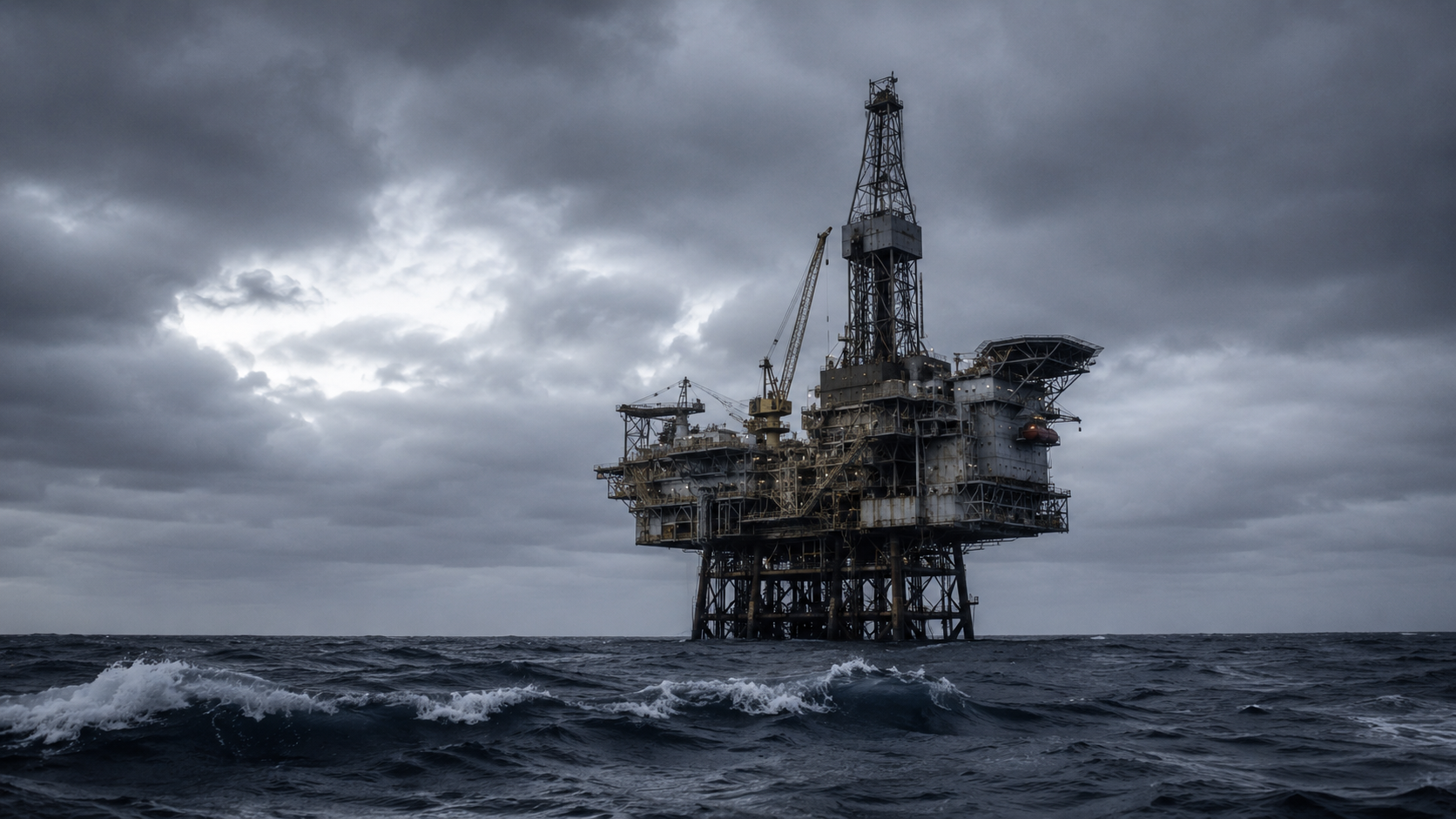
Offshore Oil and Gas Injuries: Understanding Your Legal Rights
If you were hurt on a rig or platform, the law that protects you depends on your job and where you worked. Here is how to find out where you stand.
In short: Which law covers an offshore oil and gas injury depends on your job. Workers with a substantial connection to a vessel (a drillship, supply boat, or tug) are usually covered by the Jones Act and can sue their employer for negligence. Workers on fixed platforms attached to the seabed are usually covered instead by the OCSLA and LHWCA. Getting this classification right determines what you can recover.
This article is for informational purposes only and does not constitute legal advice. Which law applies to an offshore injury is a complex, fact-specific question. Consult a licensed maritime attorney about your situation. See our full disclaimer.
Key Facts at a Glance
- Contrary to a common misconception, not every offshore oil and gas worker is covered by the Jones Act, coverage depends on whether you are a “seaman” with a connection to a vessel in navigation.
- Workers on fixed platforms attached to the seabed are generally covered by the Outer Continental Shelf Lands Act (OCSLA), which extends LHWCA benefits to many offshore workers.
- The OCSLA was enacted in 1953 and applies to the Outer Continental Shelf, the submerged lands generally beyond three nautical miles offshore.
- The U.S. Supreme Court confirmed OCSLA’s “substantial nexus” coverage test in Pacific Operators Offshore v. Valladolid (2012).
- Jones Act seamen can recover lost earnings, pain and suffering, and more; OCSLA/LHWCA generally provides no-fault medical and wage benefits but not pain and suffering from the employer.
- Even when the employer’s liability is limited, an injured worker may have a separate third-party claim against a contractor, equipment manufacturer, or other company whose negligence contributed.
Offshore oil and gas work is among the most dangerous jobs in the country. Workers face heavy equipment, high-pressure systems, fire and explosion hazards, cranes, falls, and long shifts far from shore. When something goes wrong, the injuries are often catastrophic, and the question of who is responsible, and which law applies, becomes critically important.
This guide explains the legal landscape accurately: the different laws that may cover you, how to tell which one applies, the injuries that most often lead to claims, what you can recover, who can be held liable, and the deadlines you cannot afford to miss. Be aware that many websites oversimplify this area by saying flatly that “the Jones Act covers oil rig workers.” That is often wrong, and the truth depends on details that matter enormously to your case.
Why Are Offshore Oil and Gas Cases Legally Complicated?
They are complicated because, unlike most land-based workers who fall under a single state workers’ compensation system, an injured offshore oil and gas worker could be covered by any of several federal laws, each with very different rules and very different compensation. Which one applies turns on what you do, what kind of structure or vessel you work on, and where the injury happened.
Getting this classification right is one of the most important parts of your case. Filing under the wrong law, or missing a deadline because of confusion about which law applies, can cost you the right to recover. This is precisely why experienced legal guidance matters so much in offshore cases, and why the loose “it’s all the Jones Act” framing found on many websites can be harmful.
How Dangerous Is Offshore Oil and Gas Work?
Offshore oil and gas extraction is consistently ranked among the most hazardous industries in the United States. The U.S. Bureau of Labor Statistics tracks fatal and nonfatal injuries in oil and gas extraction, and the sector’s injury and fatality rates run well above the national average for all industries (Source: bls.gov). The reasons are structural: workers operate heavy machinery and high-pressure systems on moving or remote platforms, often on long shifts, surrounded by flammable materials, and far from immediate emergency medical care. When an accident happens offshore, the combination of dangerous forces and distance from help means injuries are frequently severe or fatal. That danger is exactly why federal law gives offshore workers special protections that ordinary land-based workers do not have.
Which Laws Can Cover an Offshore Oil and Gas Injury?
Three legal frameworks cover most offshore oil and gas injuries, and which applies depends mainly on whether you qualify as a seaman.
1. The Jones Act (for “seamen”)
The Jones Act protects “seamen”, workers with a substantial connection to a vessel in navigation. In the oil and gas world, this often includes crew on drillships, vessels, tugboats, and supply boats that support offshore operations. The Jones Act is generally the most powerful option, because it lets an injured worker sue their employer for negligence and recover a broad range of damages, including pain and suffering. Even though a fixed platform itself is usually not a vessel, the Jones Act can still apply to workers on vessels that support drilling and production. You can learn more in our complete guide to the Jones Act.
2. OCSLA and the LHWCA (for fixed-platform workers)
Many offshore oil and gas workers, especially those on fixed platforms attached to the seabed, are not seamen, because a fixed platform is generally not a vessel in navigation. For them, the key laws are the Outer Continental Shelf Lands Act (OCSLA) and the Longshore and Harbor Workers’ Compensation Act (LHWCA). OCSLA, enacted in 1953, extends federal protection to workers on the Outer Continental Shelf (generally beyond three nautical miles offshore), and routes many of them into the LHWCA benefit system. Unlike the Jones Act, an LHWCA claim generally does not require proving negligence; it provides medical care and wage benefits for a qualifying injury, closer to a workers’ compensation system.
3. General Maritime Law and Third-Party Claims
Beyond these, an injured worker may have claims under general maritime law (such as unseaworthiness) or against third parties, companies other than the direct employer whose negligence or defective equipment contributed to the injury. Offshore operations involve many companies (the rig operator, the well owner, contractors, equipment makers), and sometimes the strongest claim is against one of these third parties.
Not sure which law covers your injury?
This is the most important question in many offshore cases, and the hardest to answer alone. A free case review can help.
Which Law Covers Which Offshore Worker?
This table shows which law most often applies to which kind of offshore oil and gas worker. It is a general guide; the actual classification is fact-specific.
| Type of worker | Law that usually applies | Sue employer for negligence? |
|---|---|---|
| Crew on a drillship or drilling vessel | Jones Act (seaman) | Yes |
| Crew on a supply vessel, tug, or crew boat | Jones Act (seaman) | Yes |
| Worker on a jack-up rig (afloat / in navigation) | Often Jones Act (fact-specific) | Often yes |
| Worker on a fixed platform attached to the seabed | OCSLA / LHWCA (not a seaman) | Generally no (third-party claims may exist) |
| Longshoreman or loading/unloading worker | LHWCA | Generally no (no-fault benefits) |
| Worker killed more than 3 nautical miles offshore | Possibly DOHSA (plus other claims) | Wrongful death claim |
How Does the Type of Offshore Structure Affect Your Case?
Because seaman status turns on whether you are connected to a “vessel in navigation,” the type of structure you work on is often decisive. Offshore oil and gas operations use several very different kinds of structures, and they fall on different sides of the legal line.
- Fixed platforms are permanently attached to the seabed. They are generally not vessels, so workers on them are usually covered by OCSLA and the LHWCA rather than the Jones Act.
- Drillships are ships built to drill; their crews are typically Jones Act seamen because a drillship is a vessel in navigation.
- Semi-submersible rigs float and are often moved between locations; courts frequently treat them, and their crews, as vessels and seamen, though the analysis is fact-specific.
- Jack-up rigs float to a location and then lower legs to the seabed. Their status can be contested and depends on the specific facts of the assignment.
- Supply vessels, crew boats, and tugs that service the rigs are vessels, and their crews are generally Jones Act seamen.
This is why two workers on the same offshore project can be covered by entirely different laws: one on a drillship may be a Jones Act seaman, while another on a neighboring fixed platform may be an OCSLA/LHWCA worker. The structure matters as much as the job title.
Why Does “Seaman or Not” Change Everything?
It changes everything because the difference in potential recovery is enormous. If you are a seaman, you can generally sue your employer under the Jones Act for negligence and recover fuller damages, including pain and suffering and lost earning capacity. If you are not a seaman (for example, a fixed-platform worker), you are generally limited to OCSLA/LHWCA benefits, which provide medical care and wage replacement but typically not pain and suffering from your employer, though you may still have third-party claims.
Because the stakes are so high, this classification is frequently disputed. It depends on a detailed look at your actual duties, the structures and vessels you worked on, and how your time was divided. A worker who assumes “I worked on an oil rig, so I must be covered by the Jones Act” can be seriously misled; the honest answer is that it depends, and the details matter.
How Do the Compensation Systems Compare?
The two main systems offer very different things. This comparison shows the core differences.
| Feature | Jones Act (seamen) | OCSLA / LHWCA (non-seamen) |
|---|---|---|
| Must prove fault? | Yes, but “featherweight” standard | No, benefits regardless of fault |
| Pain and suffering from employer? | Yes | Generally no |
| Lost earning capacity? | Yes | Wage-replacement benefits (scheduled) |
| Medical treatment? | Yes (incl. maintenance and cure) | Yes |
| Key authority | 46 U.S.C. § 30104 | 43 U.S.C. Ch. 29 / LHWCA |
What Are the Most Common Offshore Oil and Gas Accidents?
Offshore oil and gas injuries arise from a range of hazards inherent to drilling and production. The most common include:
- Fires and explosions, including blowouts and well-control incidents like the Deepwater Horizon disaster.
- Falls from height and falls on slippery or poorly maintained surfaces.
- Crane, rigging, and heavy-equipment accidents, including being struck by falling objects or swinging loads.
- Equipment failures and defective machinery.
- Toxic chemical and gas exposure, including hydrogen sulfide.
- Transportation accidents, including helicopter and crew-boat incidents to and from the platform.
- Injuries from fatigue caused by long shifts and inadequate crewing.
Many of these trace back to preventable causes: inadequate safety procedures, poor maintenance, defective equipment, insufficient training, or pressure to work quickly. Where negligence or an unseaworthy vessel contributed, an injured worker may have a strong claim.
What Injuries Do Offshore Oil and Gas Workers Suffer?
The injuries are often catastrophic and life-altering. They commonly include traumatic brain injuries from falls and explosions; spinal cord injuries and severe back injuries that can cause partial or complete paralysis; crush injuries and amputations from machinery, cranes, and cables; severe burns from fires, explosions, and chemical contact, often requiring skin grafts; broken bones and orthopedic damage; respiratory injuries and chemical poisoning from toxic exposure such as hydrogen sulfide; and drowning or near-drowning from falls overboard. Because these injuries frequently end or permanently limit a worker’s career, the lost-earning-capacity component of an offshore claim is often very large.
What Did the Deepwater Horizon Disaster Change?
The 2010 Deepwater Horizon blowout in the Gulf of Mexico killed 11 workers and remains the defining offshore oil disaster in U.S. history. Beyond the environmental catastrophe, it reshaped offshore safety regulation. In its aftermath, federal oversight of offshore drilling was restructured, and today the Bureau of Safety and Environmental Enforcement (BSEE) regulates the safety of offshore oil and gas operations on the Outer Continental Shelf (Source: bsee.gov).
For injured workers, this regulatory framework matters. Violations of safety regulations, inadequate well-control procedures, and failures to follow established offshore safety standards can all be evidence of negligence in a Jones Act or third-party claim. When an operator or contractor cut corners on safety, that failure often becomes central to proving the case.
How Is an Offshore Oil and Gas Injury Claim Proven?
Because so much can turn on negligence and on which company was responsible, evidence is the practical battleground. The proof that often matters includes equipment maintenance and inspection records, safety meeting and training logs, the platform or vessel’s incident reports, witness statements from crewmates, photographs of the scene and equipment, BSEE or Coast Guard incident findings, and expert analysis of how the accident occurred. Much of this evidence is controlled by the employer or operator, and some of it can disappear or be altered after an incident. That is one reason acting quickly, and getting a knowledgeable advocate involved early, can be so important in offshore cases.
Who Can Be Held Liable for an Offshore Oil and Gas Injury?
More than one company may share responsibility, and identifying every liable party can significantly increase the compensation available. Potentially liable parties include the employer (for negligence, if you are a Jones Act seaman), the vessel owner (for an unseaworthy condition), and third parties such as the rig operator, well owner, contractors, or equipment manufacturers whose negligence or defective products contributed to the injury. Because offshore operations involve so many companies working around the same site, a careful investigation of who controlled what is essential. A third-party claim can sometimes provide recovery, including pain and suffering, even when the worker’s direct employer is shielded by the no-fault LHWCA system.
What Can You Recover After an Offshore Oil and Gas Injury?
What you can recover depends heavily on which law applies:
- Under the Jones Act and general maritime law: medical expenses, lost past and future wages, lost earning capacity, pain and suffering, disability and disfigurement, and maintenance and cure.
- Under OCSLA/LHWCA: medical treatment and wage-replacement benefits for temporary or permanent disability, generally without proving fault, but typically without pain and suffering from the employer.
- Against third parties: where another company’s negligence or defective equipment caused the injury, a separate claim may allow a fuller range of damages.
No one can promise a specific result, and every case turns on its facts. But because offshore injuries are often severe and multiple avenues of recovery may exist, the stakes are frequently very high.
Injured on an oil rig or platform?
Find out which law protects you and what your options are, at no cost and no obligation.
What If You Were Injured as a Contractor?
A large share of offshore oil and gas work is done by contractors and subcontractors rather than direct employees of the rig operator, and this is a frequent source of confusion. Being a contractor does not strip you of your rights. If you are a contractor with a substantial connection to a vessel, you can still be a Jones Act seaman and sue your employer for negligence. If you are a contractor on a fixed platform, you may be covered by OCSLA and the LHWCA. And importantly, as a contractor you may have especially strong third-party claims, because the company that injured you (the rig operator, another contractor, or an equipment maker) is often not your direct employer and therefore is not shielded by any no-fault benefit system. If you were hurt as an offshore contractor, report the incident to both your employer and the rig operator, and have your situation evaluated; the multi-company structure of offshore work often creates more than one avenue of recovery.
Can You Still Recover If You Were Partly at Fault?
Often, yes. For Jones Act and general maritime claims, maritime law uses comparative negligence, meaning your recovery is reduced by your percentage of fault rather than barred entirely. If you are found 25 percent at fault, your recovery is reduced by 25 percent, but you still recover the rest. Employers and insurers frequently try to blame the injured worker to reduce what they pay, but under comparative negligence they must actually prove your share of fault. Do not assume that being partly responsible, or being told the accident was your fault, means you have no case.
What Should You Do After an Offshore Oil and Gas Injury?
Every situation is different, but injured offshore workers generally benefit from these steps:
- Get medical attention immediately. Your health comes first, and prompt treatment also documents the injury.
- Report the accident to your supervisor, and if you are a contractor, to the rig operator as well, and make sure it is documented.
- Preserve evidence. Photograph the scene, the equipment, your injuries, and the conditions if you safely can.
- Be careful about recorded statements. Employers and insurers may ask you to give a statement or sign documents early; understand your rights first.
- Consult a maritime attorney who handles offshore oil and gas cases, given how much turns on which law applies.
How Long Does an Offshore Oil and Gas Claim Take?
There is no single timeline, because it depends on the severity of the injury, which law applies, whether the case settles or goes to litigation, and how many parties are involved. Some maintenance and cure or LHWCA benefit disputes resolve relatively quickly, while a contested Jones Act or third-party negligence case involving serious injuries can take many months or longer to fully resolve, particularly if it proceeds toward trial. One important principle: an injured worker generally should not rush to settle before the full extent of the injury is understood, especially before reaching maximum medical improvement, because a settlement typically closes the claim for good. An experienced maritime attorney can help weigh the value of resolving a claim sooner against waiting until the long-term medical picture and lost-earning-capacity are clear.
What Are the Deadlines for an Offshore Oil and Gas Claim?
Different laws carry different deadlines, which is another reason the classification matters. Jones Act and general maritime claims generally must be filed within three years. LHWCA claims have their own, often much shorter, notice and filing requirements, typically requiring written notice of the injury within a limited period. Because the deadlines vary and missing one can permanently bar your claim, it is important to speak with a qualified maritime attorney as soon as possible after an offshore injury.
Frequently Asked Questions
Are oil rig workers covered by the Jones Act?
It depends on the structure and your duties. Workers with a substantial connection to a vessel, such as a drillship or supply vessel, may be Jones Act seamen. Workers on fixed platforms attached to the seabed usually are not seamen, and are typically covered instead by OCSLA and the LHWCA. The common claim that “the Jones Act covers all oil rig workers” is an oversimplification; the classification is fact-specific and often disputed.
What law applies to an offshore oil rig injury?
Usually one of three: the Jones Act (for seamen on vessels), OCSLA together with the LHWCA (for fixed-platform and many other non-seaman offshore workers), or general maritime law and third-party claims. Which applies depends on whether you are a seaman, the type of structure, and where the injury occurred.
Can I sue someone other than my employer?
Possibly. Offshore operations involve many companies, rig operators, well owners, contractors, and equipment manufacturers. If a third party’s negligence or defective equipment contributed to your injury, you may have a claim against that company in addition to any benefits from your employer. This can be especially important for fixed-platform workers whose employer is shielded by no-fault LHWCA benefits. Discuss your case at no cost to learn whether a third-party claim exists.
What is the difference between the Jones Act and OCSLA?
The Jones Act lets an injured seaman sue their employer for negligence and recover a broad range of damages including pain and suffering. OCSLA extends LHWCA workers’ compensation-style benefits to many offshore workers who are not seamen; these benefits generally do not require proving fault but are more limited and typically exclude pain and suffering from the employer.
What are common oil rig accident injuries?
Common injuries include traumatic brain injuries, spinal cord and back injuries, crush injuries and amputations, severe burns, broken bones, respiratory injury from toxic exposure, and drowning. Because these injuries are often catastrophic and career-ending, the lost-earning-capacity portion of a claim can be substantial.
How long do I have to file an offshore oil and gas injury claim?
It depends on the law that applies. Jones Act and general maritime claims generally have a three-year deadline, while LHWCA claims have their own, often shorter, notice and filing requirements. Because deadlines vary and missing one can bar your claim, consult an attorney quickly.
Do I have to prove my employer was at fault?
Under the Jones Act, you must show employer negligence, but the standard is very low (negligence that played any part, even the slightest). Under OCSLA/LHWCA, you generally do not need to prove fault to receive benefits. The right approach depends on which law covers you.
Get Help Understanding Your Rights
Offshore oil and gas injury cases are among the most legally complex in all of maritime law, precisely because so much depends on which law applies to your specific situation. The good news is that injured offshore workers often have powerful options, sometimes more than one, but only if those options are identified and pursued correctly and on time.
If you or someone you love has been seriously injured or killed in an offshore oil and gas accident, request a free, no-obligation case review. We will help you understand your situation and, where appropriate, connect you with an experienced maritime attorney.
References and Sources
- Outer Continental Shelf Lands Act, 43 U.S.C. Ch. 29. Legal Information Institute, Cornell Law School. (Source: law.cornell.edu)
- 46 U.S.C. § 30104 – Personal Injury to or Death of Seamen (Jones Act). Legal Information Institute, Cornell Law School. (Source: law.cornell.edu)
- Longshore and Harbor Workers’ Compensation Act. U.S. Department of Labor, Office of Workers’ Compensation Programs. (Source: dol.gov)
- Pacific Operators Offshore, LLP v. Valladolid, 565 U.S. 207 (2012). U.S. Supreme Court. (Source: supreme.justia.com)
- Chandris, Inc. v. Latsis, 515 U.S. 347 (1995). U.S. Supreme Court. (Source: supreme.justia.com)
- Death on the High Seas Act, 46 U.S.C. Ch. 303. Legal Information Institute, Cornell Law School. (Source: law.cornell.edu)
- Bureau of Safety and Environmental Enforcement (offshore oil and gas safety regulation). (Source: bsee.gov)
- U.S. Bureau of Labor Statistics, Injuries, Illnesses, and Fatalities. (Source: bls.gov)
Editorial Standards and Review
This article was researched and written in accordance with our Editorial Standards. Every legal explanation and citation is traced to authoritative primary sources, including federal statutes, the U.S. Department of Labor, and U.S. Supreme Court decisions. We follow a zero-hallucination policy: where a fact could not be verified against a reliable source, it was not included. Maritime law changes over time, and this guide is reviewed and updated as the law evolves. Last reviewed: May 2026.
This article is for general informational purposes only and does not constitute legal advice. Offshore Injury Help is not a law firm and does not provide legal advice. Reading this article does not create an attorney-client relationship. Every case is different; consult a licensed maritime attorney about your specific situation.



test