Jones Act or Longshore Act? Coverage for Offshore Platform Workers
For an offshore worker hurt on or around a platform, the first fight is rarely about how the accident happened. It is about which law governs your claim, because that single answer can be the difference between full damages and a capped benefit check.
In short: Whether the Jones Act or the Longshore Act applies turns on whether you are a “seaman.” Crew with a substantial connection to a vessel in navigation fall under the Jones Act. Workers on fixed platforms are generally not seamen, so they recover under the Longshore Act as extended by OCSLA. The two systems are mutually exclusive.
This article is for general informational purposes only and does not constitute legal advice. Coverage turns on the specific facts of your job and your injury, so consult a licensed maritime attorney about your situation.
Key Facts at a Glance
- The Jones Act gives seamen a fault-based negligence claim against their employer (Source: Cornell LII, 46 U.S.C. § 30104).
- The Longshore and Harbor Workers’ Compensation Act is a no-fault benefits system for maritime workers who are not seamen (Source: Cornell LII, 33 U.S.C. § 901).
- OCSLA extends Longshore Act coverage to injuries occurring as a result of operations on the Outer Continental Shelf (Source: Cornell LII, 43 U.S.C. § 1333(b)).
- In Pacific Operators Offshore v. Valladolid, the Supreme Court held that OCSLA coverage requires a “substantial nexus” between the injury and the employer’s shelf operations (Source: Justia, 565 U.S. 207).
- A fixed platform bolted to the seabed is not a vessel, so platform workers rarely qualify as Jones Act seamen (Source: Cornell LII, 1 U.S.C. § 3).
- The Jones Act and the Longshore Act are mutually exclusive; a worker recovers under one, not both (Source: U.S. DOL, OWCP).
- The Jones Act carries a three-year statute of limitations (Source: Cornell LII, 46 U.S.C. § 30106).
Why the Right Statute Is Worth Fighting For
Offshore energy work is unforgiving. When something goes wrong on a rig or platform, the injuries are often catastrophic, and the recovery a worker is owed depends entirely on a legal label assigned to the job. Employers and their insurers understand this, which is why seaman status is so frequently disputed: the Longshore route generally costs them far less than a Jones Act lawsuit.
Transportation incidents, the category that captures most vessel and offshore casualties, were the most frequent fatal workplace event in 2023, accounting for 36.8% of all 5,283 work fatalities tracked by the federal government (Source: BLS, Census of Fatal Occupational Injuries 2023). For survivors, the stakes of the Jones Act versus Longshore question are measured in hundreds of thousands of dollars.
This guide explains exactly how courts sort offshore workers between the two systems, what OCSLA does for platform crews, how the benefits differ, and where a worker who splits time between platforms and vessels can end up. It connects three areas we cover in depth: the Jones Act, offshore oil and gas injuries, and the Longshore Act.
Not sure which law covers your offshore injury?
What Determines Whether the Jones Act or the Longshore Act Applies?
The dividing line is seaman status. If you are a seaman, the Jones Act governs and you can sue your employer for negligence; if you are not, the Longshore Act provides no-fault benefits instead. To be a seaman, your duties must contribute to a vessel in navigation and your connection to that vessel, or to an identifiable fleet, must be substantial in both duration and nature, the test the Supreme Court set in Chandris v. Latsis (Source: Justia, 515 U.S. 347). Courts decide status by the actual nature of the work, not job title, and the two systems are mutually exclusive: you recover under one, never both (Source: U.S. DOL, OWCP). Our Jones Act guide covers the seaman test in detail.
Are Offshore Platform Workers Covered by the Jones Act?
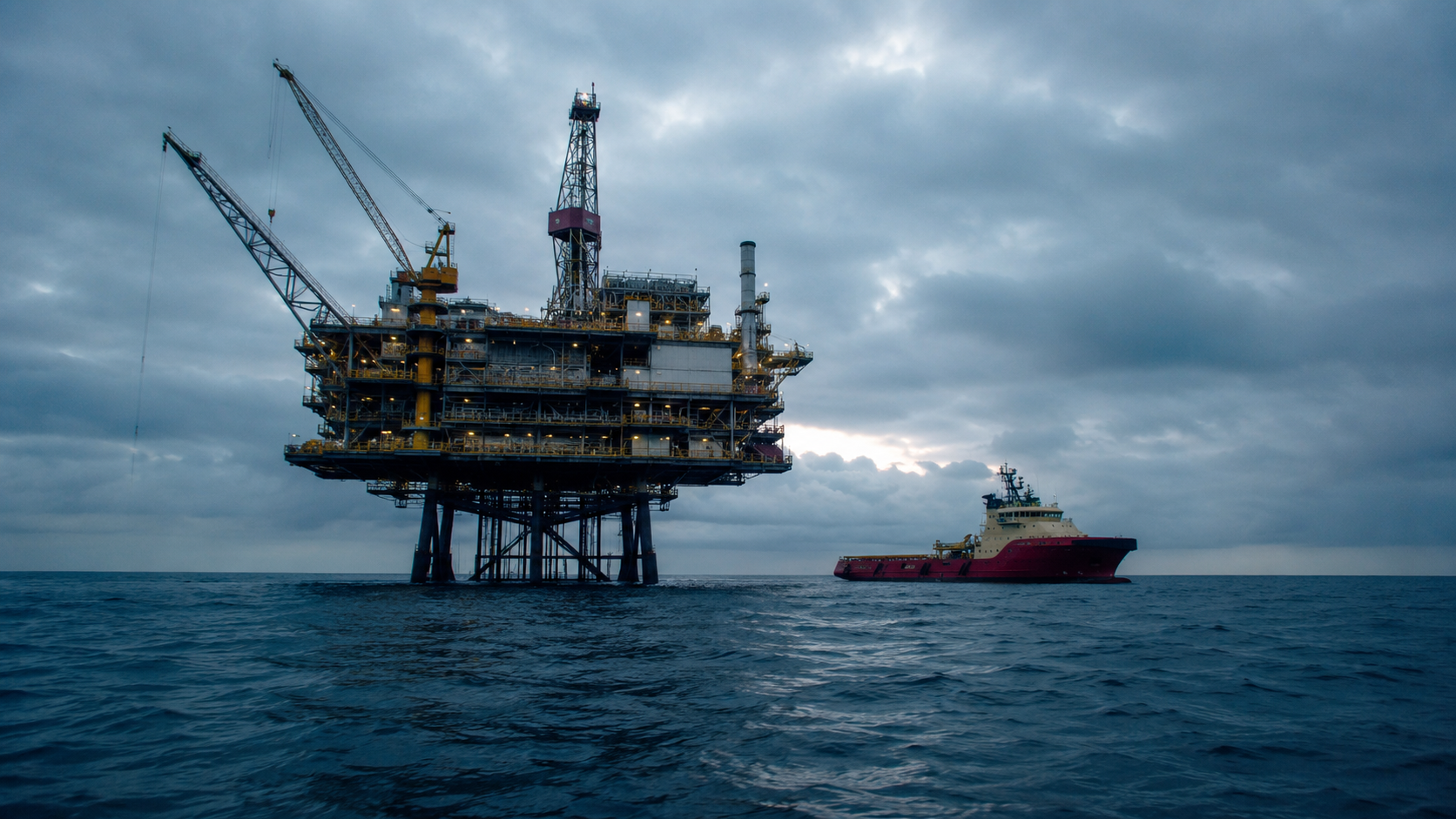
Usually not. A fixed platform attached to the seabed is treated as an artificial island rather than a vessel, and the Jones Act protects crew of vessels in navigation, so platform workers rarely meet the seaman test (Source: Cornell LII, 1 U.S.C. § 3). The exception is workers on mobile units. Drillships, semi-submersibles, and jack-up rigs while afloat can be vessels in navigation, so their regular crews may qualify as seamen. The practical rule offshore is straightforward: if your structure floats and moves under its own power or under tow, Jones Act coverage is in play; if it is permanently fixed to the bottom, you are almost certainly in the Longshore and OCSLA system instead.
What Is OCSLA, and How Does It Cover Platform Workers?
The Outer Continental Shelf Lands Act is the bridge that gives fixed-platform workers a remedy. OCSLA extends the Longshore Act to disability or death resulting from operations on the Outer Continental Shelf to explore for, develop, or transport the seabed’s natural resources (Source: Cornell LII, 43 U.S.C. § 1333(b)). It does not create its own benefit schedule; it borrows the Longshore Act’s. So a roughneck, driller, or crane operator hurt on a Gulf of Mexico platform typically files for Longshore benefits through their employer, paid regardless of fault. Because the Outer Continental Shelf begins beyond state waters, roughly three nautical miles offshore, the great majority of deepwater oil and gas platforms fall squarely inside OCSLA’s reach.
What Is the Valladolid “Substantial Nexus” Test?
The substantial-nexus test decides whether an injury counts as resulting from shelf operations, even when the worker is hurt somewhere else. In Pacific Operators Offshore v. Valladolid, a worker who spent most of his time on an offshore platform was killed in a forklift accident at an onshore facility. The Supreme Court held that OCSLA coverage reaches an injury when the worker shows a “substantial nexus,” a significant causal link, between the injury and the employer’s extractive operations on the shelf (Source: Justia, 565 U.S. 207). The Court rejected a rigid rule that the injury had to happen on the platform itself (Source: case summary). For platform crews, this broadens coverage beyond the literal footprint of the rig.
Does OCSLA Borrow State Law for Platform Claims?
Yes, and it can quietly change the deadline and the rules that apply to your claim. OCSLA does not create its own freestanding body of injury law; instead, it adopts the law of the adjacent state as surrogate federal law for the Outer Continental Shelf. For a fixed platform off the Texas coast, that means Texas law governs most claims, including Texas’s two-year statute of limitations and its workers’ compensation rules; off Louisiana, Louisiana law applies (Source: Amaro Law Firm). This is a critical and often-missed point, because a platform worker who assumes the maritime three-year deadline applies could lose the claim under a shorter state limitations period. Which state’s law attaches depends on the platform’s location, so identifying the adjacent state early is part of protecting the claim.
How Do the Benefits Compare?
The gap between the two systems is large. The table below lays out what each path provides. In broad terms, the Jones Act is a fault-based lawsuit that can recover full damages, including lost earning capacity and pain and suffering, while the Longshore Act pays no-fault benefits at roughly two-thirds of the worker’s average weekly wage with no recovery for pain and suffering from the employer (Source: Lambert Zainey).
| Feature | Jones Act (seaman) | Longshore Act via OCSLA (platform worker) |
|---|---|---|
| Who it covers | Crew with a substantial vessel connection | Fixed-platform and other non-seaman OCS workers (§ 1333(b)) |
| Fault required? | Yes, employer negligence (§ 30104) | No, benefits are no-fault |
| Wage benefit | Full lost earnings as damages | About two-thirds of average weekly wage, capped (DOL) |
| Pain and suffering | Yes | No, not against the employer (source) |
| Medical care | Yes, through the claim | Yes, full reasonable and necessary (33 U.S.C. § 901) |
| Third-party lawsuit | Yes | Yes, including vessel negligence (§ 905(b)) |
Can a Platform Worker Sue a Third Party?
Yes. Longshore and OCSLA benefits are no-fault and come from your employer, but they do not bar a separate lawsuit against a negligent third party. If a vessel’s negligence causes the injury, Section 905(b) of the Longshore Act preserves a direct claim against the vessel owner (Source: Cornell LII, 33 U.S.C. § 905(b)). On the shelf, OCSLA likewise allows third-party actions against equipment manufacturers, contractors, or other companies whose fault contributed to the accident. These third-party claims can recover the tort damages the no-fault benefit schedule leaves out, including pain and suffering, which is why identifying every responsible party early matters as much as the benefits filing itself.
A platform injury can involve both a benefits claim and a third-party lawsuit. Both deserve a close look.
What If a Worker Splits Time Between Platforms and Vessels?
This is where status fights get hardest. A worker who divides time between fixed platforms and vessels may be pushed toward Longshore by an employer even when the vessel time is substantial. Courts return to the Chandris test, asking whether the connection to vessels in navigation is substantial in both duration and nature across the worker’s overall employment (Source: Justia, Chandris v. Latsis). Time on fixed platforms generally does not count toward the 30% vessel guideline, because a platform is not a vessel. The result is fact-specific, and two workers with similar schedules can be classified differently, which is exactly why an independent review of your work history is worth getting before accepting any classification.
What Are the Filing Deadlines?
The deadlines differ by system, and missing one can end an otherwise strong claim. A Jones Act seaman generally has three years from the date of injury to sue (Source: Cornell LII, 46 U.S.C. § 30106). The Longshore Act, which governs OCSLA platform claims, moves faster: it generally requires written notice of injury within 30 days and a formal claim within one year, deadlines administered by the Department of Labor (Source: U.S. DOL, OWCP). Because the correct deadline depends on the same status question this article addresses, the safe assumption is the shortest one: report the injury in writing immediately and preserve every record.
Frequently Asked Questions
Jones Act or Longshore Act, which one covers me?
It depends on whether you are a seaman. Crew with a substantial connection to a vessel in navigation fall under the Jones Act; non-seaman maritime workers, including most fixed-platform crews, fall under the Longshore Act, often by way of OCSLA (Source: U.S. DOL, OWCP). The two are mutually exclusive.
Are oil rig workers covered by the Jones Act?
It depends on the rig. Workers on floating units such as drillships and semi-submersibles may be Jones Act seamen, while workers on fixed platforms attached to the seabed usually are not and instead recover under the Longshore Act as extended by OCSLA (Source: Cornell LII, 43 U.S.C. § 1333(b)).
What does OCSLA cover?
OCSLA extends Longshore Act benefits to workers injured as a result of natural-resource operations on the Outer Continental Shelf, the federal waters beyond the state line roughly three nautical miles out (Source: Cornell LII, 43 U.S.C. § 1333(b)). It adopts the Longshore Act’s benefit schedule rather than creating its own.
What is the substantial nexus test?
It is the standard from Pacific Operators Offshore v. Valladolid for OCSLA coverage: the worker must show a significant causal link between the injury and the employer’s extractive operations on the shelf, even if the injury happened off the platform (Source: Justia, 565 U.S. 207).
Do Longshore benefits pay for pain and suffering?
No. Longshore and OCSLA benefits are no-fault and cover medical care and about two-thirds of lost wages, but not pain and suffering from the employer (Source: Lambert Zainey). Those damages may still be recoverable through a third-party lawsuit. To map both paths, get a free case review.
Can I receive both Jones Act and Longshore benefits?
No. The systems are mutually exclusive; you qualify under one based on your status, never both (Source: U.S. DOL, OWCP). Employers sometimes assert the lower-cost classification, so the status determination is often contested.
How long do I have to file?
A Jones Act seaman generally has three years to sue (Source: Cornell LII, 46 U.S.C. § 30106). A Longshore or OCSLA claim generally requires notice within 30 days and a claim within one year (Source: U.S. DOL, OWCP).
The Bottom Line
For offshore platform workers, the Jones Act versus Longshore Act question is not a technicality; it sets the ceiling on your recovery. Seamen sue under the Jones Act for full damages. Platform crews who are not seamen recover no-fault Longshore benefits through OCSLA, and may add a third-party lawsuit for the damages those benefits leave out. Because the classification is fact-specific and routinely disputed, an early, independent review of your job duties and the structure you worked on is the most valuable step you can take.
Find out which law covers your offshore injury, and everything you may be owed.
References and Sources
- Jones Act, 46 U.S.C. § 30104: Cornell Legal Information Institute
- Maritime statute of limitations, 46 U.S.C. § 30106: Cornell Legal Information Institute
- Longshore and Harbor Workers’ Compensation Act, 33 U.S.C. § 901: Cornell Legal Information Institute
- Vessel negligence claims, 33 U.S.C. § 905(b): Cornell Legal Information Institute
- Outer Continental Shelf Lands Act, 43 U.S.C. § 1333(b): Cornell Legal Information Institute
- Pacific Operators Offshore, LLP v. Valladolid, 565 U.S. 207 (2012): Justia U.S. Supreme Court Center
- Chandris, Inc. v. Latsis, 515 U.S. 347 (1995): Justia U.S. Supreme Court Center
- Definition of “vessel,” 1 U.S.C. § 3: Cornell Legal Information Institute
- Division of Longshore and Harbor Workers’ Compensation: U.S. Department of Labor, OWCP
- National Census of Fatal Occupational Injuries 2023: U.S. Bureau of Labor Statistics
- Pacific Operators Offshore v. Valladolid (case summary): Wikipedia
- Jones Act vs. LHWCA, benefit comparison: Lambert Zainey
- OCSLA adopts adjacent-state law (Texas two-year limitations): Amaro Law Firm
Editorial Standards and Review
This article follows a zero-hallucination policy. Every statute, case holding, and statistic above is traced to a primary or authoritative source and linked inline. Legal authorities are cited to the U.S. Code, U.S. Supreme Court opinions, and the Department of Labor; statistics are cited to the Bureau of Labor Statistics. OffshoreInjuryHelp.com is an informational resource, not a law firm, and does not provide legal representation; it connects injured maritime workers and their families with experienced maritime attorneys. Learn more on our Editorial Standards page. Last reviewed: June 1, 2026.