Injured Cruise Ship Crew: Your Rights, Foreign Flags, and Arbitration Clauses
If you crew a cruise ship and get hurt on the job, you may be told your contract sends you to arbitration in another country under another nation’s law. That is often true. It does not mean you have no rights.
In short: Injured cruise ship crew keep real maritime rights, including maintenance and cure and, for those who qualify, Jones Act and unseaworthiness claims, even on foreign-flagged ships. The catch is choice of law and arbitration: cruise contracts often require foreign arbitration under foreign law, and U.S. courts usually enforce those clauses, so the value of your claim can hinge on which law applies.
This article is for general informational purposes only and does not constitute legal advice. Crew rights depend on your contract, the vessel’s flag, and the facts, so consult a licensed maritime attorney about your situation.
Key Facts at a Glance
- A cruise line owes injured crew a non-delegable duty of maintenance and cure, daily living costs and medical care, regardless of fault (Source: Holzberg Legal).
- Crew who qualify as seamen can bring Jones Act negligence and unseaworthiness claims (Source: Cornell LII, 46 U.S.C. § 30104).
- Whether U.S. or foreign law applies is decided by the Lauritzen-Rhoditis factors (Source: Justia, Lauritzen v. Larsen).
- The law of the flag is of “cardinal importance,” but a shipowner’s U.S. base of operations can override it (Source: Justia, Hellenic Lines v. Rhoditis).
- Most cruise lines register ships under foreign “flags of convenience” with lenient regulation (Source: Vucci Law Group).
- U.S. courts routinely compel foreign arbitration of crew claims under the New York Convention (Source: Cornell LII, 9 U.S.C. ch. 2).
- The deadline to bring a Jones Act claim is generally three years (Source: Cornell LII, 46 U.S.C. § 30106).
Why Cruise Crew Cases Are Different
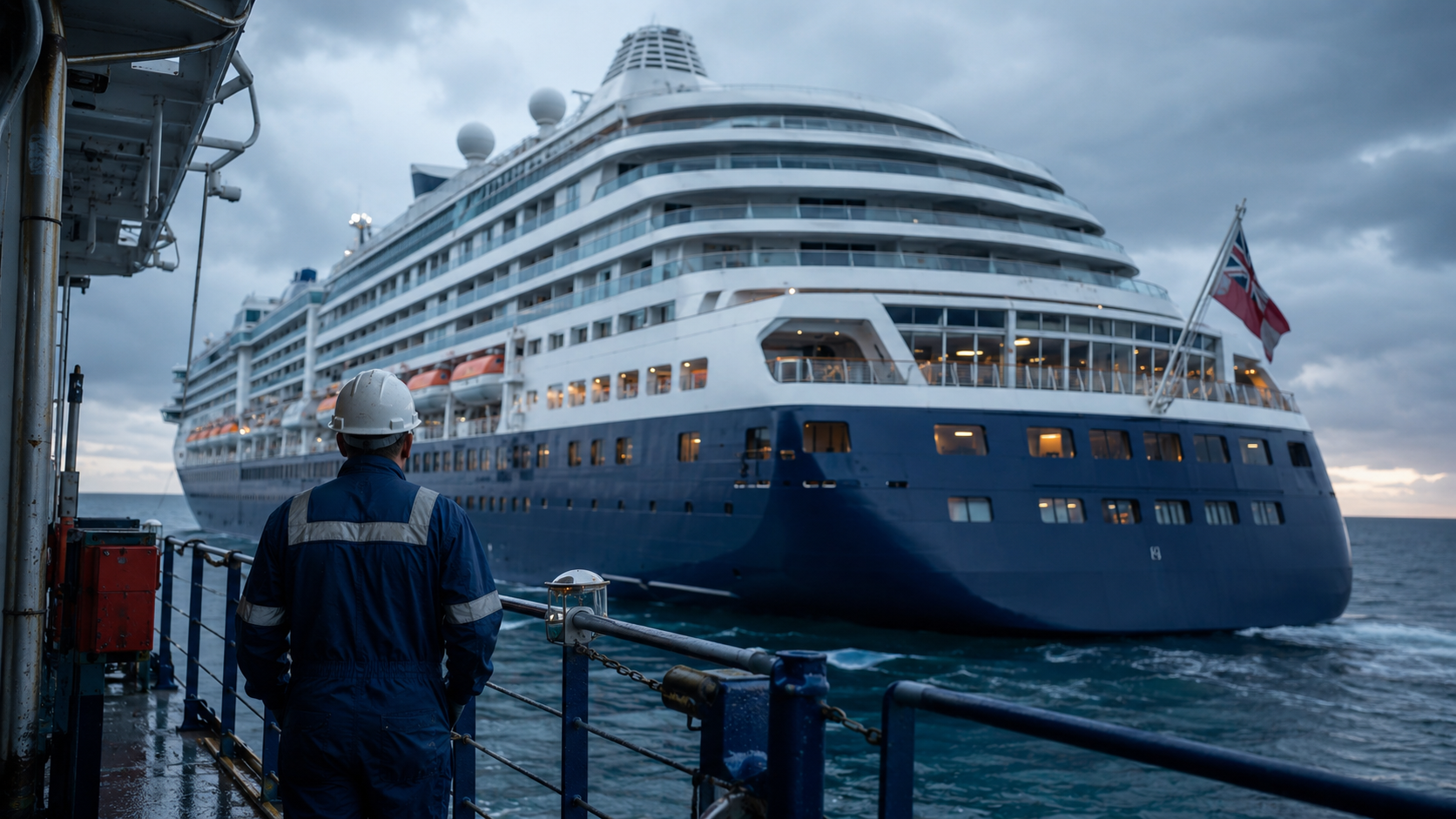
Cruise ships are floating workplaces staffed by crews drawn from around the world, India, the Philippines, Latin America, Eastern Europe, working under contracts written by the cruise line. The vast majority of ships sailing from U.S. ports fly foreign flags, registered in countries chosen for light regulation, a practice known as flying a flag of convenience (Source: Vucci Law Group). That single fact shapes everything that follows, because it puts the question of which nation’s law governs your injury at the center of the case.
The result is a system that can feel stacked against the worker: real rights on paper, filtered through contracts that push disputes into foreign arbitration. Understanding both halves, the rights you hold and the procedural hurdles in front of them, is what lets injured crew make informed decisions instead of signing them away.
Hurt working aboard a cruise ship and facing an arbitration clause?
What Rights Do Injured Cruise Ship Crew Have?
Crew hold powerful maritime rights regardless of nationality. Every injured crew member in the service of a vessel is owed maintenance and cure, a no-fault duty to pay daily living costs and medical care until maximum medical improvement, and that duty cannot be contracted away to a third party (Source: Holzberg Legal). Crew who qualify as seamen can also bring a Jones Act negligence claim and a general-maritime unseaworthiness claim (Source: Cornell LII, 46 U.S.C. § 30104). The threshold question for the Jones Act, as with any seaman, is whether the worker has a substantial connection to a vessel in navigation, which crew almost always do; our cruise ship crew guide covers those rights in depth.
Does the Jones Act Apply to Foreign Cruise Ship Crew?
Sometimes, and it depends on choice of law rather than citizenship. A foreign national can invoke the Jones Act when U.S. law governs the case, and a U.S. citizen does not automatically get it if the connections point to a foreign nation. The decision runs through the Lauritzen-Rhoditis factors discussed below (Source: BOATLAW). Because most cruise ships are foreign-flagged, the law of the flag often points away from the United States, which is one reason cruise lines build their contracts around foreign law and arbitration. Even so, a shipowner’s heavy U.S. operations can pull the case back toward American law.
What Is a “Flag of Convenience,” and Why Does It Matter?
A flag of convenience is a foreign registration a shipowner chooses for favorable regulation and lower costs, even when the company operates largely from the United States. Cruise lines commonly register vessels in countries such as the Bahamas, Panama, or Liberia (Source: Vucci Law Group). The flag matters because, under maritime choice-of-law rules, the law of the flag carries great weight in deciding which nation’s law governs an injury claim. That can mean a less protective legal regime, lower compensation, and a foreign forum, unless other factors, especially where the company actually runs its business, shift the balance back toward U.S. law.
How Do Courts Decide Which Country’s Law Applies?
Courts apply the eight Lauritzen-Rhoditis factors, drawn from a Supreme Court trilogy, to choose between U.S. and foreign law. The factors are the place of the wrongful act, the law of the flag, the allegiance or domicile of the injured worker, the allegiance of the shipowner, the place of the contract, the inaccessibility of a foreign forum, the law of the forum, and the shipowner’s base of operations (Source: McGlinchey / MBLB). They are not weighed equally. The law of the flag is of “cardinal importance” (Source: Justia, Lauritzen v. Larsen), yet the Supreme Court in Hellenic Lines v. Rhoditis applied U.S. law to a foreign-flagged ship because the owner’s base of operations was in the United States (Source: Justia, 398 U.S. 306).
What Does Court Versus Arbitration Actually Change?
The forum can change the size and shape of your recovery. The table below contrasts a claim heard in a U.S. court under American law with one pushed into foreign arbitration under a crew contract.
| Feature | U.S. court (if U.S. law applies) | Foreign arbitration (per contract) |
|---|---|---|
| Governing law | U.S. maritime law, including the Jones Act | Often foreign flag-state law (source) |
| Right to a jury | Yes, the Jones Act grants it | No jury (source) |
| Pain and suffering / punitive | Available under U.S. law | Often limited or unavailable (source) |
| Forum | U.S. court near the home port | AAA or ICDR, sometimes abroad (source) |
| Typical outcome | Higher recoveries | Tends to favor the employer (source) |
| Speed | Slower | Faster (source) |
Can a Cruise Line Force You Into Arbitration?
Often, yes. U.S. courts routinely enforce arbitration clauses in seafarer contracts under the New York Convention and its implementing statute (Source: Cornell LII, 9 U.S.C. ch. 2). Appellate decisions such as Bautista v. Star Cruises and Lindo v. NCL have compelled crew to arbitrate even Jones Act claims, and in Alberts v. Royal Caribbean the Fifth Circuit enforced arbitration against a U.S.-citizen crew member (Source: Rivkind Law). The clauses are not always airtight, though. Challenges based on public policy, denial of any meaningful remedy, or bad-faith refusal to provide care can complicate or defeat enforcement, which is why the wording of your specific contract matters so much.
Before you sign anything or accept an arbitration demand, understand what you are giving up.
What Does Arbitration Mean for Your Claim?
Arbitration changes the rules of the contest, usually in the cruise line’s favor. Many crew contracts specify that a foreign nation’s law governs the arbitration, and that law often provides less than U.S. maritime law would (Source: Holzberg Legal). Crew may give up the right to a jury, and in many cases the ability to pursue punitive damages or compensation for emotional distress (Source: Florida cruise injury counsel). Arbitration is typically faster than a trial, but speed is not the same as fairness, and awards tend to be lower. None of this means a claim is hopeless; it means the choice-of-law fight and the contract terms are where much of the case is won or lost.
Has a Court Actually Forced a Crew Member Into Arbitration?
Yes, and a real case shows how it plays out. In a matter involving Norwegian Cruise Line, a Colombian crew member, Javier Brock Moro, tried to have a Miami judge and jury hear his injury claim, arguing that the arbitration clause in his Seaman’s Employment Agreement was void because it stripped him of his U.S. statutory rights. The federal court disagreed and enforced the arbitration provision under the United Nations Convention on the Recognition and Enforcement of Foreign Arbitral Awards, sending his claim out of U.S. court and into arbitration (Source: Aronfeld Trial Lawyers). The lesson is that these clauses are routinely upheld, so a crew member should never assume a U.S. lawsuit is available without first having the agreement reviewed.
What Should Injured Crew Do to Protect Their Rights?
Act early and protect the record. Report the injury to your supervisor and the onboard medical team, and get a copy of the incident report (Source: Holzberg Legal). Request proper medical treatment, and keep copies of your medical records, your employment contract, and any communications. Do not sign waivers, releases, or “routine” forms that may restrict your rights without understanding them. Above all, preserve your employment agreement, because its flag, choice-of-law, and arbitration terms will drive the entire strategy. Getting advice before signing anything is the single most protective step a crew member can take.
How Long Do You Have to Act?
A Jones Act claim generally carries a three-year deadline (Source: Cornell LII, 46 U.S.C. § 30106). Crew contracts can impose their own, often shorter, notice and filing requirements for arbitration, and a missed contractual deadline can be just as fatal as a missed statute of limitations. For deaths that occur more than three nautical miles offshore, the Death on the High Seas Act provides the remedy, with its own limits (Source: Cornell LII, DOHSA). Because several clocks can run at once, the date of injury should be treated as the start of all of them.
Frequently Asked Questions
Do injured cruise ship crew have legal rights?
Yes. Crew are owed maintenance and cure regardless of fault, and those who qualify as seamen can bring Jones Act and unseaworthiness claims, even on foreign-flagged ships (Source: Cornell LII, 46 U.S.C. § 30104). The main hurdles are choice of law and arbitration, not the existence of rights.
Does the Jones Act apply to foreign crew members?
It can. Application turns on the Lauritzen-Rhoditis choice-of-law factors rather than citizenship, so a foreign worker may invoke U.S. law when the connections favor it (Source: BOATLAW).
Can a cruise line force me into arbitration?
Often yes. U.S. courts regularly enforce crew arbitration clauses under the New York Convention, including for Jones Act claims (Source: Cornell LII, 9 U.S.C. ch. 2). Some clauses can still be challenged on public-policy or remedy grounds.
Why does the ship’s flag matter so much?
Because the law of the flag is of “cardinal importance” in deciding which nation’s law governs, and most cruise ships fly foreign flags of convenience (Source: Justia, Lauritzen v. Larsen). A U.S. base of operations can still override the flag.
Is arbitration worse than going to court?
It usually favors the employer: often foreign law, no jury, limited punitive and emotional-distress damages, and lower awards, though it is faster (Source: Florida cruise injury counsel). If you are facing an arbitration demand, get a free case review.
What should I do right after an injury aboard?
Report it, get the incident report, seek medical care, keep your contract and records, and avoid signing waivers you do not understand (Source: Holzberg Legal). Preserve your employment agreement above all.
How long do I have to bring a claim?
Generally three years for a Jones Act claim (Source: Cornell LII, 46 U.S.C. § 30106), but your contract may set shorter arbitration deadlines, so act quickly.
The Bottom Line
Injured cruise ship crew are not without protection. Maintenance and cure follows you regardless of flag or fault, and Jones Act and unseaworthiness claims are open to crew who qualify as seamen. What the cruise industry has built around those rights is a wall of foreign flags, choice-of-law rules, and arbitration clauses designed to move disputes onto friendlier ground. The case is often won or lost on which law applies and what your contract says, which is why reading those terms, and getting advice before signing anything, matters more here than almost anywhere else in maritime law.
Find out which law applies to your cruise crew injury, and what your claim is really worth.
References and Sources
- Jones Act, 46 U.S.C. § 30104: Cornell Legal Information Institute
- Maritime statute of limitations, 46 U.S.C. § 30106: Cornell Legal Information Institute
- Convention on the Recognition and Enforcement of Foreign Arbitral Awards, 9 U.S.C. ch. 2: Cornell Legal Information Institute
- Death on the High Seas Act, 46 U.S.C. ch. 303: Cornell Legal Information Institute
- Lauritzen v. Larsen, 345 U.S. 571 (1953): Justia U.S. Supreme Court Center
- Hellenic Lines Ltd. v. Rhoditis, 398 U.S. 306 (1970): Justia U.S. Supreme Court Center
- The Lauritzen-Rhoditis choice-of-law factors: McGlinchey / MBLB
- Foreign seamen have legal rights in U.S. courts: BOATLAW, LLP
- The Jones Act and arbitration clauses for crew: Holzberg Legal
- Seamen subject to mandatory arbitration (Alberts v. Royal Caribbean): Rivkind Law
- Crew member arbitration and waived rights: Florida Cruise Ship Injury Lawyers
- How the Jones Act applies to cruise ships: Vucci Law Group
- Crew arbitration enforced under the New York Convention (Moro v. NCL): Aronfeld Trial Lawyers
Editorial Standards and Review
This article follows a zero-hallucination policy. Statutes and Supreme Court holdings are cited to the U.S. Code and U.S. Supreme Court opinions; the arbitration and choice-of-law applications are attributed to experienced maritime practitioners and reported appellate decisions. OffshoreInjuryHelp.com is an informational resource, not a law firm, and does not provide legal representation; it connects injured maritime workers and their families with experienced maritime attorneys. Learn more on our Editorial Standards page. Last reviewed: June 1, 2026.