Who Is Liable for an Offshore Oil Rig Accident?
When an oil rig accident happens, the company that signs your paychecks is rarely the only party at fault, and sometimes it is not the one you can recover the most from. Offshore operations run on a web of operators, contractors, and equipment makers, and figuring out which of them is liable is the difference between a capped benefit check and full compensation.
In short: An offshore oil rig accident rarely has a single responsible party. Depending on what failed, the operator, drilling contractor, rig or vessel owner, a third-party contractor, or an equipment manufacturer may share liability. Which claims you can bring depends on whether you are a Jones Act seaman or a platform worker; for platform workers, a third-party lawsuit is often the only route to full damages.
This article is for general informational purposes only and does not constitute legal advice. Liability turns on the specific facts and the contracts behind the operation, so consult a licensed maritime attorney about your situation.
Key Facts at a Glance
- Offshore oil rig accidents rarely involve one party; maritime law often allows you to sue multiple defendants at once (Source: Oberheiden Law Group).
- Potential defendants include the operator, drilling contractor, rig or vessel owner, third-party contractors, and equipment manufacturers (Source: Zehl & Associates).
- A Jones Act seaman can sue the employer for negligence and the vessel owner for unseaworthiness (Source: Oberheiden Law Group).
- For platform workers covered by the LHWCA, a third-party lawsuit is often the only route to full common-law damages, including pain and suffering (Source: Oberheiden Law Group).
- Defective equipment can support a separate product-liability claim against the manufacturer (Source: Zehl & Associates).
- For deaths more than three nautical miles offshore, the Death on the High Seas Act may govern the claim (Source: Cornell LII, 46 U.S.C. § 30302).
- A Jones Act claim generally must be filed within three years of the injury (Source: Cornell LII, 46 U.S.C. § 30106).
Why Oil Rig Liability Is Rarely One Party
Unlike a car wreck, an offshore injury case seldom has a single responsible party, because the modern oil and gas industry divides ownership, operation, and maintenance among many companies (Source: Oberheiden Law Group). A rig is typically run by a primary operator, but the actual work is performed by dozens of specialized contractors, drilling, cementing, maintenance, catering, supply, each of which can be a separate liable party. Identifying every negligent entity is critical, because missing one can sharply limit what you recover. This guide explains who can be held liable, how your worker classification changes which claims you can bring, why third-party claims matter so much, and how deaths and deadlines are handled.
Hurt on a rig and not sure who can actually be held responsible?
Who Can Be Held Liable for an Oil Rig Accident?
Liability depends on who had control and whose failure caused the harm. Several parties can be on the hook, sometimes more than one at the same time. The table below lays out the usual candidates.
| Potential defendant | When potentially liable | Typical legal basis |
|---|---|---|
| Operator / oil company | Failed to enforce safety or manage known hazards | Negligence (source) |
| Employer (if a Jones Act seaman) | Negligence that played any part in the injury | Jones Act negligence + maintenance and cure (source) |
| Rig / vessel owner | Unsafe vessel, equipment, or crew | Unseaworthiness (source) |
| Third-party contractor (drilling, cementing, catering, maintenance) | Its employee’s negligence caused the injury | Third-party negligence (source) |
| Equipment manufacturer | Defective design or manufacture of a tool or component | Product liability (source) |
| Safety consultant | Failed to identify hazards or enforce protocols | Negligence (source) |
Does It Matter Whether You Are a Seaman or a Platform Worker?
It matters enormously, because it determines which claims you can bring and against whom. If you are a Jones Act seaman, a crew member of a vessel such as a drillship or a mobile offshore drilling unit, your employer is the primary defendant for negligence and maintenance and cure, and the vessel owner is liable for unseaworthiness regardless of whether it employed you (Source: Oberheiden Law Group). If you work on a fixed platform, you are generally not a seaman; you fall under the LHWCA, often through OCSLA on the Outer Continental Shelf, which provides no-fault benefits from your employer but bars suing that employer for full damages (Source: Cornell LII, 43 U.S.C. § 1333). That distinction is why the next question, third-party liability, is so important for platform workers.
Why Are Third-Party Claims So Important for Platform Workers?
Because for a platform worker, a third-party lawsuit is frequently the only path to full compensation. The LHWCA gives covered workers no-fault medical and disability benefits, but it generally prevents them from suing their own employer for common-law damages such as pain and suffering. A claim against a negligent party other than the employer, a different contractor, the vessel owner, or an equipment manufacturer, is often the only route to those full damages, which is why identifying every non-employer defendant is essential (Source: Oberheiden Law Group). One specific federal pathway, Section 905(b) of the LHWCA, lets a covered worker sue a vessel owner whose negligence caused the injury (Source: Cornell LII, 33 U.S.C. § 905). Even a worker already collecting LHWCA benefits should investigate whether a third-party claim exists alongside them.
If you are on workers’ comp benefits, you may still have a third-party claim worth far more.
Can You Sue the Equipment Manufacturer?
Yes, when defective equipment caused or contributed to the accident. Many catastrophic offshore accidents trace back not to human error but to a dangerously defective component, a wire rope, a drilling part, a valve, or an alarm system, and a manufacturer can be held liable for a design or manufacturing defect through a product-liability claim (Source: Zehl & Associates). This claim runs separately from any negligence or unseaworthiness claim and against a different defendant, the maker rather than the operator or vessel owner, so it can add a source of recovery that does not depend on proving anyone on the rig was careless. Identifying the failed component early, before it is repaired or scrapped, is often decisive in these cases.
Is a Jack-Up or Mobile Rig Treated Differently From a Fixed Platform?
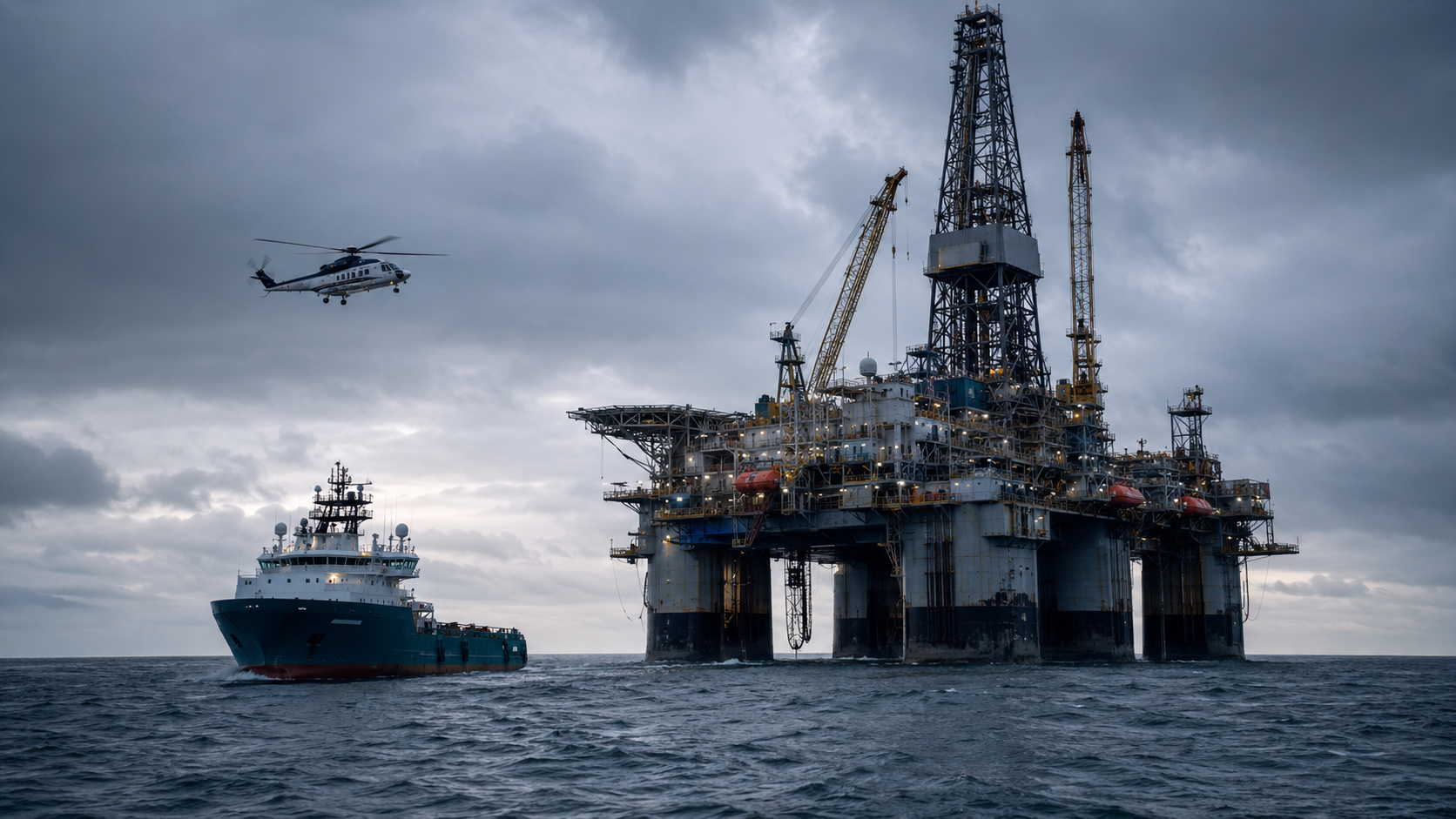
Yes, and the difference drives the entire claim. A mobile offshore drilling unit, such as a jack-up rig, drillship, or semi-submersible, can qualify as a vessel, which means its crew may be Jones Act seamen with negligence and unseaworthiness claims (Source: Ship Law Matters). A fixed platform permanently attached to the seabed is not a vessel, so its workers are generally covered by OCSLA and the LHWCA rather than the Jones Act (Source: Cornell LII, 43 U.S.C. § 1333). A jack-up rig in particular stacks marine, drilling, and structural risks together, and a single incident can trigger personal-injury, death, and equipment claims at once, which is part of why these cases pull in so many defendants. Determining whether the structure was a vessel is frequently the first and most consequential issue.
How Do Contractor Indemnity Clauses Affect Your Claim?
They affect who ultimately pays, not your right to recover. Offshore contracts are full of risk-shifting and indemnity clauses in which contractors agree to absorb or pass along liability among themselves, and after a serious accident those companies often fight over who indemnifies whom (Source: Ship Law Matters). For an injured worker, the key point is that these contracts are largely a behind-the-scenes dispute among the companies and their insurers; they do not erase your claim against a negligent party. In practice, claimants pursue the parties with the clearest role and the deepest resources, often the rig owner, drilling contractor, and oil company, and let the finer indemnity arguments sort out later. You should not be discouraged by talk of indemnity clauses, which are the companies’ problem, not a bar to your recovery.
What Are the Most Common Oil Rig Accidents and Injuries?
The hazards are severe and often catastrophic. Common offshore oil rig accidents include explosions and fires, blowouts, falls from height, falling objects, and equipment failures, producing injuries such as burns, broken bones, head and spinal injuries, crush injuries, and chemical exposure, with the worst cases causing permanent disability or death (Source: Fuquay Law Firm). Because these incidents are frequently preventable through proper maintenance, safety enforcement, and seaworthy equipment, the cause of the accident usually points directly at one or more of the liable parties above. Federal offshore operations are regulated by the Bureau of Safety and Environmental Enforcement, and a violation of safety regulations can be powerful evidence of negligence (Source: BSEE).
Who Is Liable If a Worker Dies in an Oil Rig Accident?
The same parties can be liable, but the governing law shifts to wrongful death. When a worker is killed offshore, surviving family members may bring a claim against the responsible operator, contractor, vessel owner, or manufacturer, and these fatal cases frequently involve federal investigations and multiple corporate defendants (Source: HKGC Law). If the death occurred more than three nautical miles from shore, the Death on the High Seas Act typically governs, allowing eligible survivors to recover pecuniary losses (Source: Cornell LII, 46 U.S.C. § 30302). Our maritime wrongful death guide explains who can file and what these claims can recover.
How Long Do You Have to File?
It depends on the governing law, which is one more reason to identify your claim type early. A Jones Act claim generally must be filed within three years of the injury (Source: Cornell LII, 46 U.S.C. § 30106). LHWCA and OCSLA claims run on shorter administrative deadlines, and where state law applies through OCSLA, that state’s statute of limitations, sometimes as short as two years, controls. Beyond the deadline, the practical urgency is evidence: rig logs, maintenance records, the failed equipment, and the accounts of a crew that rotates and disperses all degrade quickly. Acting early protects both the deadline and the proof needed to hold every liable party accountable.
Frequently Asked Questions
Who is liable for an offshore oil rig accident?
Often several parties: the operator, your employer, the rig or vessel owner, third-party contractors, and equipment manufacturers, depending on what failed and who controlled it (Source: Zehl & Associates).
Can I sue more than one company?
Yes. Maritime law often allows you to sue multiple defendants at once, and identifying every negligent party is critical to full recovery (Source: Oberheiden Law Group).
I’m on a fixed platform receiving workers’ comp. Can I still sue?
Often yes, through a third-party claim. The LHWCA bars suing your employer for full damages, but a claim against a negligent contractor, vessel owner, or manufacturer can recover pain and suffering (Source: Oberheiden Law Group). To check, get a free case review.
Can I sue the equipment manufacturer?
Yes, if a defective component caused the accident, you may have a product-liability claim against the manufacturer, separate from any other claim (Source: Zehl & Associates).
Does it matter if I worked on a jack-up rig versus a fixed platform?
Yes. A mobile rig may be a vessel, making its crew Jones Act seamen; a fixed platform is not a vessel, so workers fall under OCSLA and the LHWCA (Source: Ship Law Matters).
Do contractor indemnity clauses stop me from recovering?
No. Indemnity clauses shift cost among the companies and insurers; they do not bar your claim against a negligent party (Source: Ship Law Matters).
Who is liable if a worker dies on a rig?
The same potential defendants, under wrongful-death law; for deaths beyond three nautical miles, the Death on the High Seas Act usually governs (Source: Cornell LII, 46 U.S.C. § 30302).
How long do I have to file?
Generally three years for a Jones Act claim; LHWCA, OCSLA, and state-law claims have shorter deadlines (Source: Cornell LII, 46 U.S.C. § 30106).
The Bottom Line
Who is liable for an offshore oil rig accident is rarely a one-word answer, and that complexity works in an injured worker’s favor when it is handled well. The operator, the drilling contractor, the rig or vessel owner, other contractors, and equipment manufacturers can all share responsibility, and maritime law often allows claims against several at once. Your classification, seaman or platform worker, decides which claims you can bring, and for platform workers a third-party lawsuit is frequently the only route to full damages beyond capped benefits. Identifying every liable party early, before evidence disappears, is what turns a limited recovery into a complete one.
Find out who can be held liable for your oil rig accident and which claims you can bring.
References and Sources
- Jones Act, 46 U.S.C. § 30104: Cornell Legal Information Institute
- Maritime statute of limitations, 46 U.S.C. § 30106: Cornell Legal Information Institute
- Outer Continental Shelf Lands Act, 43 U.S.C. § 1333: Cornell Legal Information Institute
- LHWCA liability of vessels (Section 905(b)), 33 U.S.C. § 905: Cornell Legal Information Institute
- Death on the High Seas Act, 46 U.S.C. § 30302: Cornell Legal Information Institute
- Bureau of Safety and Environmental Enforcement (offshore safety regulation): U.S. BSEE
- Who can be sued after an offshore injury: Oberheiden Law Group
- Common causes of offshore accidents and who is responsible: Oberheiden Law Group
- Who is liable in an oil rig explosion or accident: Zehl & Associates
- Who can I sue for an oilfield accident (product liability): Zehl & Associates
- Jack-up rig accidents and indemnity clauses: Ship Law Matters
- Common offshore oil rig injuries and liability: Fuquay Law Firm
Editorial Standards and Review
This article follows a zero-hallucination policy. The statutes are cited to the U.S. Code; the federal offshore-safety regulator to BSEE; and the liability framework to experienced offshore-injury practitioners. The article distinguishes the remedies available to Jones Act seamen from those available to platform workers under OCSLA and the LHWCA, and explains why third-party claims are central for the latter. OffshoreInjuryHelp.com is an informational resource, not a law firm, and does not provide legal representation; it connects injured offshore workers and their families with experienced maritime attorneys. Learn more on our Editorial Standards page. Last reviewed: June 1, 2026.