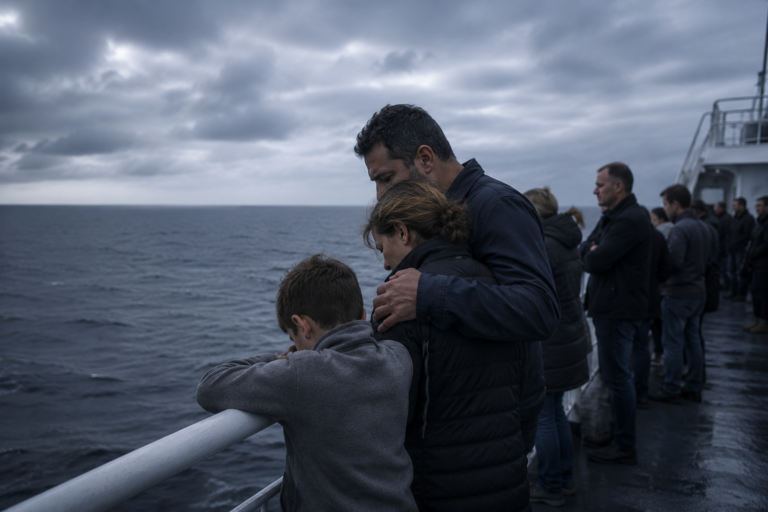

Who Can File a Maritime Wrongful Death Claim?
Losing a family member to a maritime accident is devastating, and the legal questions that follow can feel overwhelming at the worst possible time. One of the first is also one of the most practical: who in the family is actually allowed to bring a claim?
In short: A maritime wrongful death claim is filed by the personal representative of the deceased’s estate, on behalf of eligible surviving family, usually a spouse, children, parents, or dependent relatives. Which family members qualify, and what they can recover, depends on which law applies: the Jones Act, the Death on the High Seas Act, general maritime law, or state law.
This article is for general informational purposes only and does not constitute legal advice. Eligibility depends on the facts and the governing law, so consult a licensed maritime attorney about your family’s situation.
Key Facts at a Glance
- A maritime wrongful death claim is generally brought by the personal representative of the deceased’s estate (Source: Cornell LII, 46 U.S.C. § 30302).
- Eligible beneficiaries are typically the spouse, children, parents, or a dependent relative (Source: Brais Law).
- Siblings, grandparents, and other relatives are generally not eligible under the Death on the High Seas Act (Source: Kherkher Garcia).
- If the deceased was a seaman, the family may bring a wrongful death claim against the employer under the Jones Act (Source: Cornell LII, 46 U.S.C. § 30104).
- The Death on the High Seas Act governs deaths occurring more than three nautical miles from shore (Source: Cornell LII, 46 U.S.C. § 30302).
- General maritime law provides a wrongful death remedy recognized by the Supreme Court in Moragne v. States Marine Lines (Source: Justia, 398 U.S. 375).
- The deadline to file is generally three years from the death (Source: Cornell LII, 46 U.S.C. § 30106).
Why the Right to File Depends on the Law
Maritime work remains among the most dangerous in the country, and fatal accidents at sea reach not just workers but the families who depended on them. In 2023, the federal government recorded 5,283 fatal work injuries, with transportation incidents the most frequent fatal event (Source: BLS, Census of Fatal Occupational Injuries 2023). Behind each of those numbers is a household trying to understand its rights.
Maritime wrongful death is not governed by a single statute. Several different laws can apply depending on who died, what they did for work, and where the accident happened, and each one sets its own rules for who may file and who may recover. This guide explains who is allowed to bring a claim, who counts as an eligible family member, and how the governing law shapes both answers, in plain terms.
Unsure whether your family can bring a claim?
Who Is Legally Allowed to File a Maritime Wrongful Death Claim?
In almost every maritime wrongful death case, the claim is filed by one person on behalf of the family: the personal representative of the deceased’s estate. Under both the Jones Act and the Death on the High Seas Act, the personal representative brings the action for the benefit of the eligible surviving family members (Source: Fuquay Law Firm). The representative is often the surviving spouse, but it can be an adult child, a parent, or another person a court appoints. The individual family members do not each file separate suits; they are the beneficiaries on whose behalf the single claim is pursued. That structure keeps the case unified while making sure every qualifying relative’s loss is accounted for.
Who Are the Eligible Beneficiaries?
The people who can actually recover are a defined group: typically the surviving spouse, children, parents, and dependent relatives of the deceased (Source: Brais Law). The Death on the High Seas Act draws the circle fairly tightly, and relatives outside it, such as siblings or grandparents, generally cannot recover (Source: Kherkher Garcia). Dependency matters: a relative who relied on the deceased for financial support has a stronger claim than one who did not. Because the eligible class varies somewhat between the governing laws, identifying which statute applies is the first step in knowing who in a family qualifies.
How Does the Governing Law Decide Who Can File?
The applicable law turns on three things: whether the deceased was a seaman, where the death occurred, and the cause. If the deceased was a seaman killed by employer negligence, the family can pursue a Jones Act claim, which applies no matter where the death happened (Source: Cornell LII, 46 U.S.C. § 30104). If the death occurred more than three nautical miles from shore, the Death on the High Seas Act applies (Source: Cornell LII, 46 U.S.C. § 30302). Deaths within territorial waters fall under general maritime law or state wrongful death statutes (Source: Justia). Our maritime wrongful death guide covers how these frameworks fit together.
Who Can File and Recover, by Governing Law?
The table below summarizes when each law applies, who brings the claim, and what the family can recover. Most cases turn on the location of the accident and whether the deceased was a seaman.
| Governing law | When it applies | Who files / beneficiaries | Damages |
|---|---|---|---|
| Jones Act | Seaman’s death from employer negligence, anywhere | Personal rep, for spouse / children / parents | Pecuniary, plus pre-death pain via survival (§ 30104) |
| Death on the High Seas Act | Death more than 3 nautical miles from shore | Personal rep, for spouse / parent / child / dependent relative | Pecuniary loss only (§ 30303) |
| General maritime law | Territorial waters / non-DOHSA deaths | Personal rep, for statutory beneficiaries | Broader; loss of society in some cases (Moragne) |
| State wrongful death | Non-seaman deaths in state territorial waters | Per state statute (rep or family) | Varies; often allows non-economic (source) |
| DOHSA, commercial aviation | Air crash beyond 12 nautical miles | Personal rep, for eligible family | Pecuniary plus loss of care and companionship (source) |
What Is a “Personal Representative,” and How Do You Become One?
A personal representative is the person a court formally appoints to manage the deceased’s estate and act on its behalf, including filing the wrongful death claim. Appointment comes through a probate court, which issues letters of administration or letters testamentary giving that person legal authority to sue for the estate and its beneficiaries (Source: U.S. Law Explained). If the deceased left a will naming an executor, that person usually serves; if not, the court appoints an administrator, often the surviving spouse or an adult child. Securing this appointment is a necessary early step, because without it no one has standing to bring the claim, and the filing deadline keeps running in the meantime.
Can More Than One Claim Be Filed for the Same Death?
Yes. When a seaman dies more than three nautical miles from shore, the family may pursue a Death on the High Seas Act claim and a Jones Act claim at the same time, because maritime law treats them as complementary rather than mutually exclusive (Source: Trueb Berne & Beard). Combining claims can also reach additional defendants beyond the employer, such as a negligent contractor or equipment manufacturer. The single personal representative typically brings all of them together, which is why mapping every applicable law early can materially change what the family recovers.
More than one law, and more than one responsible party, may apply to your family’s loss.
Can State Law Provide a Remedy for a Non-Seafarer’s Death?
Yes, in territorial waters it often can. For the death of a non-seafarer, such as a recreational boater or a passenger, that occurs within a state’s territorial waters (generally within three nautical miles of shore), the Supreme Court held in Yamaha Motor Corp. v. Calhoun that general maritime law does not displace the remedies available under state wrongful-death statutes (Source: Justia, Yamaha Motor Corp. v. Calhoun). That matters because state wrongful-death laws frequently allow broader, non-pecuniary damages, such as loss of companionship, than maritime law alone. The rule does not extend to seamen, whose remedies are governed by the Jones Act and general maritime law, but for families of non-seafarers killed close to shore, a state-law claim can be an important additional avenue.
What Can Surviving Families Recover?
Recovery depends heavily on which law governs. The Death on the High Seas Act limits damages to pecuniary losses, the measurable financial harm, such as lost financial support, lost services, and funeral expenses, and it does not allow recovery for grief or loss of companionship (Source: BOATLAW). General maritime law and many state statutes are broader, sometimes allowing loss of society and the deceased’s pre-death pain and suffering through a survival action (Source: Fuquay Law Firm). Because the same loss can be worth very different amounts under different laws, the choice-of-law analysis is not a technicality; it is central to what a family is owed.
How Long Do You Have to File?
The deadline is generally three years from the date of death (Source: Cornell LII, 46 U.S.C. § 30106). Two practical realities make acting sooner important. First, the personal representative must be appointed by a probate court before the claim can be filed, which takes time. Second, the evidence that proves fault, vessel logs, equipment, and witness accounts from a scattered offshore crew, degrades quickly. Beginning the process early protects both the deadline and the family’s ability to prove the case.
Frequently Asked Questions
Who can file a maritime wrongful death claim?
The personal representative of the deceased’s estate files the claim on behalf of eligible family members, usually a spouse, children, parents, or dependent relatives (Source: Cornell LII, 46 U.S.C. § 30302). The individual relatives do not each file separately.
Which family members can recover?
Typically the surviving spouse, children, parents, and dependent relatives. Siblings, grandparents, and more distant relatives generally cannot recover under the Death on the High Seas Act (Source: Kherkher Garcia).
What if my loved one was a seaman?
If the deceased was a seaman killed by employer negligence, the family can bring a Jones Act claim against the employer, which applies regardless of where the death occurred (Source: Cornell LII, 46 U.S.C. § 30104). A DOHSA claim may apply too if the death was beyond three miles.
How do I become the personal representative?
A probate court appoints the personal representative and issues letters giving authority to act for the estate (Source: U.S. Law Explained). It is often the surviving spouse or an adult child. If your family needs help with this step, speak with someone at no cost.
Can more than one family member benefit from the claim?
Yes. The single claim is brought for the benefit of all eligible beneficiaries, and recovery is apportioned among them according to each person’s loss (Source: Johnson Garcia).
Does it matter where the death happened?
Very much. Deaths beyond three nautical miles fall under DOHSA, while deaths in territorial waters fall under general maritime law or state statutes, which often allow broader recovery (Source: Justia).
How long do we have to file?
Generally three years from the date of death (Source: Cornell LII, 46 U.S.C. § 30106). Because a representative must be appointed first, it is best not to wait.
The Bottom Line
In a maritime wrongful death case, one person, the personal representative of the estate, files a single claim for the benefit of the family’s eligible members, usually the spouse, children, parents, and dependent relatives. Who qualifies, and what they can recover, depends on whether the deceased was a seaman, where the accident happened, and which law therefore governs. Those questions decide everything that follows, which is why getting them answered early, and accurately, matters so much for a grieving family trying to move forward.
Find out who in your family can file, and what you may be owed.
References and Sources
- Death on the High Seas Act, 46 U.S.C. § 30302: Cornell Legal Information Institute
- DOHSA recovery (pecuniary loss), 46 U.S.C. § 30303: Cornell Legal Information Institute
- Jones Act, 46 U.S.C. § 30104: Cornell Legal Information Institute
- Maritime statute of limitations, 46 U.S.C. § 30106: Cornell Legal Information Institute
- Moragne v. States Marine Lines, 398 U.S. 375 (1970): Justia U.S. Supreme Court Center
- The Death on the High Seas Act and fatal maritime accidents: Justia
- National Census of Fatal Occupational Injuries 2023: U.S. Bureau of Labor Statistics
- Who can file a maritime wrongful death claim: Fuquay Law Firm
- DOHSA eligible beneficiaries: Brais Law
- FAQs about the Death on the High Seas Act: Kherkher Garcia
- DOHSA and the Jones Act for seamen: Trueb Berne & Beard
- Yamaha Motor Corp. v. Calhoun, 516 U.S. 199 (1996): Justia U.S. Supreme Court Center
Editorial Standards and Review
This article follows a zero-hallucination policy. Statutes and Supreme Court holdings are cited to the U.S. Code and U.S. Supreme Court opinions; fatality data is cited to the Bureau of Labor Statistics; and the practical eligibility points are attributed to experienced maritime practitioners. OffshoreInjuryHelp.com is an informational resource, not a law firm, and does not provide legal representation; it connects bereaved maritime families with experienced maritime attorneys. Learn more on our Editorial Standards page. Last reviewed: June 1, 2026.