Tugboat and Barge Injuries: Your Jones Act Rights
The crews who push barges down the Mississippi and work tugs in the nation’s harbors do some of the most dangerous work on the water, and most of them are Jones Act seamen with powerful rights. Tugboat and barge injuries are governed by maritime law, not ordinary workers’ compensation, and that changes everything about what you can recover.
This article is for informational purposes only and does not constitute legal advice. Your rights depend on your specific job and the facts of the accident; to understand them, consult a licensed maritime attorney.
Key Facts at a Glance
- Tugboat and towboat crew members are generally Jones Act seamen and can sue their employer for negligence, 46 U.S.C. § 30104 (Source: Cornell LII).
- Injured seamen can also bring an unseaworthiness claim and receive maintenance and cure regardless of fault.
- Roughly 5,500 U.S. towing vessels, operated by about 1,100 companies, are subject to Coast Guard inspection (Source: Federal Register).
- Since July 19, 2022, towing vessels covered by Subchapter M must carry a valid Certificate of Inspection, 46 CFR part 136 (Source: eCFR).
- Subchapter M imposes operating requirements including fall-overboard prevention and the wearing of work vests, 46 CFR part 140 (Source: eCFR).
- Subchapter M generally applies to U.S.-flag towing vessels 26 feet and longer, and to smaller vessels moving oil or hazardous-material barges (Source: Federal Register).
- A Jones Act or unseaworthiness lawsuit generally must be filed within 3 years of the injury, 46 U.S.C. § 30106 (Source: Cornell LII).
Hurt on a tug, towboat, or barge? As a Jones Act seaman you likely have far more rights than a workers’ comp claim.
We are not a law firm and not attorneys; we connect injured maritime workers and families with experienced maritime attorneys at no cost.
The inland and coastal towing industry is the hidden engine of American commerce, moving grain, coal, petroleum, chemicals, and steel along thousands of miles of rivers and intracoastal waterways and through every major harbor. The people who crew these vessels work around heavy lines under enormous tension, climb across strings of barges in the dark, and operate in fog, current, and cold, often far from immediate medical help. When something goes wrong, the injuries are serious, and the legal questions are very different from those facing a worker hurt on land.
This guide explains tugboat and barge injuries from the worker’s side: whether you are a Jones Act seaman, how tugs and towboats differ, the most common ways crews get hurt, how the Coast Guard’s Subchapter M inspection rules affect a claim, who can be held liable, and what you can recover. The aim is a single page that answers the questions an injured inland or harbor mariner actually has.
Are Tugboat and Towboat Crews Covered by the Jones Act?
Yes. Tugboat and towboat crew members are classic Jones Act seamen. A worker qualifies as a seaman by having a substantial connection to a vessel in navigation, and a deckhand, tankerman, mate, engineer, cook, or captain assigned to a tug or towboat plainly meets that test, since the vessel is their workplace and they spend their working life aboard it. That status unlocks the strongest remedies in maritime law: the right to sue the employer for negligence under the Jones Act, the right to bring an unseaworthiness claim against the vessel owner, and the right to maintenance and cure during recovery. Because tugs and towboats are unquestionably vessels in navigation, the vessel-status fight that complicates some offshore cases rarely arises here; see our guide on whether you are a Jones Act seaman.
What Is the Difference Between a Tugboat, a Towboat, and a Barge?
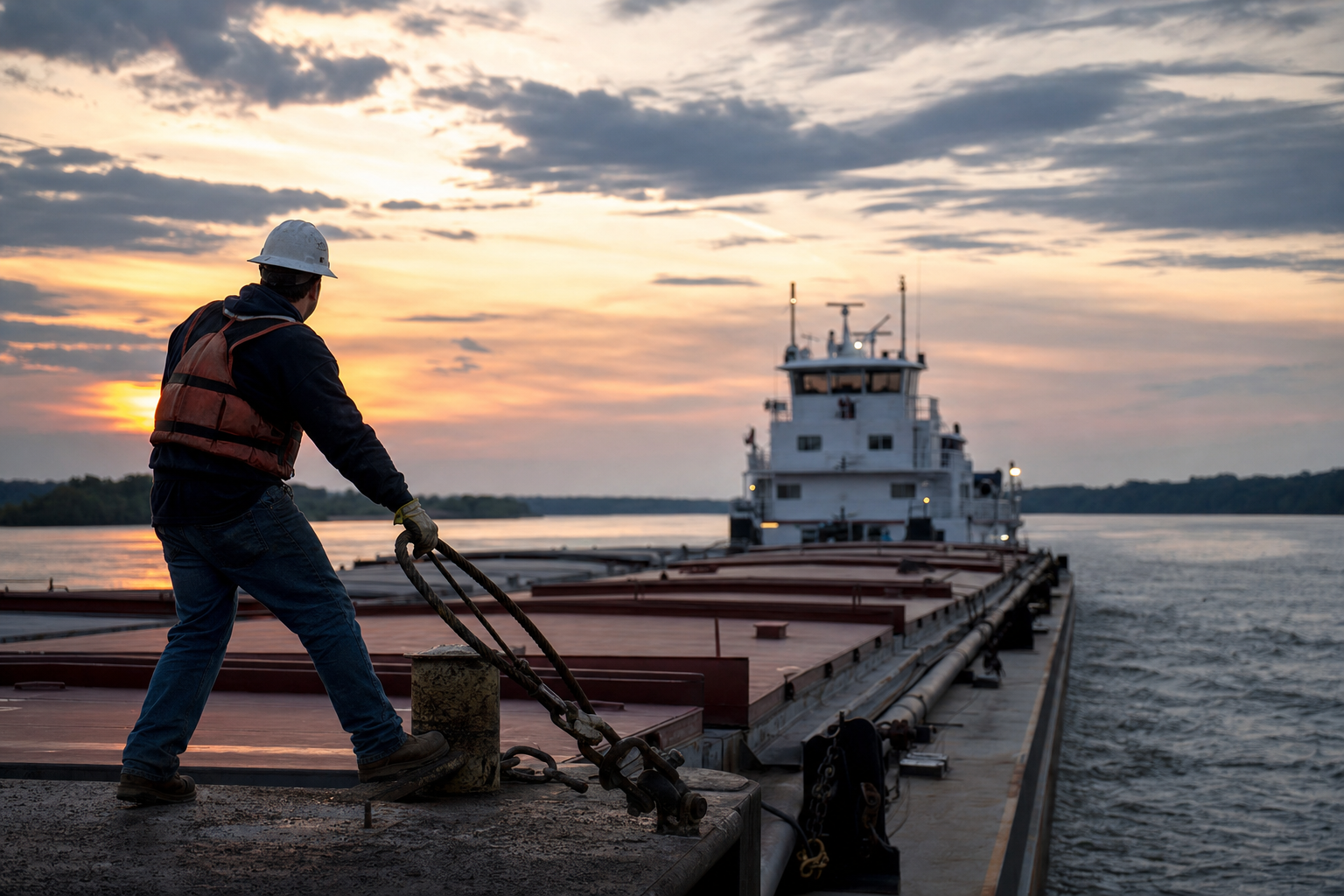
The terms describe different vessels and different working worlds. A tugboat is a powerful, ship-shaped vessel that pulls or pushes other vessels, and tugs work in harbors assisting ships, along the coast, and on the open ocean towing barges. A towboat, also called a pushboat, has a flat bow and pushes a tow of barges lashed together ahead of it, and these are the vessels that work the inland river system, the Mississippi, Ohio, Illinois, Tennessee, and the Gulf Intracoastal Waterway. A barge is an unpowered vessel that carries the cargo and is moved by the tug or towboat. The work differs accordingly: harbor tug crews handle heavy ship-assist lines, while inland towboat crews spend their shifts climbing across barge tows to build, secure, and break apart the unit, which is where many injuries happen.
What Are the Most Common Tugboat and Barge Injuries?
The injuries track the work, and most fall into a handful of recurring categories. Line-handling injuries are among the worst, because a synthetic or wire towing line under tension that parts or slips can snap back with lethal force through the area where a deckhand stands. Slips, trips, and falls are constant on wet, moving steel decks and on the uneven surfaces of a barge tow. Falls overboard carry a high risk of drowning, especially on rivers with current. Crew members are caught in winches, capstans, and deck machinery, and crushed while making or breaking tow as heavy barges and rigging shift. The table below maps the common injuries to how they occur.
| Injury | Common cause | Typical setting |
|---|---|---|
| Struck by a parted or snapping line | Tow line or face wire under tension fails | Making tow, ship assist |
| Slips, trips, and falls | Wet or icy decks, uneven barge surfaces | Deck work, crossing the tow |
| Fall overboard and drowning | Loss of balance crossing barges; no work vest | Inland rivers, fleeting areas |
| Caught in machinery | Winches, capstans, deck gear | Handling lines and rigging |
| Crush injuries | Shifting barges, ratchets, and wires | Building or breaking the tow |
| Falls into voids or holds | Open hatches and barge voids | Inspecting or working barges |
Why Are Falls Overboard So Dangerous on Inland Tows?
Falls overboard are one of the deadliest hazards in towing because a crew member who goes into a river is often in serious trouble within seconds. Inland rivers carry strong currents that sweep a person under and away from the tow, water temperatures can cause rapid incapacitation, and a fall that happens while crossing a barge string at night may not be witnessed until the next head count. The Coast Guard’s Subchapter M rules respond directly to this danger with operating requirements for fall-overboard prevention and the wearing of work vests in specified situations, 46 CFR part 140 (Source: eCFR). When an employer fails to enforce work-vest use, provide guarding and handholds, or maintain man-overboard recovery procedures, that failure can support both a Jones Act negligence claim and an unseaworthiness claim if a crew member is lost or injured.
What Is Subchapter M and How Does It Affect Your Claim?
Subchapter M is the Coast Guard’s inspection regime for towing vessels, and it has real consequences for an injury case. Established in 2016 and fully phased in by July 19, 2022, it requires covered U.S.-flag towing vessels to carry a valid Certificate of Inspection, obtained either through a Towing Safety Management System or direct Coast Guard inspection, 46 CFR part 136 (Source: eCFR). It applies to roughly 5,500 towing vessels and sets standards for vessel design, stability, equipment, crew training, and safe operation (Source: Federal Register). For an injured mariner, Subchapter M matters because it establishes a federal safety baseline: when an operator ignores its inspection obligations, skips required training, or runs a vessel with known deficiencies, those violations are powerful evidence that the employer was negligent or that the vessel was unseaworthy. Maintenance logs, inspection records, and safety-management documents become central proof in the case.
A towing operator that cut safety corners can be held accountable. The vessel’s records often tell the story.
We are not a law firm and not attorneys; we connect injured maritime workers and families with experienced maritime attorneys at no cost.
Who Is Liable for a Towing Vessel Injury?
Liability in a towing case can reach several parties. The employer is liable under the Jones Act for negligence, which includes inadequate crewing, poor training, unsafe schedules that cause fatigue, defective equipment it failed to fix, and unsafe work methods. The vessel owner is liable for unseaworthiness when the tug, towboat, or its gear is not reasonably fit, such as a worn tow wire that parts, missing non-skid on decks, broken handholds, or an undermanned crew forced to do a job that needs more hands. Third parties can also be responsible: the owner of a barge that was defective or improperly maintained, a fleeting or harbor-service company whose negligence caused the accident, or the manufacturer of a winch, wire, or fitting that failed. Identifying every responsible party is important, because a third-party claim can add substantial recovery beyond the employer.
What Can You Recover After a Tugboat or Barge Injury?
As a Jones Act seaman, you can recover the full range of damages, which is far more than a workers’ compensation system provides. A successful Jones Act or unseaworthiness claim can recover past and future medical expenses, lost wages and lost earning capacity, and compensation for pain, suffering, and disability, and Jones Act negligence uses a relaxed, featherweight causation standard that favors the injured worker. On top of that, maintenance and cure provides a daily living allowance and medical coverage from the date of injury until you reach maximum medical improvement, owed regardless of who was at fault. Your own share of fault reduces but does not bar recovery under maritime comparative negligence. For a sense of how these claims are valued, see our overview of Jones Act settlement amounts.
Worked example: A deckhand on an inland towboat is making tow at night when a ratchet binder fails and a wire whips across the barge, fracturing his leg. He pursues Jones Act negligence for the failure to replace worn rigging, unseaworthiness for the defective binder and wire, and maintenance and cure during his months of recovery. If the binder failed because of a manufacturing defect, he may add a third-party product claim against the maker.
What Should You Do After an Inland Marine Injury?
What you do in the first days protects the claim. Report the injury to the vessel and the company in writing as soon as possible, and make sure it is logged accurately, because employers sometimes dispute that an accident happened or how. Get medical attention and tell the providers exactly how the injury occurred. Photograph the scene, the equipment involved, and your injuries if you can, and note the names of crew members who witnessed it. Preserve everything: the vessel name, the location, the date and time, and any defective gear. Be cautious about giving a recorded statement to a company representative or insurer before you understand your rights, and do not assume a quick payment offer reflects what the claim is worth. The deadline to sue is generally three years, but evidence on a working vessel disappears fast, so acting early matters (Source: Cornell LII).
Key Authorities for Towing Vessel Injuries
| Authority | What it provides |
|---|---|
| Jones Act, 46 U.S.C. § 30104 | Lets an injured seaman sue the employer for negligence and demand a jury |
| 46 CFR Subchapter M, part 136 | Requires a Certificate of Inspection for covered towing vessels |
| 46 CFR Subchapter M, part 140 | Sets operating rules, including fall-overboard prevention and work vests |
| 46 U.S.C. § 30106 | Three-year deadline to file a Jones Act or unseaworthiness suit |
Frequently Asked Questions
Are tugboat and towboat workers Jones Act seamen?
Yes. Deckhands, tankermen, mates, engineers, cooks, and captains assigned to tugboats and towboats are classic Jones Act seamen because they have a substantial connection to a vessel in navigation. That status lets them sue the employer for negligence, bring an unseaworthiness claim, and receive maintenance and cure.
What are the most common towing vessel injuries?
The most common are injuries from parting or snapping lines, slips and falls on wet decks and barges, falls overboard with a high drowning risk, getting caught in winches and deck machinery, and crush injuries while building or breaking a tow. Many happen while crew cross and work the barge string.
What is Subchapter M?
Subchapter M is the Coast Guard’s towing-vessel inspection regime, fully phased in by July 19, 2022, that requires covered U.S.-flag towing vessels to carry a Certificate of Inspection and meet standards for stability, equipment, training, and safe operation. Violations can be strong evidence of negligence or unseaworthiness in an injury claim.
Can I sue if I was hurt on a barge?
Often yes. If you are a crew member of a tug or towboat working the barges, you are a Jones Act seaman and can sue your employer and pursue unseaworthiness. You may also have a third-party claim against the barge owner or an equipment manufacturer if a defect or their negligence caused the injury.
What can I recover for a tugboat or barge injury?
As a seaman you can recover past and future medical costs, lost wages and earning capacity, and pain and suffering through Jones Act and unseaworthiness claims, plus maintenance and cure during recovery. See how Jones Act claims are valued.
How long do I have to file a towing vessel injury claim?
Generally three years from the date of injury for a Jones Act or unseaworthiness lawsuit. Because vessel records, equipment, and crew memories change quickly, the practical time to start building a strong claim is much sooner than the legal deadline.
What if a family member was killed on a towboat?
The family may have a wrongful death claim under the Jones Act and general maritime law, and for deaths on certain waters other statutes can apply. Because the location and the worker’s status affect which law governs and what can be recovered, the family should have the facts reviewed by a maritime attorney.
If you were hurt working a tug, towboat, or barge, find out what your claim is worth before you settle.
We are not a law firm and not attorneys; we connect injured maritime workers and families with experienced maritime attorneys at no cost.
References and Sources
- Jones Act, 46 U.S.C. § 30104, Cornell LII
- Maritime statute of limitations, 46 U.S.C. § 30106, Cornell LII
- 46 CFR Subchapter M, part 136, Certification, eCFR
- 46 CFR Subchapter M, part 140, Operations, eCFR
- Inspection of Towing Vessels, final rule, Federal Register (2016)
- Offshore Injury Help, the Jones Act
- Offshore Injury Help, unseaworthiness claims
- Offshore Injury Help, maintenance and cure
Editorial Standards and Review
This article follows a zero-hallucination policy. The Jones Act and the limitations period are cited to the U.S. Code through the Cornell Legal Information Institute, and the Subchapter M requirements and towing-fleet figures are cited to the federal regulations in the eCFR and the Coast Guard’s rule in the Federal Register. We are not a law firm and not attorneys, and nothing here is legal advice. Whether a particular towing-vessel worker has a claim depends on the specific facts, so an injured mariner should consult a licensed maritime attorney. Last reviewed June 2026. See our editorial standards.