Offshore Burn Injuries: Causes, Severity, and Your Legal Rights
A fire or explosion on a rig or vessel produces some of the most catastrophic injuries in the maritime world. Offshore burn injuries are life-altering, expensive to treat, and, because help is hours away by helicopter, often far more severe than the same burn would be on land. The law that applies can determine whether a burned worker recovers a fraction of the cost or all of it.
This article is for informational purposes only and does not constitute legal advice and describes serious injuries some readers may find difficult. To understand the rights that apply to a specific burn injury, consult a licensed maritime attorney.
Key Facts at a Glance
- Offshore burns are caused by fires and explosions, flash fires, hot surfaces and steam, chemicals, and electrical arcs.
- Burn severity is graded by depth, from first degree through fourth degree, and by the total body surface area affected (Source: MedlinePlus).
- Inhalation injury to the airway and lungs is a frequent and often deadly complication of fires in enclosed spaces (Source: MedlinePlus).
- Serious burns frequently require skin grafts, multiple surgeries, and long rehabilitation, and carry a high infection risk (Source: American Burn Association).
- Hydrogen sulfide and other chemicals present on oil and gas sites can cause chemical burns and other serious harm (Source: OSHA).
- A burned worker who is a Jones Act seaman can recover full tort damages from a negligent employer, 46 U.S.C. § 30104 (Source: Cornell LII).
- The 2010 Deepwater Horizon explosion killed 11 workers, a stark illustration of the catastrophic potential of offshore fires.
Burned in a rig fire, explosion, or chemical release? These are high-value claims, and the law that applies sets the ceiling.
We are not a law firm and not attorneys; we connect injured maritime workers and families with experienced maritime attorneys at no cost.
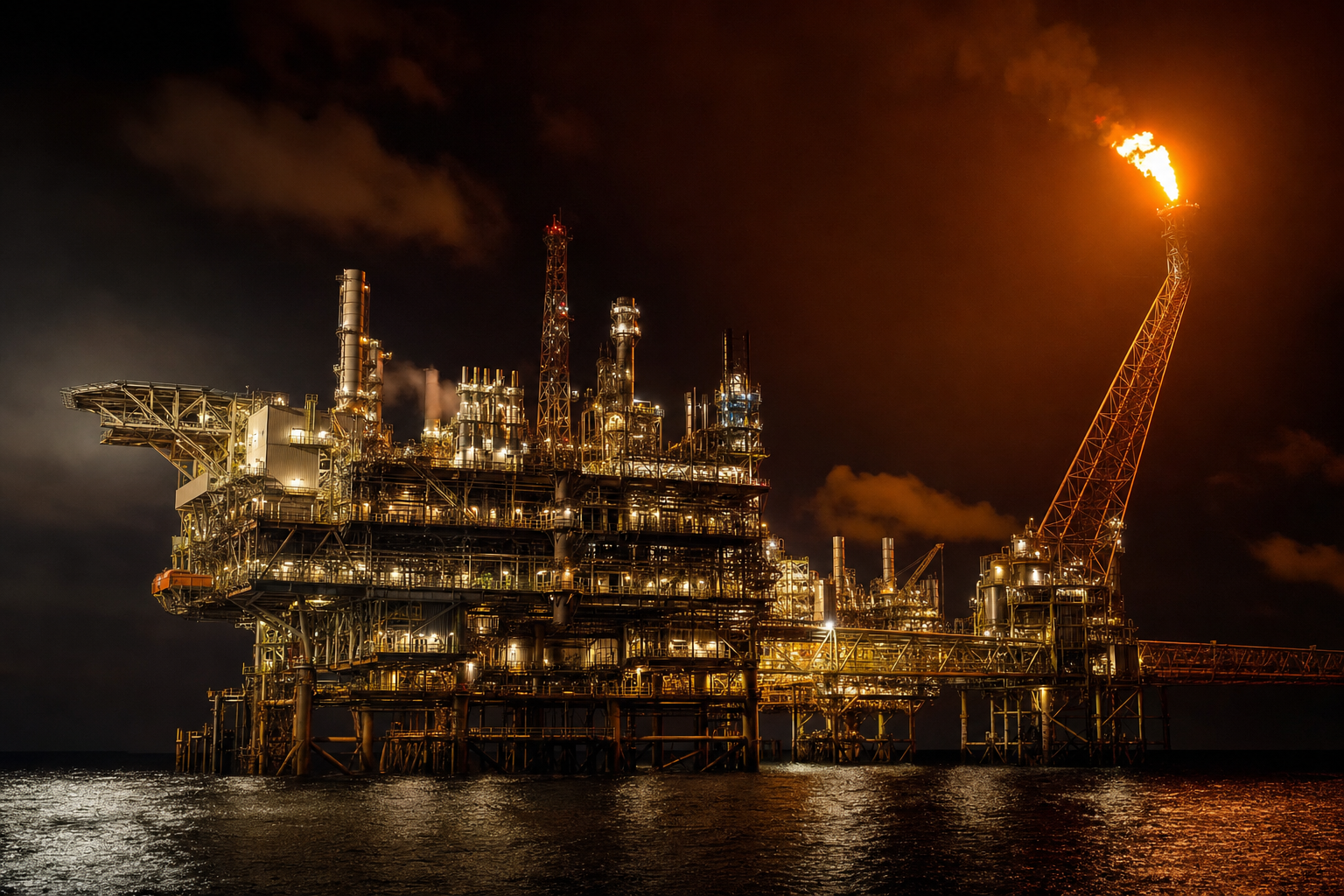
Offshore oil and gas work concentrates the ingredients of catastrophic fire in one place: flammable hydrocarbons under pressure, ignition sources, confined spaces, and crews who cannot simply walk away from the danger. When control is lost, the result can be a flash fire, a sustained blaze, or an explosion that injures everyone nearby. Burns are also far from the only maritime fire risk; engine rooms, galleys, electrical systems, and chemical cargoes injure workers on vessels of every kind. What unites these cases is severity, because a serious burn is among the most painful and disabling injuries a person can survive.
This guide explains offshore burn injuries from both the medical and legal angles: how they happen, how doctors grade them, why the offshore setting makes them worse, the special danger of inhalation injury, the long-term consequences, the laws that apply, who can be held liable, and what an injured worker or a family can recover. Understanding both sides is essential, because the value of these claims is driven by the medical reality.
How Do Offshore Burn Injuries Happen?
Offshore burns come from several distinct hazards, and a single incident can combine them. Fires and explosions are the most feared, arising from well-control failures, gas releases, ruptured lines, and ignition of hydrocarbon vapor, and they can produce both flame burns and blast injuries. Flash fires from a sudden ignition of vapor cause severe burns to exposed skin in an instant. Thermal burns come from contact with hot surfaces, steam lines, and superheated equipment in engine rooms and process areas, and scalding occurs in galleys and around hot-water and steam systems. Chemical burns result from exposure to caustics, solvents, drilling fluids, and gases such as hydrogen sulfide that are common on oil and gas sites (Source: OSHA). Electrical burns and arc-flash injuries occur during work on energized systems. The table below maps the main causes to their offshore sources.
| Burn type | Typical offshore source |
|---|---|
| Flame burns from fire or explosion | Well-control loss, gas release, ignition of hydrocarbons |
| Flash burns | Sudden ignition of vapor or gas |
| Thermal and scald burns | Hot surfaces, steam lines, engine rooms, galleys |
| Chemical burns | Caustics, solvents, drilling fluids, hydrogen sulfide |
| Electrical and arc-flash burns | Work on energized electrical systems |
What Are the Degrees of Burn Injury?
Doctors grade burns by how deep they reach, and the depth drives the treatment and the long-term outcome. A first-degree burn affects only the outer layer of skin, causing redness and pain, and heals on its own. A second-degree, or partial-thickness, burn extends into the deeper skin layer, blisters, and can scar. A third-degree, or full-thickness, burn destroys the entire thickness of the skin, often appears white or charred and may be numb because nerve endings are destroyed, and generally requires skin grafting. A fourth-degree burn extends beyond the skin into muscle, tendon, or bone and is the most catastrophic (Source: MedlinePlus). Severity also depends on the total body surface area burned, which clinicians estimate using methods like the rule of nines. The table below summarizes the levels.
| Burn degree | Depth | Typical features |
|---|---|---|
| First degree | Outer skin layer | Redness and pain; heals without scarring |
| Second degree | Into the deeper skin layer | Blisters, swelling, possible scarring |
| Third degree | Full thickness of skin | White or charred, often numb; needs grafting |
| Fourth degree | Into muscle, tendon, or bone | Most severe; risk of amputation |
Why Are Offshore Burns So Severe?
The offshore environment turns a serious burn into a life-threatening emergency. The defining problem is distance: a worker burned on a rig or vessel far out at sea cannot be rushed to a hospital, and the delay before reaching a specialized burn center can stretch to hours while the body’s response to a major burn is already underway. Fires aboard a vessel or platform often occur in confined spaces that concentrate heat and smoke, increasing both burn depth and the risk of inhalation injury. The same hydrocarbon and chemical loads that start the fire can intensify it. Infection, the leading cause of death in burn patients who survive the initial injury, is harder to prevent in a remote setting before evacuation. Together these factors mean an offshore burn frequently produces worse outcomes than an identical burn would on shore (Source: American Burn Association).
What Is Inhalation Injury and Why Is It So Dangerous?
Inhalation injury is damage to the airway and lungs from breathing hot gases, smoke, and toxic combustion products, and it is one of the deadliest complications of any fire in an enclosed space. In an explosion or a fire belowdecks or inside a module, a worker can suffer severe damage to the respiratory tract even when the visible skin burns seem survivable, and the airway can swell shut in the hours after the injury (Source: MedlinePlus). Inhalation injury dramatically raises the danger of an otherwise survivable burn and often requires intubation and intensive care. Offshore, where advanced airway management and evacuation are delayed, this hidden injury is especially lethal. It is also a reason burn cases must be evaluated carefully, because the full extent of harm from a fire is not always visible on the skin.
Severe burns mean years of treatment and lost earning power. The right claim accounts for all of it.
We are not a law firm and not attorneys; we connect injured maritime workers and families with experienced maritime attorneys at no cost.
What Are the Long-Term Consequences of Severe Burns?
Survivors of serious burns face a long and costly road that a settlement must account for. Treatment commonly involves repeated surgeries and skin grafts, extended hospital and burn-center stays, and months or years of rehabilitation (Source: American Burn Association). The lasting effects include permanent scarring and disfigurement, contractures that limit motion, chronic pain, sensitivity, and, in the worst cases, amputation. The psychological toll is also significant, with many survivors experiencing post-traumatic stress, depression, and anxiety. For a working person, a severe burn can end a career and the ability to do physical offshore work, producing a lifetime of lost earning capacity. These future costs, medical care, lost income, and the human impact of disfigurement and pain, are exactly what a full-damages maritime claim is designed to capture, and why early valuation by professionals matters.
What Laws Cover an Offshore Burn Injury?
Which law applies depends on the worker’s status, and it sets the ceiling on recovery. A worker who is a Jones Act seaman, such as a crew member on a drillship, supply vessel, or tug, can sue the employer for negligence and recover full damages, can bring an unseaworthiness claim, and is owed maintenance and cure during recovery, 46 U.S.C. § 30104 (Source: Cornell LII). A worker on a fixed platform is generally covered by the LHWCA through the Outer Continental Shelf Lands Act, which provides no-fault benefits but no pain-and-suffering recovery from the employer. In either case, a third-party claim against an equipment manufacturer or negligent contractor can add full tort damages. Because burns are so severe, the difference between these routes can be enormous, which is why pinning down status is the first task.
Who Is Liable for an Offshore Fire or Explosion?
Liability usually traces to a failure of safety systems and procedures. An employer can be liable under the Jones Act for negligence such as inadequate gas detection, failure to control ignition sources, poor maintenance of fire and hydrocarbon systems, insufficient training, missing or inadequate protective equipment, and unsafe work practices that allowed a fire to start or spread. The vessel owner can be liable for unseaworthiness if the vessel’s firefighting equipment, alarms, or escape routes were inadequate, or if defective equipment caused the fire. Third parties, including the manufacturers of failed equipment and contractors whose negligence contributed, can be sued separately. The 2010 Deepwater Horizon disaster, which killed 11 workers, remains the defining example of how failures in well control and safety systems can produce a catastrophic offshore fire. Establishing which failures caused the incident is central to the case.
Worked example: A roustabout suffers third-degree burns over much of his body when a gas release ignites near an unprotected ignition source. As a Jones Act seaman he sues his employer for negligent gas detection and ignition control, claims unseaworthiness for inadequate fire protection, and receives maintenance and cure during a year of grafts and rehabilitation. If a defective gas detector failed, he adds a third-party product claim against its manufacturer.
What Can You Recover for an Offshore Burn Injury?
A burned seaman can recover the full value of the harm, which for a catastrophic burn is substantial. Recoverable damages include all past and future medical expenses, which for severe burns can mean a lifetime of surgeries, grafts, and care; lost wages and lost earning capacity, often total for a worker who can no longer do offshore work; and compensation for pain and suffering, disfigurement, and disability, which loom especially large in burn cases. Maintenance and cure runs from the date of injury until maximum medical improvement, covering living expenses and medical care in the meantime regardless of fault. Where an employer’s conduct was egregious, such as a willful refusal to pay maintenance and cure, punitive damages may be available. Because future medical and wage losses dominate these claims, valuing them correctly requires medical and economic expertise.
Key Authorities for Offshore Burn Claims
| Authority | What it provides |
|---|---|
| Jones Act, 46 U.S.C. § 30104 | Full tort damages for a negligent employer when the worker is a seaman |
| Unseaworthiness | Vessel owner liability for inadequate fire protection or defective equipment |
| MedlinePlus, burns | Medical grading of burn depth and inhalation injury |
| American Burn Association | Burn treatment, grafting, and outcome data |
Frequently Asked Questions
What causes most offshore burn injuries?
Most serious offshore burns come from fires and explosions caused by loss of well control or ignition of hydrocarbons, along with flash fires, contact with hot surfaces and steam, chemical exposure such as caustics and hydrogen sulfide, and electrical arc flash. A single incident can combine flame, blast, and inhalation injury.
How are burn injuries classified?
Burns are graded by depth: first degree affects the outer skin, second degree reaches the deeper skin and blisters, third degree destroys the full thickness of skin and usually needs grafting, and fourth degree extends into muscle or bone. Severity also depends on the percentage of body surface area burned.
Why are offshore burns more dangerous than burns on land?
Because help is far away. A worker burned on a rig or vessel may wait hours for evacuation to a burn center while the body’s response and infection risk progress, fires in confined spaces increase depth and inhalation injury, and advanced care is delayed. The same burn often has a worse outcome offshore than on shore.
What is inhalation injury?
Inhalation injury is damage to the airway and lungs from breathing hot gases, smoke, and toxic fumes, common in fires and explosions in enclosed spaces. It can be deadly even when skin burns look survivable, because the airway can swell shut, and it often requires intubation and intensive care.
What laws cover an offshore burn injury?
It depends on status. A Jones Act seaman can recover full damages from a negligent employer plus maintenance and cure; a fixed-platform worker is generally covered by the LHWCA through the OCSLA with no-fault benefits. In either case a third-party claim against an equipment maker or contractor can add full tort damages. Find out which applies to you.
What can I recover for a severe burn injury?
A seaman can recover all past and future medical costs, lost wages and earning capacity, and compensation for pain, suffering, disfigurement, and disability, plus maintenance and cure during recovery. Because future care and lost earnings dominate burn claims, accurate valuation needs medical and economic experts.
Who is liable for a rig fire or explosion?
Often the employer, for negligence such as inadequate gas detection, ignition control, training, or protective equipment, and the vessel owner, for unseaworthy fire protection or defective equipment. Third parties, like equipment manufacturers and contractors, can also be liable. Identifying the failures that caused the fire is central to the claim.
If you or a loved one was burned offshore, find out what the claim is truly worth before you settle.
We are not a law firm and not attorneys; we connect injured maritime workers and families with experienced maritime attorneys at no cost.
References and Sources
- Burns, classification and complications, MedlinePlus (U.S. National Library of Medicine)
- American Burn Association, burn incidence and treatment information
- OSHA, hydrogen sulfide hazards
- Jones Act, 46 U.S.C. § 30104, Cornell LII
- CDC / NIOSH, occupational safety and health
- Offshore Injury Help, offshore oil and gas injuries
- Offshore Injury Help, unseaworthiness claims
- Offshore Injury Help, maintenance and cure
Editorial Standards and Review
This article follows a zero-hallucination policy. Medical information on burn classification and complications is cited to MedlinePlus and the American Burn Association, chemical hazard information to OSHA, and the governing law to the U.S. Code through the Cornell Legal Information Institute. The Deepwater Horizon figure refers to a well-documented event. We are not a law firm and not attorneys, and nothing here is legal advice. The law that governs a burn injury and what can be recovered depend on the worker’s status and the facts, so an injured worker or family should consult a licensed maritime attorney. Last reviewed June 2026. See our editorial standards.