Offshore Wind Farm Worker Injuries: How They Happen and What Compensation Applies
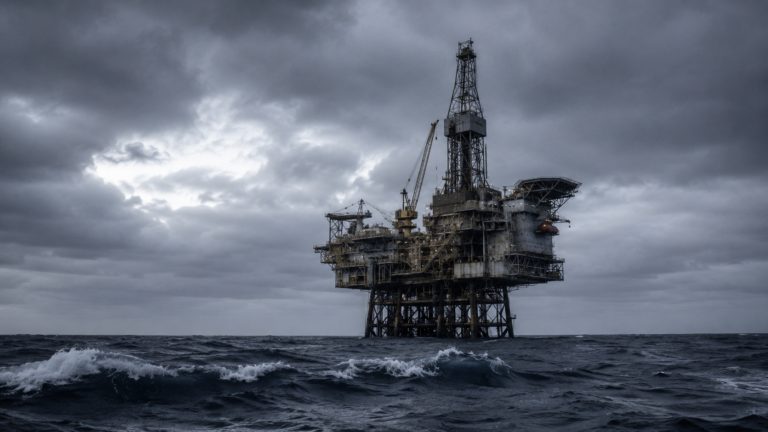
The American offshore wind industry is being built faster than the country has boats and crews to build it safely, and that gap is showing up as injuries. Turbines rise more than 500 feet above the water, the only way onto many of them is to step from a pitching vessel, and a workforce drawn from shipping, construction, and diving is being pushed into one of the most hazardous job sites in the country. When someone gets hurt, the most important question is not how the accident happened but which law governs the claim, because that decides what the injury is worth.
In short: An offshore wind farm injury is usually covered by maritime law, most often the Jones Act for crew of the vessels that build and service the turbines, or the Longshore Act through the Outer Continental Shelf Lands Act for workers on fixed structures. Which one applies decides whether you recover full damages or capped benefits, and a vessel or equipment maker may be a separate, larger source of recovery.
This article is for general informational purposes only and does not constitute legal advice. Which law applies turns on your specific role and worksite, so consult a licensed maritime attorney about your situation.
Key Facts at a Glance
- Most crew who build, service, or supply offshore wind turbines from vessels are covered by the Jones Act (Source: Gilman & Bedigian).
- Offshore wind turbines can stand more than 500 feet tall, making falls from height a leading hazard (Source: Maritime Injury Center).
- A Jones Act seaman must have a substantial connection to a vessel in navigation, about 30 percent of work time, under Chandris v. Latsis (Source: Justia, Chandris v. Latsis).
- The Outer Continental Shelf Lands Act applies the LHWCA to many workers on fixed structures on the Outer Continental Shelf (Source: Cornell LII, 43 U.S.C. § 1333).
- In April 2020 the crew transfer vessel Njord Forseti struck an Orsted wind turbine, severely injuring one crew member and cracking the vessel’s bow (Source: Hofmann & Schweitzer).
- A Jones Act or general maritime claim must generally be filed within three years, while an LHWCA claim must be filed within one year (Source: Boatlaw).
- Workers hurt by defective equipment or another company’s negligence may have a separate third-party claim for full damages (Source: Hofmann & Schweitzer).
Why Offshore Wind Work Is So Dangerous Right Now
The danger is not only the ocean; it is the pace. The United States does not yet have enough purpose-built turbine installation vessels, so existing ships are being rapidly retrofitted to do work they were not designed for, which raises the risk of accidents during construction and servicing (Source: Hofmann & Schweitzer). This guide covers how offshore wind workers get hurt, why the new industry is so hazardous, which law governs a claim, whether you are a Jones Act seaman, what compensation each route allows, when a vessel or third party is liable, what real accidents have looked like, and the deadlines, with worked examples throughout.
Hurt building or servicing an offshore wind farm? The law that applies sets what you can recover.
How Do Offshore Wind Workers Get Hurt?
The hazards track the work: building and maintaining 500-foot turbines from vessels in open water. Common injuries include being swept overboard and drowning, falls from great heights, impact injuries, crane collapses, falling objects, electric shock, and confined-space and diving hazards (Source: Gilman & Bedigian). The table below maps the mechanism to the typical injury and the worker usually exposed.
| Mechanism | Typical injury | Worker most exposed |
|---|---|---|
| Vessel-to-turbine transfer / allision | Crush, fracture, fall into the sea | CTV crew, technicians (source) |
| Fall from height on the turbine | Traumatic head and spine injury | Turbine technicians (source) |
| Falling object / dropped load | Crush and impact injury | Deck crew, installers (source) |
| Electric shock | Burns, cardiac injury | Cable and turbine technicians (source) |
| Confined space / diving | Asphyxiation, decompression injury | Divers, foundation crew (source) |
Which Law Covers an Offshore Wind Injury?
It depends on your role and where you were standing when you were hurt, and the difference is large. Compensation can come through the Jones Act, where you must prove negligence but recover full damages, or as no-fault benefits through the LHWCA or general maritime law (Source: Gilman & Bedigian). The table below routes the main roles.
| Worker role | Likely status | Law and recovery |
|---|---|---|
| Crew of a CTV, supply, or installation vessel | Jones Act seaman | Jones Act + unseaworthiness + maintenance and cure; full damages (§ 30104) |
| Technician working on a fixed turbine foundation | Likely not a seaman | LHWCA via OCSLA; no-fault benefits (§ 1333) |
| Shipyard or vessel-retrofit worker | Longshore worker | LHWCA; benefits, plus a possible vessel claim (§ 905) |
| Hurt by defective equipment or another firm | Third-party claimant | Negligence / product liability; full tort damages (source) |
| Killed beyond 3 nautical miles | Survivors’ claim | DOHSA (and the Jones Act if a seaman) (§ 30302) |
Are Offshore Wind Workers Jones Act Seamen?
Many are, and that status is worth fighting for because it unlocks full damages. The crews of crew transfer vessels, supply boats, and turbine installation vessels generally qualify as seamen, since they have a substantial connection to a vessel in navigation under the standard set in Chandris, Inc. v. Latsis, which uses a rule of thumb of roughly 30 percent of work time in service of a vessel (Source: Justia, Chandris v. Latsis). A technician who spends his shifts aboard a service operation vessel and transfers to turbines to work is a strong candidate for seaman status; a technician based onshore who is helicoptered out for occasional tasks is a weaker one. Because a seaman can sue the employer for negligence and the vessel for unseaworthiness and is owed maintenance and cure, establishing the connection to a vessel is usually the first and most consequential step in a wind-farm injury case.
What If You Worked on the Turbine or a Fixed Structure?
Then your claim likely runs through the Longshore Act, applied by the Outer Continental Shelf Lands Act. Congress extended the OCSLA to cover non-mineral energy development, including offshore wind, on the Outer Continental Shelf, which brings many fixed-structure wind workers under the LHWCA’s no-fault benefit system rather than the Jones Act (Source: Cornell LII, 43 U.S.C. § 1333). The Supreme Court’s decision in Pacific Operators Offshore, LLP v. Valladolid requires a substantial nexus between the injury and operations on the Outer Continental Shelf for OCSLA coverage, a test originally applied to oil and gas that now matters for wind as well (Source: Justia, Pacific Operators v. Valladolid). The practical effect mirrors oil and gas: a fixed-structure worker is generally limited to capped LHWCA benefits from the employer unless a vessel or third party was at fault, which is why those other claims matter so much.
Seaman, fixed-structure worker, or third-party claim? The classification decides your ceiling.
What Compensation Can You Recover?
If you are a seaman, the full range of maritime damages is available; if you are a longshore worker, you receive defined benefits. A Jones Act seaman can recover medical expenses, lost earnings and earning capacity, pain and suffering, and disability, plus maintenance and cure, a daily living allowance and medical care owed regardless of fault until maximum medical improvement (Source: Big Tex Injury Lawyers). An LHWCA worker instead receives no-fault medical coverage and a capped wage-replacement benefit, with no payment for pain and suffering. For example, a turbine technician who is a seaman and suffers a career-ending fall can pursue the full value of his lost career and his pain, while a fixed-foundation worker with the same injury is generally limited to the benefit schedule unless a third party was responsible. That gap is the reason classification and third-party claims are pursued aggressively.
Can You Sue the Vessel or a Third Party?
Frequently, and these claims are often where the real value is. A seaman injured by an unseaworthy vessel can sue the vessel owner, and any wind worker hurt by defective equipment or another company’s negligence can bring a separate third-party claim for full tort damages, even while collecting benefits (Source: Hofmann & Schweitzer). Offshore wind is full of these scenarios because so many separate companies, vessel operators, turbine makers, crane contractors, cable installers, share one worksite. As a worked example: a deckhand crushed when a crane on an installation vessel dropped a turbine component may have a Jones Act claim against his employer, an unseaworthiness claim against the vessel, and a product claim against the crane’s manufacturer, all from one accident. Identifying every responsible party early, before the vessel sails and the equipment is replaced, is decisive.
What Have Real Offshore Wind Accidents Looked Like?
The pattern of real incidents shows where the danger concentrates: the moments vessels approach turbines and the moments heavy components are in the air. In April 2018, the offshore supply vessel Vos Stone was pushed back against a turbine platform by high winds and waves just after casting off, injuring three crew members and damaging the hull (Source: Hofmann & Schweitzer). In April 2020, the crew transfer vessel Njord Forseti struck an Orsted turbine, severely injuring one crew member and cracking the bow so the vessel took on water and required a helicopter evacuation. In October 2021, a jack-up installation vessel dropped three turbine blades and a clamping tool weighing more than three tons into the sea after a mechanical failure during maintenance. Each is a textbook setup for a maritime claim: a vessel allision, a severe transfer injury, and a dropped-load near miss, the same mechanisms the table above flags.
A Worked Example: A Transfer Gone Wrong
Picture a wind technician stepping from a crew transfer vessel onto a turbine’s access ladder in a building swell. The vessel surges, the gap opens and closes, and he is caught and badly injured. The claim has several layers. As crew of the vessel he is likely a Jones Act seaman, so he can sue his employer for negligent vessel handling and claim maintenance and cure while he recovers (Source: Chandris, 515 U.S. 347). If the transfer system or the vessel’s station-keeping was defective, an unseaworthiness claim against the vessel and a product claim against the equipment maker may follow. And because real transfer and allision injuries like the Njord Forseti case are well documented, the hazard is foreseeable, which strengthens the negligence argument (Source: Hofmann & Schweitzer). One accident, several defendants, and the worker’s recovery depends on pursuing all of them.
How Long Do You Have to File?
The deadlines differ by route and are easy to miss. A Jones Act or general maritime claim generally must be filed within three years of the injury, while an LHWCA claim must be filed within one year (Source: Boatlaw). Because a single wind-farm accident can trigger both clocks, a worker who assumes the three-year maritime deadline applies can lose a longshore benefit claim that expired in one. The evidence also disappears fast: vessels move between projects, equipment is repaired or scrapped, and crews rotate internationally. The safest course is to identify every deadline that could apply and to document the vessel, the equipment, and the conditions promptly, well before any deadline approaches.
Frequently Asked Questions
Are offshore wind workers covered by the Jones Act?
Many are. Crew of the vessels that build, supply, and service turbines are generally Jones Act seamen and can sue for negligence and unseaworthiness (Source: Gilman & Bedigian).
What if I work on the turbine itself?
A worker on a fixed turbine foundation is usually covered by the LHWCA through the OCSLA, which provides no-fault benefits rather than full damages, unless a third party was at fault (Source: Cornell LII, 43 U.S.C. § 1333).
How do offshore wind workers get hurt?
Common causes include vessel-to-turbine transfers and allisions, falls from height, dropped objects, electric shock, and confined-space or diving hazards (Source: Gilman & Bedigian). To assess your case, get a free case review.
Can I sue the vessel or the equipment maker?
Often yes. A seaman can sue an unseaworthy vessel, and any worker hurt by defective equipment or another firm’s negligence can bring a separate third-party claim for full damages (Source: Hofmann & Schweitzer).
What compensation can I recover?
A seaman can recover full tort damages plus maintenance and cure; a longshore worker receives no-fault medical and capped wage benefits with no pain-and-suffering payment (Source: Big Tex Injury Lawyers).
Why is offshore wind work so dangerous?
The U.S. lacks enough purpose-built vessels, so ships are being rapidly retrofitted for work they were not designed for, raising accident risk (Source: Hofmann & Schweitzer).
How long do I have to file?
Generally three years for a Jones Act or maritime claim, but only one year for an LHWCA benefit claim (Source: Boatlaw).
The Bottom Line
Offshore wind is one of the country’s newest and most dangerous maritime worksites, and the law governing an injury there is not new at all. Crew of the vessels that build and service turbines are generally Jones Act seamen who can pursue full damages plus maintenance and cure; workers on fixed structures fall under the LHWCA through the OCSLA, with capped benefits unless a vessel or third party was at fault; and the crowded, multi-company nature of these projects means one accident often supports several claims. Real incidents, vessel allisions, severe transfer injuries, and dropped multi-ton loads, show exactly where the risk lives. Pin down your status, identify every responsible party, and mind the two different clocks, three years for maritime claims and one year for longshore benefits.
Find out which law governs your offshore wind injury and every party who may owe you.
References and Sources
- Jones Act, 46 U.S.C. § 30104: Cornell Legal Information Institute
- Outer Continental Shelf Lands Act, 43 U.S.C. § 1333: Cornell Legal Information Institute
- LHWCA vessel-negligence claim, 33 U.S.C. § 905: Cornell Legal Information Institute
- Death on the High Seas Act, 46 U.S.C. § 30302: Cornell Legal Information Institute
- Maritime statute of limitations, 46 U.S.C. § 30106: Cornell Legal Information Institute
- Chandris, Inc. v. Latsis, 515 U.S. 347 (1995): Justia U.S. Supreme Court Center
- Pacific Operators Offshore, LLP v. Valladolid, 565 U.S. 207 (2012): Justia U.S. Supreme Court Center
- Offshore wind farm injury compensation, hazards, and which law applies: Gilman & Bedigian
- Maritime collisions and injuries near offshore wind farms (real incidents): Hofmann & Schweitzer
- Causes of injury for maritime workers on wind farms: Hofmann & Schweitzer
- Jones Act injuries from retrofitting wind-farm vessels: Hofmann & Schweitzer
- Offshore wind accidents, statutes of limitations, OSHA hazards: Boatlaw
- Offshore wind farm accidents and OCSLA coverage: Maritime Injury Center
- How the Jones Act protects offshore wind workers; compensation: Big Tex Injury Lawyers
Editorial Standards and Review
This article follows a zero-hallucination policy. The governing statutes (the Jones Act, OCSLA, the LHWCA, DOHSA, and the maritime limitations period) are cited to the U.S. Code; the seaman-status and Outer Continental Shelf coverage rules to the Supreme Court decisions in Chandris v. Latsis and Pacific Operators v. Valladolid; and the named accidents (the Vos Stone, the Njord Forseti, and the October 2021 dropped-blade incident) to the reporting of an experienced maritime firm. The worked examples are illustrative and not specific cases. OffshoreInjuryHelp.com is an informational resource, not a law firm, and does not provide legal representation; it connects injured offshore wind workers and their families with experienced maritime attorneys. Learn more on our Editorial Standards page. Last reviewed: June 1, 2026.