Back and Spinal Injuries in Maritime Workers: Your Rights
Back and spinal injuries are the most common serious harm suffered by maritime workers, and they are also the injuries employers fight hardest, usually by blaming your spine instead of the job. If you are a seaman, the law gives you strong tools to push back and recover.
This article is for informational purposes only and does not constitute legal advice. Back-injury claims turn heavily on medical evidence and the specific facts; to protect your claim, consult a licensed maritime attorney.
Key Facts at a Glance
- Back and spinal injuries are among the most common serious injuries in maritime work, driven by heavy lifting, falls, and vessel motion.
- A worker who is a Jones Act seaman can sue the employer for negligence and recover full damages, 46 U.S.C. § 30104 (Source: Cornell LII).
- Injured seamen can also bring an unseaworthiness claim and receive maintenance and cure regardless of fault.
- A herniated disc occurs when the soft center of a spinal disc pushes through its outer layer and can press on nearby nerves (Source: MedlinePlus).
- An employer is generally liable for the aggravation of a pre-existing back condition caused by shipboard work or unseaworthiness.
- Intentionally concealing a prior back condition on a pre-hire medical questionnaire can bar maintenance and cure under the McCorpen defense (Source: Justia).
- A Jones Act or unseaworthiness lawsuit generally must be filed within 3 years, 46 U.S.C. § 30106 (Source: Cornell LII).
Injured your back at sea and being told it’s just degeneration? That argument is beatable with the right evidence.
We are not a law firm and not attorneys; we connect injured maritime workers and families with experienced maritime attorneys at no cost.
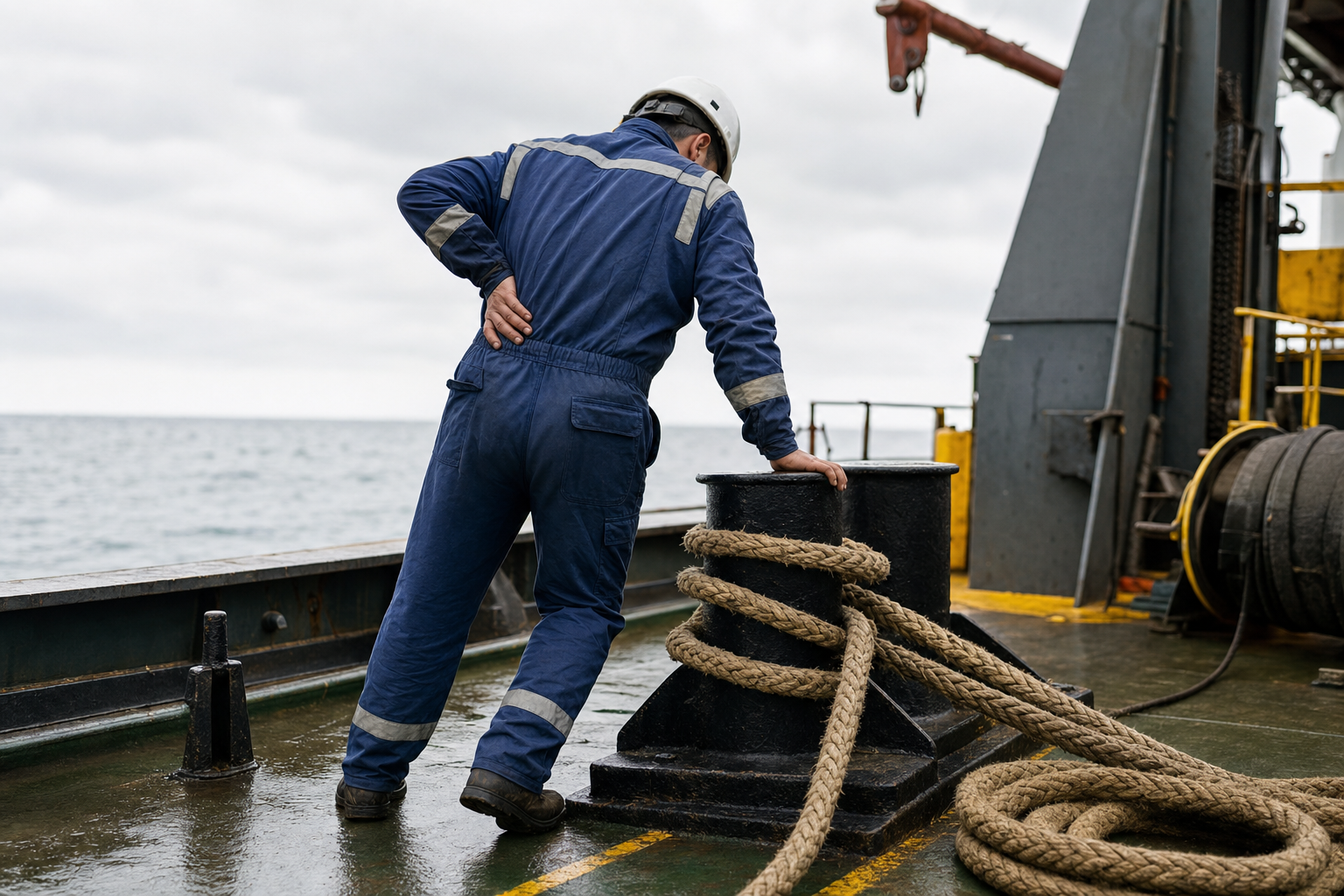
The maritime workplace is brutal on the spine. Crews lift and drag heavy lines, gear, and cargo on surfaces that pitch and roll, climb and descend ladders and stairs in all weather, and absorb the relentless pounding of a hull working through a seaway. It is no surprise that the back is the body part most often seriously injured at sea. What surprises many injured workers is how aggressively these claims are contested, because a back injury is easy for an insurer to blame on age, prior strain, or ordinary degeneration rather than the accident.
This guide explains maritime back and spinal injuries from the worker’s side: how common they are, what causes them, the types of injuries that occur, why they are so serious for people who do physical work, the laws that protect an injured seaman, the all-important pre-existing-condition question, how employers fight these claims, and what you can recover.
How Common Are Back and Spinal Injuries Among Maritime Workers?
Back and spinal injuries are the workhorse injury of the maritime industry, the single category that fills more injury reports than almost any other. The reason is structural: nearly every job aboard a vessel involves lifting, pulling, bending, and carrying, and it all happens on a platform that is itself moving. A deckhand handling lines, an engineer wrestling machinery, a steward carrying provisions, and a fisherman hauling gear all load their spines in ways that land-based jobs rarely match, and they do it while bracing against the motion of the sea. Acute injuries from a single accident and cumulative injuries from months of strain both show up as back and spine problems. Because the work is so physically demanding, an injury that might be a temporary setback for an office worker can end a maritime career.
What Causes Back and Spinal Injuries Offshore?
The causes cluster around the physical realities of working on the water. Heavy lifting and manual handling of lines, equipment, and cargo are the leading cause, especially when crews are short-handed or rushed. Slips, trips, and falls on wet, oily, or moving decks twist and compress the spine. Falls from height, down ladders, stairs, or into holds, can fracture vertebrae or injure the spinal cord. The motion of a vessel in heavy seas throws workers against equipment and bulkheads and loads the spine repeatedly. And repetitive stress from doing the same heavy task day after day breaks the back down over time. The table below maps the common causes to how they injure the spine.
| Cause | How it injures the spine | Typical setting |
|---|---|---|
| Heavy lifting and manual handling | Disc herniation, muscle and ligament strain | Handling lines, gear, cargo, provisions |
| Slips, trips, and falls | Twisting and compression injuries | Wet, oily, or moving decks |
| Falls from height | Vertebral fractures, spinal cord injury | Ladders, stairs, hatches, holds |
| Vessel motion in heavy seas | Impact and repeated loading of the spine | Open water, rough weather |
| Repetitive stress | Cumulative disc and joint damage | Daily heavy tasks over time |
What Types of Back and Spine Injuries Occur?
Maritime accidents produce the full range of spinal injuries, from painful but treatable to permanently disabling. A herniated or bulging disc, in which the soft inner material of a spinal disc pushes out and can press on a nerve, is among the most common and often causes radiating pain, numbness, or weakness down a leg or arm (Source: MedlinePlus). Vertebral fractures result from falls and heavy impacts. The most catastrophic injuries damage the spinal cord itself, which can cause partial or complete paralysis and is often permanent (Source: MedlinePlus). Workers also suffer sciatica, sacroiliac joint injuries, and chronic muscle and ligament strain. The table below summarizes the common injuries and how they are typically treated.
| Injury | Description | Typical treatment |
|---|---|---|
| Herniated or bulging disc | Disc material presses on a nerve | Therapy, injections, discectomy or fusion |
| Sciatica | Nerve pain radiating down the leg | Therapy, injections, sometimes surgery |
| Vertebral fracture | Broken bone in the spinal column | Bracing, surgery, fusion |
| Spinal cord injury | Damage to the cord, risk of paralysis | Emergency care, surgery, lifelong rehab |
| Chronic strain or SI joint injury | Soft-tissue and joint damage | Therapy, pain management |
Why Are These Injuries So Serious for Maritime Workers?
A back injury hits a maritime worker where it hurts most: the ability to do physical work. Offshore and shipboard jobs require lifting, climbing, and bracing that a damaged spine often cannot tolerate, so an injury that might allow a return to a desk job can permanently end a career at sea. Spinal injuries also tend to be progressive and recurrent, with surgeries that may help but carry their own risks and sometimes lead to more surgery later. Chronic pain, reduced mobility, and dependence on medication follow many workers for life. For a younger worker, the loss of decades of high earning capacity in a physically demanding trade can be enormous. These are the human and financial realities that a full-damages maritime claim is meant to address, which is why accurate valuation matters so much.
What Laws Protect an Injured Maritime Worker’s Back Claim?
If you are a Jones Act seaman, you have powerful protections. You can sue your employer for negligence under the Jones Act, which uses a relaxed, featherweight causation standard, meaning the employer is liable if its negligence played any part in the injury, 46 U.S.C. § 30104 (Source: Cornell LII). You can bring an unseaworthiness claim against the vessel owner if an unsafe condition, such as inadequate crewing for a heavy lift or defective equipment, caused the injury. And you are owed maintenance and cure from the date of injury until maximum medical improvement, regardless of fault. Maritime workers who are not seamen, such as many dock and shipyard workers, are generally covered instead by the Longshore Act.
Can You Recover If You Had a Prior Back Problem?
Usually yes, and this is one of the most important points for injured maritime workers to understand. The law generally holds an employer responsible for the aggravation of a pre-existing condition, so if shipboard work or an unseaworthy vessel worsened a prior back problem or turned a symptom-free degenerative condition into a disabling injury, that aggravation is compensable. A defendant takes the worker as it finds him. There is, however, a critical trap: if you intentionally concealed a prior back condition on a pre-hire medical questionnaire, and that condition is connected to your injury, the employer can invoke the McCorpen defense to bar maintenance and cure (Source: Justia). The lesson is to be truthful on medical paperwork, because honesty protects the claim while concealment can sink it.
Worked example: A deckhand with an old, healed disc issue he disclosed when hired ruptures the same disc lifting a heavy pump the crew was too short-handed to move safely. The employer argues it is just his old degeneration. Because he disclosed the history and the heavy lift aggravated it, he can recover for the aggravation, and his disclosure forecloses a McCorpen defense to his maintenance and cure.
A pre-existing condition does not end your claim. Aggravation caused by the job is compensable.
We are not a law firm and not attorneys; we connect injured maritime workers and families with experienced maritime attorneys at no cost.
How Do Employers Fight Back Injury Claims?
Back claims draw the most aggressive defenses in maritime law, because the spine gives insurers room to argue. The central move is to call the injury degenerative and pre-existing rather than work-related, using imaging that shows age-related changes nearly everyone has. Employers order independent medical examinations with doctors who tend to favor the defense, dispute how the accident happened, and characterize serious injuries as minor soft-tissue strains. Surveillance is common, with investigators filming the worker in hopes of catching activity that contradicts the claim. Employers also raise comparative fault, arguing the worker lifted improperly or ignored a procedure, and they press for early, low settlements before the full extent of the injury and any surgery is known. Countering all of this takes consistent medical treatment, honest history, and a clear record connecting the injury to the work.
What Can You Recover for a Maritime Back or Spine Injury?
As a seaman, you can recover the full value of the harm, which for a serious spine injury can be substantial. Recoverable damages include all past and future medical expenses, which for back injuries can mean injections, surgery such as discectomy or fusion, and long-term care; lost wages and lost earning capacity, often significant when the worker can no longer do physical maritime work; and compensation for pain, suffering, and disability. Maintenance and cure runs separately from the date of injury until maximum medical improvement, covering living expenses and medical care regardless of fault. Your own share of responsibility reduces but does not bar recovery under maritime comparative negligence. For context on how these claims are valued, see our guide to Jones Act settlement amounts.
Key Authorities for Maritime Back Injury Claims
| Authority | What it provides |
|---|---|
| Jones Act, 46 U.S.C. § 30104 | Full tort damages for a negligent employer when the worker is a seaman |
| Unseaworthiness | Vessel owner liability for unsafe conditions such as short-handed heavy lifts |
| McCorpen v. Central Gulf Steamship Corp. | Concealing a prior condition can bar maintenance and cure |
| 46 U.S.C. § 30106 | Three-year deadline to file a Jones Act or unseaworthiness suit |
Frequently Asked Questions
Are back injuries covered by the Jones Act?
Yes. A maritime worker who is a Jones Act seaman can sue the employer for negligence over a back or spinal injury and recover full damages, plus bring an unseaworthiness claim and receive maintenance and cure. Workers who are not seamen are generally covered by the Longshore Act instead.
Can I recover if I had a prior back injury?
Usually yes. An employer is generally responsible for aggravating a pre-existing condition, so if the job worsened an old back problem or triggered a degenerative one, the aggravation is compensable. The key exception is the McCorpen defense, which can bar maintenance and cure if you concealed the prior condition on a pre-hire medical form.
Why do employers say my back injury is degenerative?
Because it is the most effective way to reduce or defeat the claim. Imaging often shows age-related changes in almost everyone, so insurers use it to argue the injury was not caused by the accident. Consistent medical treatment, an honest history, and a clear account of the accident help defeat that argument.
What is the most serious type of spinal injury?
Damage to the spinal cord itself is the most serious, because it can cause partial or complete paralysis and is often permanent. Vertebral fractures and severe herniated discs requiring surgery are also serious. These catastrophic injuries can end a maritime career and require lifelong care.
Do I need surgery to have a valid claim?
No. Many valid maritime back claims involve disc injuries treated with therapy and injections rather than surgery, and the law compensates the full harm regardless of treatment type. That said, whether surgery is recommended affects the value of the claim, which is one reason not to settle before reaching maximum medical improvement.
How much is a maritime back injury claim worth?
It depends on the severity, the treatment, the effect on your ability to work, and the strength of the liability case. Serious injuries requiring surgery and ending a physical career are valued far higher than temporary strains. See how Jones Act claims are valued.
How long do I have to file a back injury claim?
Generally three years from the date of injury for a Jones Act or unseaworthiness lawsuit. For injuries that develop over time, the clock may start when you knew or should have known of the injury and its connection to the work. Acting early helps preserve medical and vessel evidence.
If a back or spine injury is threatening your career at sea, find out what your claim is really worth.
We are not a law firm and not attorneys; we connect injured maritime workers and families with experienced maritime attorneys at no cost.
References and Sources
- Jones Act, 46 U.S.C. § 30104, Cornell LII
- Maritime statute of limitations, 46 U.S.C. § 30106, Cornell LII
- Herniated disk, MedlinePlus (U.S. National Library of Medicine)
- Spinal cord injuries, MedlinePlus (U.S. National Library of Medicine)
- McCorpen v. Central Gulf Steamship Corp., 396 F.2d 547 (5th Cir. 1968), Justia
- Offshore Injury Help, maintenance and cure
- Offshore Injury Help, unseaworthiness claims
- Offshore Injury Help, Jones Act settlement amounts
Editorial Standards and Review
This article follows a zero-hallucination policy. The governing law is cited to the U.S. Code through the Cornell Legal Information Institute and to the controlling federal case for the McCorpen defense, and medical descriptions of disc and spinal cord injuries are cited to MedlinePlus. We are not a law firm and not attorneys, and nothing here is legal advice. Whether a particular back injury supports a claim depends on the medical evidence and the facts, so an injured worker should consult a licensed maritime attorney. Last reviewed June 2026. See our editorial standards.