Are Commercial Fishermen Covered by the Jones Act?
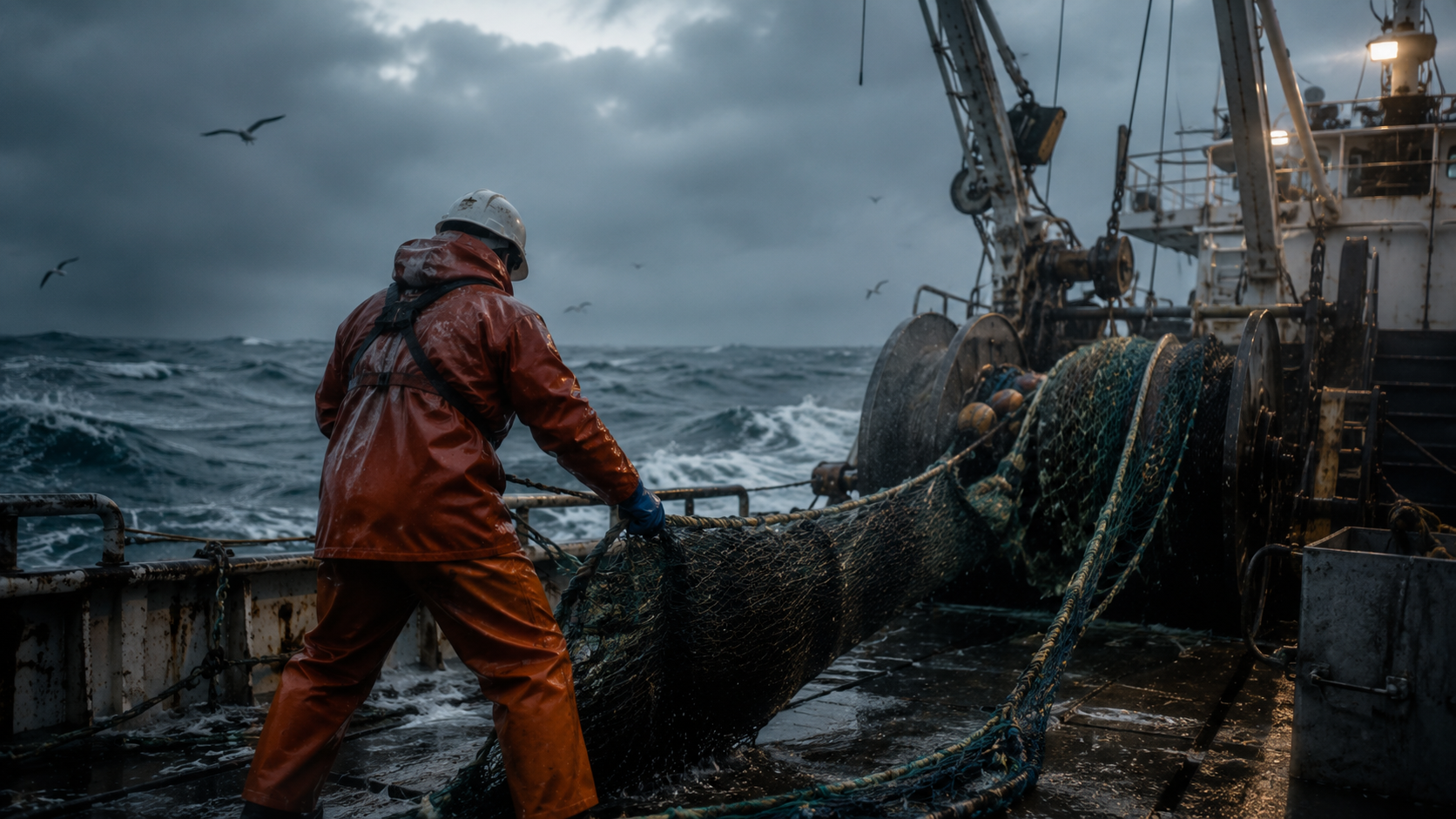
Commercial fishing is the most dangerous job in America, and the law treats the people who do it accordingly. If you crew a fishing vessel and you are hurt, your rights are almost certainly far broader than a land-based worker’s, but only if you understand the status that unlocks them.
In short: Almost all commercial fishermen are Jones Act seamen, because they crew vessels in navigation. That status lets an injured fisherman sue the employer for negligence and recover full damages, claim maintenance and cure, and pursue an unseaworthiness claim against the vessel, remedies far broader than the no-fault benefits land-based workers receive.
This article is for general informational purposes only and does not constitute legal advice. Seaman status turns on your specific work, so consult a licensed maritime attorney about your situation.
Key Facts at a Glance
- Commercial fishermen who crew fishing vessels are generally Jones Act seamen (Source: ELG Law).
- The Jones Act lets a seaman sue the employer for negligence and recover full, uncapped damages (Source: Cornell LII, 46 U.S.C. § 30104).
- Seaman status comes from the Chandris test: a substantial connection to a vessel in navigation in duration and nature (Source: Justia, 515 U.S. 347).
- The Longshore Act expressly excludes a “master or member of a crew of any vessel,” which is why it does not cover working fishermen (Source: Cornell LII, 33 U.S.C. § 902).
- From 2000 to 2017, commercial fishermen died at a rate of 114 per 100,000 workers, against about 4 per 100,000 for all U.S. workers (Source: CDC NIOSH).
- Injured seamen are owed maintenance and cure regardless of fault until maximum medical improvement (Source: Maintenance and Cure).
- A Jones Act claim generally must be filed within three years of the injury (Source: Cornell LII, 46 U.S.C. § 30106).
Why Seaman Status Matters So Much for Fishermen
The danger of the work is not an abstraction. From 2000 to 2017, commercial fishermen suffered work-related deaths at 114 per 100,000 full-time workers, roughly 28 times the rate for U.S. workers overall, and nearly half of those deaths followed a vessel disaster (Source: CDC NIOSH). The injuries that do not kill, crushing wounds, falls, hypothermia, and gear entanglements, can still end a career.
For a worker facing that risk, the legal label attached to the job is decisive. A Jones Act seaman can sue the employer for negligence and recover full damages; a land-based worker is generally limited to a no-fault benefit schedule. The good news for fishermen is that the law usually places them on the favorable side of that line. This guide explains why, what it takes to qualify, and what the status is worth.
Hurt on a fishing vessel and unsure what you can recover?
Are Commercial Fishermen Considered Jones Act Seamen?
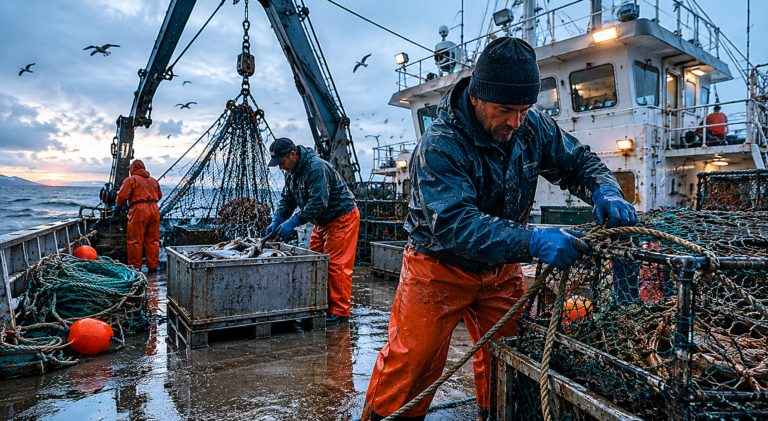
Yes, in the great majority of cases. A commercial fisherman who works as crew aboard a fishing vessel, deckhand, engineer, mate, or captain, has the substantial connection to a vessel in navigation that defines a seaman, and is therefore covered by the Jones Act (Source: ELG Law). Fishermen are routinely listed alongside deckhands and offshore crew as classic examples of Jones Act seamen. That status is valuable: it gives the injured fisherman a negligence claim against the employer for full damages, rather than the capped, no-fault benefits available to land-based maritime workers. Our commercial fishing guide covers these rights in depth.
What Makes a Fisherman a “Seaman”?
Seaman status comes from the Supreme Court’s test in Chandris v. Latsis: the worker’s duties must contribute to a vessel in navigation, and the connection to that vessel, or an identifiable fleet, must be substantial in both duration and nature (Source: Justia, 515 U.S. 347). Courts use a guideline that a worker spending at least about 30% of their time in service of a vessel generally qualifies. For a working fisherman, both parts are easy to meet: the job is the vessel’s mission, and the time aboard is the job. Even fishermen who split the season across several boats in one owner’s fleet usually satisfy the test, because time across an identifiable fleet counts toward the connection.
Why Doesn’t the Longshore Act Cover Fishermen?
Because the Longshore Act draws a hard line around vessel crew. The LHWCA defines its covered “employee” to exclude “a master or member of a crew of any vessel,” which means working fishermen fall outside it by design (Source: Cornell LII, 33 U.S.C. § 902). The two systems are mutually exclusive: a worker is either a seaman under the Jones Act or a covered worker under the Longshore Act, not both (Source: ELG Law). For fishermen this works in their favor, since the Jones Act’s fault-based, full-damages recovery is generally far more valuable than the LHWCA’s no-fault schedule.
How Dangerous Is Commercial Fishing?
By the numbers, it is the deadliest civilian occupation in the country. NIOSH, which maintains a dedicated Commercial Fishing Incident Database, recorded 878 fishermen killed by traumatic injury from 2000 to 2019, an average of more than 43 deaths a year, with 47% of fatalities following a vessel disaster and a large share from falls overboard (Source: CDC NIOSH). Some fisheries are far deadlier than the average; certain Alaskan crab seasons have seen rates many times higher still. That risk profile is exactly why the law extends fishermen the full protection of seaman status rather than a limited benefit schedule.
Which Law Covers Which Fishing-Industry Worker?
Not everyone in the seafood industry is a seaman. The table below maps common roles to their likely status and governing law.
| Worker | Likely status | Governing law |
|---|---|---|
| Deckhand, mate, engineer, or captain on a fishing vessel | Seaman | Jones Act (§ 30104) |
| Fisherman splitting a season across an owner’s fleet | Seaman | Jones Act (Chandris) |
| Dockworker loading or unloading the catch at a terminal | Non-seaman maritime worker | LHWCA (§ 902) |
| Shore-based seafood processor at a plant | Non-seaman | State comp or LHWCA (source) |
| Aquaculture or fish-farm worker | Excluded from LHWCA | State workers’ comp (source) |
| Injury from defective deck or processing equipment | Seaman, plus a product claim | Jones Act and third-party product liability (source) |
What Can an Injured Fisherman Recover?
Seaman status opens three remedies at once. First, a Jones Act negligence claim against the employer under the low featherweight standard, recovering full damages including lost earning capacity and pain and suffering (Source: Cornell LII, 46 U.S.C. § 30104). Second, an unseaworthiness claim against the vessel owner for any unsafe condition of the boat, its gear, or its crew. Third, maintenance and cure, the no-fault duty to pay daily living costs and medical care until maximum medical improvement, owed regardless of fault (Source: Maintenance and Cure). Together these reach far beyond what a land-based worker on state comp could recover for the same injury.
As a Jones Act seaman, your claim may be worth far more than a workers’ comp payout.
Which Fishing-Industry Workers Are Not Seamen?
The exceptions are the workers who never go to sea as crew. Shore-based seafood processors, dockworkers, and others who load, unload, or process the catch on land are generally not seamen; depending on their duties and location they fall under the Longshore Act or state workers’ compensation (Source: Maintenance and Cure). Aquaculture and fish-farm workers are specifically excluded from the Longshore Act and usually covered by state comp instead. The dividing question is the same one that defines every seaman case: whether the worker has a substantial connection to a vessel in navigation, which our Jones Act guide explains.
How Did the 2021 Sanchez Ruling Affect Fishermen’s Seaman Status?
In 2021, the U.S. Court of Appeals for the Fifth Circuit, sitting en banc in Sanchez v. Smart Fabricators of Texas, refined the “substantial connection” part of the seaman test, directing courts in that circuit (Texas, Louisiana, and Mississippi) to also ask whether the worker owes allegiance to the vessel, whether the work is sea-based, and whether the assignment involves discrete tasks or sailing with the vessel (Source: Jones Act). For most commercial fishermen this changes little, because a deckhand who lives and works aboard a fishing vessel through a trip plainly owes allegiance to it and performs sea-based work. The ruling matters more at the edges, for shoreside or transient workers who step aboard only for short, discrete tasks, who may now fall short of seaman status even if their time aboard adds up.
How Long Do You Have to File?
A Jones Act claim generally must be filed within three years of the injury (Source: Cornell LII, 46 U.S.C. § 30106). On a fishing vessel, the evidence that proves a claim, the boat’s maintenance and safety records, gear condition, and crew accounts, is controlled by the employer and scatters as crews disperse between seasons. Maintenance and cure should begin well before any lawsuit, since it is owed from the time of injury regardless of fault. Acting early protects both the deadline and the proof.
Frequently Asked Questions
Are commercial fishermen covered by the Jones Act?
Yes. Fishermen who crew fishing vessels are almost always Jones Act seamen, which lets them sue the employer for negligence and recover full damages (Source: ELG Law). The status comes from their substantial connection to a vessel in navigation.
What makes a fisherman a seaman under the law?
Meeting the Chandris test: contributing to a vessel in navigation and having a connection substantial in duration and nature, guided by a roughly 30% time-aboard benchmark (Source: Justia, 515 U.S. 347). Working fishermen meet it easily.
Are fishermen covered by the Longshore Act instead?
No. The Longshore Act expressly excludes masters and crew members of a vessel, so working fishermen fall under the Jones Act rather than the LHWCA (Source: Cornell LII, 33 U.S.C. § 902).
What can I recover if I’m hurt fishing?
As a seaman, you can pursue Jones Act negligence damages, an unseaworthiness claim against the vessel, and no-fault maintenance and cure, far more than a state comp payout (Source: Maintenance and Cure). To understand your options, get a free case review.
Are seafood processors and dockworkers seamen too?
Usually not. Shore-based processors and dockworkers are generally non-seamen covered by the Longshore Act or state comp, because they lack a substantial connection to a vessel in navigation (Source: Maintenance and Cure).
How dangerous is commercial fishing compared to other jobs?
It is the deadliest civilian occupation, with a fatality rate of 114 per 100,000 workers from 2000 to 2017, against about 4 per 100,000 for all U.S. workers (Source: CDC NIOSH).
How long do I have to file a claim?
Generally three years from the date of injury for a Jones Act claim (Source: Cornell LII, 46 U.S.C. § 30106). Evidence on a fishing vessel degrades fast, so act early.
The Bottom Line
Commercial fishing is the most dangerous job in America, and the law answers that danger by treating nearly every working fisherman as a Jones Act seaman. That status is worth a great deal: a negligence claim against the employer for full damages, an unseaworthiness claim against the vessel, and no-fault maintenance and cure, a far stronger position than the no-fault schedules that cover land-based workers. The main exceptions are shore-based processors and dockworkers who never crew a vessel. For an injured fisherman, confirming seaman status early, and acting within the three-year window, is what turns those rights into a recovery.
Find out what your fishing-injury claim may be worth as a Jones Act seaman.
References and Sources
- Jones Act, 46 U.S.C. § 30104: Cornell Legal Information Institute
- Maritime statute of limitations, 46 U.S.C. § 30106: Cornell Legal Information Institute
- LHWCA definitions and crew exclusion, 33 U.S.C. § 902: Cornell Legal Information Institute
- Chandris, Inc. v. Latsis, 515 U.S. 347 (1995): Justia U.S. Supreme Court Center
- Commercial fishing safety (114 deaths per 100,000 workers): CDC NIOSH
- Commercial fishing regional fatality summaries: CDC NIOSH
- What distinguishes the Jones Act from the LHWCA: ELG Law
- Difference between the Jones Act and the LHWCA: ELG Law
- Difference between the LHWCA and the Jones Act (exclusions): Maintenance and Cure
- How dangerous is commercial fishing: BOATLAW
- Seaman status and the 2021 Sanchez factors: Jones Act
Editorial Standards and Review
This article follows a zero-hallucination policy. The statute and the controlling Supreme Court test are cited to the U.S. Code and U.S. Supreme Court opinions; fatality data is cited to the CDC’s National Institute for Occupational Safety and Health; and the coverage distinctions are attributed to authoritative maritime sources. OffshoreInjuryHelp.com is an informational resource, not a law firm, and does not provide legal representation; it connects injured maritime workers and their families with experienced maritime attorneys. Learn more on our Editorial Standards page. Last reviewed: June 1, 2026.